


Pete Rose’s Reinstatement & Evictions: Worth Reaching for a Win-Win?
“It depends upon what the meaning of ‘is’ is. If the- if he- if ‘is’ means is and never has been, that is not- that is one thing.”
President Bill Clinton pleading his case during the Monica Lewinski grand jury trial
Growing up, I remember having some of Pete Rose’s baseball cards in my collection; they were good ones! Not only was he the all-time hit leader in Major League Baseball (MLB) history, he was the consummate ballplayer. He was gritty, ran out every groundball, and earned the nickname “Charlie Hustle”; he was consistently lauded for “playing the game the right way”. During his 24-year career, he won three World Series and more regular season games (1,972) than any other professional player in any sport. He loved baseball and was considered a surefire Hall-of-Famer.
But off the field when his playing career was over, he did not always conduct himself the right way and broke a major, unforgiveable rule- gambling on baseball. With the integrity of the competitiveness of the sport at stake, gambling had always been banned by MLB. Outcomes of games would not be tainted by it. It was a simple, Draconian regulation: if you gambled on baseball while involved, you were banished.
Rose was accused of betting on his own baseball games while he was manager of Cincinnatti Reds. He denied the accusations. When concrete evidence was discovered showing his guilt, he continued to lie about it. The commissioner of baseball permanently banned Rose from the game of baseball (including the ability to be voted into the Hall of Fame) in 1989. Afterwards, he still showed no remorse for his actions, even after finally admitting to gambling on baseball in a book he wrote years later. A storied career ended in infamy.
Pete Rose died last year.
But last week, the newest commissioner of MLB, Rob Manfred, reinstated Pete Rose. This lifted his ban and made him posthumously eligible for Hall of Fame induction.
But he broke the unforgivable rule! How is reinstatement possible? Doesn’t this send a bad message to other MLB personnel? Or have times changed now that gambling is more mainstream? Baseball fans seem to have split feelings. But, regardless, Pete Rose not being in the Hall of Fame is a regrettable lose-lose for Rose and MLB.
The same line of questioning can be used in property management on eviction guidelines. Most residential leases have rent due on the 1st of each month and allows for evictions to be promptly filed on the 2nd if rent has not been received. But that doesn’t happen often. In fact, most evictions aren’t filed until the 16th at the earliest. Why?
It’s because it is in everyone’s best interest (tenant, owner, and property manager) for the tenant to pay. And giving the tenant additional time to the 16th of the month usually allows a second paycheck to come in so the tenant square the balance. Once eviction is filed, attorney fees and court costs begin to accrue to the tenant which can make a perilous financial situation worse. If this happens, the tenant will probably never get caught up before the eviction is recorded, leading to the owner never receiving the rent, and leading to the tenant being forced out of the house. It creates a true lose-lose situation.
What about if the tenant gave a compelling case that full payment could be made if he was granted an extension past the 16th of the month? This is where it gets sticky. All the letters sent and communications continually reinforce that the 16th is it. There is no tomorrow. Full payment needs to be made by then or, unfortunately, eviction must be filed. Rarely can most tenants in a non-payment situation get caught up after being a full month behind anyway.
But does it need to be a hard and fast rule? Shouldn’t every effort to avoid lose-lose situations be exhausted? Is there a case to be made that sometimes the 16th isn’t it?
I believe there is. Pushing the deadline is always by a case-by-case basis, and candidly, most situations don’t warrant it. But some do. Property managers should be always aiming to avoid lose-lose situations.
Doesn’t everyone believe that the all-time hit leader in MLB history should be enshrined in baseball’s Hall-of-Fame? Of course! Hits are one of the most important baseball metrics and he had 4,256 of them.
Yes, it might be sticky if he ever gets voted in and enshrined. Fans may revolt in anger. Players may look at this as a precedent that gambling is a forgivable sin now. No one knows if there will be future negative ramifications.
However, a tenant paying and Pete Rose in the Hall of Fame are ideal win-win scenarios. But getting there requires discernment because there is always a chance of getting burned. Smart landlords (and MLB commissioners) should tread carefully.
Happy Landlording!
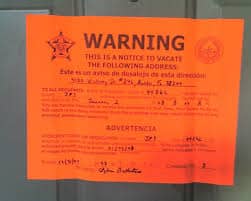
Learn MoreDoes the “Rental Bible” Say That Evictions are the Unforgiveable Sin?
“…but whoever blasphemes against the Holy Spirit will never be forgiven; they are guilty of an eternal sin.”
Mark 3:29
“Do not be one who shakes hands in pledge or puts up security for debts; if you lack the means to pay, your very bed will be snatched from under you.”
Proverbs 22:26-27
Evictions are bad to have on the credit report in the rental home game; I won’t try to gloss over that fact! There is a reason that they are asked about on every rental application worth its salt. Landlords do not like to see a prior eviction come up on a prospective tenant’s dossier because it means that things got about as bad as they could get with the tenant’s former landlord. It typically means that the tenant did not pay, did something really against the rules, and/or would not move out of the house. No landlord wants to have a repeat performance; it’s a major red flag! We like peaceful, nice relationships…
Now, there are two sides to every story. The narratives that previously evicted tenants will tell are typically less confrontational:
My mom got really sick so I moved out of my place and into hers to help her. My roommate at the time stopped paying rent and my name was still on the lease so it happened.
I’ve never lived at that residence in my life! I have no idea what you’re talking about!
COVID happened. Enough said.
I co-signed a lease for my friend so he could get into the property. I guess he didn’t pay. I’ll need to ask him about that.
(Free advice: Please don’t co-sign for someone else. There is a reason they couldn’t get approved on their own. The Bible even cautions against it (see above)!)
It’s always some combination of best intentions paved with unforeseen adversity. And I don’t doubt that at all. But life is life and stuff happens and will happen again. Landlords just don’t want it to happen on their watch.
When a tenant doesn’t pay or follow the rules of the lease, experienced landlords will try to communicate and work with the tenant to get things in compliance. There is often give-and-take and patience required to right the ship. But sometimes the tenant either cannot or will not do what they signed up to do. When backed into this corner, there is one nuclear bomb that a property manager has- filing for eviction. And this bomb is not free. It takes a lot of human resources to see it through, it costs the owner money while rent is not coming in (cash flow double-whammy), and (when vacated) the rental house is usually left in deplorable condition. It’s the downside of real estate investment.
So when a prospective tenant claims that a landlord filed for eviction “by mistake” or “on the 2nd day of the month after I left for vacation when the check was still in the mail”, I’m skeptical. Filing for eviction is a last resort and one most landlords would not take lightly. The costs are just too high.
A “successful” eviction typically means that every rock was turned over, every resource for payment exhausted, and nothing could be settled outside of the courtroom. That’s not a good reference for a renter coming in.
So, is eviction the unforgiveable sin? Is it an automatic rental application denial?
It really can’t be. No matter how draconian the landlord, saying that a human being isn’t worthy of having a place to live is a tough line. Bad things do happen to good people. And many people use these awful experiences to change for the better. We all learn from struggles and hard times and need another chance.
However, we do say that not disclosing an eviction filing on the rental application when asked is an unforgiveable sin. If we don’t start from a position of honesty, I don’t think differences can be bridged to make a tenancy palatable.
To determine whether a previously evicted tenant has a path for approval, we try to focus more on the numbers and less on the story. The stories are usually compelling, but what do the facts look like? We try to investigate:
What does their current debt level look like?
What is the length of the current employment and its real income?
How long ago was the past eviction?
What do prior (non-evicting) landlords say?
Why are things different now?
How much cash do they have on hand to put down to mitigate risk?
So, no, the “Rental Bible” does not say that eviction is the unforgiveable sin. But it is a very real red flag! Prudent landlords will need to put in the research to determine if it is likely to reoccur in their rental homes.
Happy Landlording!
Learn More