

Does the “Rental Bible” Say That Evictions are the Unforgiveable Sin?
“…but whoever blasphemes against the Holy Spirit will never be forgiven; they are guilty of an eternal sin.”
Mark 3:29
“Do not be one who shakes hands in pledge or puts up security for debts; if you lack the means to pay, your very bed will be snatched from under you.”
Proverbs 22:26-27
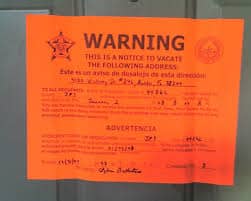
Evictions are bad to have on the credit report in the rental home game; I won’t try to gloss over that fact! There is a reason that they are asked about on every rental application worth its salt. Landlords do not like to see a prior eviction come up on a prospective tenant’s dossier because it means that things got about as bad as they could get with the tenant’s former landlord. It typically means that the tenant did not pay, did something really against the rules, and/or would not move out of the house. No landlord wants to have a repeat performance; it’s a major red flag! We like peaceful, nice relationships…
Now, there are two sides to every story. The narratives that previously evicted tenants will tell are typically less confrontational:
My mom got really sick so I moved out of my place and into hers to help her. My roommate at the time stopped paying rent and my name was still on the lease so it happened.
I’ve never lived at that residence in my life! I have no idea what you’re talking about!
COVID happened. Enough said.
I co-signed a lease for my friend so he could get into the property. I guess he didn’t pay. I’ll need to ask him about that.
(Free advice: Please don’t co-sign for someone else. There is a reason they couldn’t get approved on their own. The Bible even cautions against it (see above)!)
It’s always some combination of best intentions paved with unforeseen adversity. And I don’t doubt that at all. But life is life and stuff happens and will happen again. Landlords just don’t want it to happen on their watch.
When a tenant doesn’t pay or follow the rules of the lease, experienced landlords will try to communicate and work with the tenant to get things in compliance. There is often give-and-take and patience required to right the ship. But sometimes the tenant either cannot or will not do what they signed up to do. When backed into this corner, there is one nuclear bomb that a property manager has- filing for eviction. And this bomb is not free. It takes a lot of human resources to see it through, it costs the owner money while rent is not coming in (cash flow double-whammy), and (when vacated) the rental house is usually left in deplorable condition. It’s the downside of real estate investment.
So when a prospective tenant claims that a landlord filed for eviction “by mistake” or “on the 2nd day of the month after I left for vacation when the check was still in the mail”, I’m skeptical. Filing for eviction is a last resort and one most landlords would not take lightly. The costs are just too high.
A “successful” eviction typically means that every rock was turned over, every resource for payment exhausted, and nothing could be settled outside of the courtroom. That’s not a good reference for a renter coming in.
So, is eviction the unforgiveable sin? Is it an automatic rental application denial?
It really can’t be. No matter how draconian the landlord, saying that a human being isn’t worthy of having a place to live is a tough line. Bad things do happen to good people. And many people use these awful experiences to change for the better. We all learn from struggles and hard times and need another chance.
However, we do say that not disclosing an eviction filing on the rental application when asked is an unforgiveable sin. If we don’t start from a position of honesty, I don’t think differences can be bridged to make a tenancy palatable.
To determine whether a previously evicted tenant has a path for approval, we try to focus more on the numbers and less on the story. The stories are usually compelling, but what do the facts look like? We try to investigate:
What does their current debt level look like?
What is the length of the current employment and its real income?
How long ago was the past eviction?
What do prior (non-evicting) landlords say?
Why are things different now?
How much cash do they have on hand to put down to mitigate risk?
So, no, the “Rental Bible” does not say that eviction is the unforgiveable sin. But it is a very real red flag! Prudent landlords will need to put in the research to determine if it is likely to reoccur in their rental homes.
Happy Landlording!
Learn MoreCharlotte Property Management Weekly: With Obama & Landlords, You Can’t Legally Withhold Payment

Taxpayer: “This country is going down the drain quickly with no end in sight! Obama is proving himself to be a bum like the rest of them. “Change to believe in”? I’m laughing too hard to retort. You wanna know what? I’m not funding this incompetent government anymore and will not be a party to it. I’m not paying taxes until this country is fixed!”
Tenant: “This house is killing me! This week the faucet broke. A month before it was the air conditioner. It took 48 hours for the landlord to get the maintenance guy to fix it in 98 degree heat! 98 degrees my family put up with! My sweet daughter, Abby, must have gone through at least 20 popsicles. “Daddy, why is it so hot?” she quietly bleated as she read “Seventeen” Magazine with a cold washcloth lain across her forehead (with the few remaining ice cubes that our (too small) freezer could muster). The landlord should be paying us to live in this house! I’m certainly not paying him this month! Next month’s payment is “under review” too; we’ll see how the faucet repair goes.”
Obama and (diplomatic and highly educated) landlords: “I feel your pain! Once, my radiator broke in my dorm room at Harvard and it just wasn’t fair that it took over 72 hours to repair! The economy is weak and jobs are scarce. Injustices like this need to be made right! But… like with all things that are dearest to us, these things sometimes take time. In the meantime, if you don’t pay me, your house will be taken away.”
The point of these fictitious quotes is that tenants and American citizens do not have to like what is going on with their house or country, respectively. But they still have to pay.
There seems to be a common misconception that home repairs and rental payments are linked. Legally, they are not. If the house is falling apart, the lease still stands. If the country is (hypothetically) suffering high unemployment and being financially run into bankruptcy, citizens still have to pay their taxes. It’s the law.
However, this is not an open invitation for landlords to not complete necessary repairs in a timely fashion. Slow and incomplete repair work makes tenants very unhappy; keeping tenants as happy as possible is paramount to having them stick around! Plus, there are other painful avenues unhappy tenants can take to legally have a home that is functioning to building code. It just can’t happen through rent abatement.
But I’ve seen this played out. Tenants go to court thinking that repairs not being done to their satisfaction will get them a free pass from eviction from a judge. This is just not the case. They find out quickly that their repair issues (even if extremely legitimate) are a moot point in an eviction hearing; these arguments are not heard because it’s not the place for them to be arbitrated. In an eviction hearing, it comes down to one question, “Do you have payment or proof of payment?” If the answer is “yes”, the tenant wins. If the answer is “no, but”, they don’t.
Rental payments and repair work are two separate issues. Tenants are obligated to pay by contract. That’s it.
You don’t have to like Obama, but you don’t want to try not paying him!
Brett Furniss is the President & Owner of BDF Realty (“Charlotte’s Most Innovative Property Management & Investment Company”), and Rent-To-Sell Realty (“When You Need a New Solution to Sell Your Home”) which specialize in rent-to-own (lease options) and rent-to-sell homes. His newest book, A Real Estate Agent’s Complete Guide to Representing Rent-To-Own (Lease Option) Tenants (Delight Clients, Fill Vacant Homes, and Earn $2,250* Upfront! (*Minimum!)
Learn MoreCharlotte Property Management Weekly: How To Handle Evictions And The Reasons To Avoid Them

Handyman: I was over working on your property and your tenant seemed to be really happy.
Owner: You would be too if you were living rent-free.
When tenants don’t pay, it is not good for anyone. Inevitably, things get put in motion. The owner gets upset and wants to know why they haven’t gotten their money. The property manager is spurred to issue threats to lower the hammer on non-payers. The tenants typically try to go “dark” (incommunicado), as Jack Bauer (and those in the spy game) would say.
I think of the Tupac song that I was mistakenly listening to a few years back. It talked about the deep pride he felt about having the ability to pay the rent. I believe that people do want to pay, but they can’t give what they don’t have. Life happens and things cost money. If the rent is not getting paid, it is never the only expense that is being neglected.
Unfortunately, there really isn’t much to do as a landlord but file for eviction if the rent money doesn’t come in. However, due to the costs, stress, and actual time, it is something o be avoided if at all possible! There are two common avoidance techniques that have minimal success:
1. Payment plans to catch up on rent: I’ve been burned on these! If the tenant is on a fixed income and is living paycheck-to-paycheck, there is really no way for them to get out of the hole. The plans seldom work. I really have to have history with the tenant and think highly of their character to entertain these.
2. Negotiated exits: this allows the tenant to leave without an eviction and saves the owner money for the court stuff. The only problem with this is, “How does the tenant have money to pay another landlord when he’s not paying you?”
So, how does one file for eviction as a private landlord? Well, in NC, this is how a normal eviction goes:
1. Make sure the tenant always receives a rental statement with what’s owed on the first of the month (this is your “demand for rent” letter). We e-mail them.
2. The first day evictions can be filed is the 11th of the month. You’ll need to go down to the courthouse with a copy of the lease, a few stamped envelopes, and cash. Ask someone where evictions are filed, go there, wait in line, fill out the paperwork and envelopes, and give these items to the clerk.
3. Once you receive the nod from the clerk, exit stage right (or left); just get out of there. Hanging out at the courthouse isn’t that fun. Or cool (unless you’re a high-priced lawyer working for Lockhart-Gardner).
4. Wait for the eviction court date to arrive in the mail in one of the envelopes you provided. The show up to court on that day 20 minutes early to fill out the paperwork that you’ll need for the trial. Do what the judge says. You should “win”.
You are now thinking, “Yeah! It’s over! I won! I knew I should have forgone mortuary school (stupid “Six Feet Under”!) and been a lawyer instead!” Uh, no. Not quite. The next steps which cost more money and take a month to complete are as follows:
1. Wait 10 days to file a “Writ of Possession”. This can be accomplished at the same desk at the courthouse. Please bring a new stash of stamped envelopes, cash, and the eviction notice you received in the mail from the court. You’ll repeat basically the same process for the eviction in step #2 with the new “Writ of Possession” paperwork.
2. Get out of there. Don’t mingle. Your head needs to be down and a beeline made for your escape vehicle. Pretend to be talking on your cell phone while speed walking. Wipe profusive sweat off of your brow. Wear a hood to cover your head, if weather appropriate.
3. Wait for the sheriff to call you to let you know when they will be at the house to change the locks. This takes a week or two. After they call, you’ll need to call a locksmith and schedule them to meet you at the house when you meet the sheriff.
4. Show up and be really uncomfortable. Watch the sheriff remove tenants from the home and the locksmith change the locks. Give the locksmith cash after he hands you the new keys.
5. The tenant now has 10 days to remove their things. They will call you to schedule a time for you to let them in the house. If their things are not removed within 10 days, you are required to store anything of value at your expense if they want it later (because you’re so nice (!) and it’s the law).
6. Begin the process of fixing up the house to get it in market shape.
I hope this is enough evidence showing that evictions are not desirable! To avoid these costly evictions, utilize thorough tenant screening procedures upfront!
Brett Furniss is the President & Owner of BDF Realty (“Charlotte’s Most Innovative Property Management & Investment Company”), and Rent-To-Sell Realty (“When You Need a New Solution to Sell Your Home”) which specialize in rent-to-own (lease options) and rent-to-sell homes. His newest book, A Real Estate Agent’s Complete Guide to Representing Rent-To-Own (Lease Option) Tenants (Delight Clients, Fill Vacant Homes, and Earn $2,250* Upfront! (*Minimum!)
Learn MoreCharlotte Property Management Weekly: Talking To Your Tenant Will Cost You Money

“Talk is Cheap.” (Keith Richards)
“Talk can be expensive!” (Property Manager)
There are “hands-off” owner clients. And then there are the “hands-on” varieties.
The “hands off” clients just want to know the rent money is in their account on the day they expect. If there are repairs that are going to cost them money, they want to know that too. They just want the bare bone facts with no fluff. That’s fine.
Then there are the “hands-on” owners. They want to be continually updated if there is any news at all about their properties. “What repairs are needed now?” “Is the tenant caring for the lawn?” That’s fine. “How did Felicia do on her math test last Friday?”
What??? Who’s Felicia?
As I pull the property folder and scan through the lease, “Felicia” is listed as an 8-year old occupant. Unfortunately, no math test scores were listed. Darn!
As a property manager, we work for the owners. However, we want to have good relationships with our tenants as well. When executed properly, we serve as a cordial buffer between them. That is a valuable service!
However, we can’t get too friendly with tenants, as much as we’d like to with many of them. We don’t work for them. If we get involved talking about their families and what’s going on with Felicia, we can’t do our jobs effectively. For example, what happens when they don’t pay rent and we need to evict them? The relationship gets really personal; personal to the effect of your “friend” calling you screaming that you’re heartless, they can’t understand why you would evict them when you know she lost her job, and how we felt about Felicia being homeless? Yeah, that’s not a good conversation.
Any decent property manager (with any length of experience) quickly learns to keep a professional distance so this type of scenario doesn’t happen. Dealing with these types of situations where bad things happen in our residents’ lives is part of the job (not a good part!). But we know how to deal with them.
This is where the “hands-on” owner sometimes gets in trouble. They decide to contact the tenant in their home and forge a bond. Instead of relying on the property manager for home updates, they go straight to the source. And this is where talk leaves the “free zone” and becomes expensive. Here are a few examples:
1. The owner calls the tenant regularly and asks how things are going. The tenant brings up any minor issue with the home. The owner feels compelled to ask us to send a repairman there.
2. The property manager asks for a rental price increase. The tenant calls the owner directly and makes their case on why they can’t afford it. The rent stays the same.
3. The tenant is late paying rent and the eviction is scheduled to begin. The tenant calls the owner and swears to pay soon. The owner asks us to call of the eviction. This usually doesn’t work out and the owner loses more money.
My favorite all-time story on this topic is the owner who called us about rescinding a rental increase planned for his tenant. When we asked why he didn’t want the extra money, he said:
“It’s not worth it to me to hear him griping night-after-night about it. To even it up, he’d just make me pick up more rounds at the bar anyway.”
When owners talk to tenants, it takes their relationship from a business to a personal one. And it’s tough for most to say “no” to a friend, even when it means taking a financial loss.
So save some money and resist the urge to talk to your tenant. Rest assured, Felicia’s very capable math teacher is doing her job!
Brett Furniss is the President & Owner of BDF Realty (“Charlotte’s Most Innovative Property Management & Investment Company”), and Rent-To-Sell Realty (“When You Need a New Solution to Sell Your Home”) which specialize in rent-to-own (lease options) and rent-to-sell homes. His newest book, A Real Estate Agent’s Complete Guide to Representing Rent-To-Own (Lease Option) Tenants (Delight Clients, Fill Vacant Homes, and Earn $2,250* Upfront! (*Minimum!)
Learn More