


Lease Renewals: Lock in the $2.00 NYC Breakfast!
“If I can make it there, I’ll make it anywhere, It’s up to you, New York, New York…”
“New York, New York” by Frank Sinatra
I remember living in New York City (NYC) when I was first out of college. All of the big buildings, happening things going on, the energy, the lights, so many people… it was amazing to behold. It seemed like everything that was going on in the news was happening right around the corner from my apartment. It was really cool.
But it was really expensive. Everything cost so much, especially compared to college life. After my first week of work, I went out with some colleagues and offered to buy the first round of drinks- big mistake!
“That will be $90.00, sir.”
“No, I’m sorry… There must be some misunderstanding. I only ordered 5 of them and we just got here.”
Weird look. “Um, it’s $90.00 sir.”
(Gulp) There goes this week’s money…
And that was 20 years ago. I hate to see what things cost now.
However, there was one great deal in NYC- the breakfast food trucks. You could get a coffee and a big bagel for $1.00 each. I’d line up every morning before getting on the subway to lock it in before heading to work. When an apple cost $4.00 at the bodega across the street, this was the way to go (maybe not health-wise, but you couldn’t beat the bang for your buck).
I remember one morning being in line behind an obvious tourist who looked like he had just gotten into town. He asked the food truck proprietor how much a cup of coffee was and did a double-take:
“$1.00??? Seriously? I’ve never paid $1.00 in my life for coffee!”
That’s when I knew this guy was about to have the worst vacation of his life.
I feel this way about rental rates in Charlotte. I was recently going through our list of tenants with expiring leases and was struck on how much rental rates had gone up, especially those who were coming off of 2-year leases. Rents have been climbing up for almost a decade, but have become more pronounced in the past two years.
As a landlord, this is great. Higher rents equal more profits. The question becomes how much more rent to ask for when existing leases are near their expiration and it’s time to offer the tenant the lease renewal terms. Is the strategy to ask for market rate (probably 10-20% higher) or keep the increase on the lower end (5-10%)?
Generally-speaking (if it is a good tenant), I’m a proponent of keeping the increase offer on the lower end and trying to keep the tenant in the property. Avoiding all the vacancy costs and keeping the cash coming in is usually the most profitable path, as well as the easiest. I don’t like good tenants looking elsewhere as new ones are not guaranteed to work out as well. However, if the tenant still decides to leave, then all bets are off and the house can be re-marketed at the higher market rate.
If I was a tenant in this scenario (once again, generally-speaking) with an offer of a lower than market rental rate on a lease renewal, I’d also look to stay and try to lock into a 2-year lease. Looking at the competition for rental homes now as well as the higher prices, it should be close to a no-brainer. It’s a win-win for both the tenant and landlord to keep near the status quo.
So while the New York City nightlife and dining choices are enticing, it’s probably best to enjoy the vacation and relish the $2.00 breakfast combo. Good deals in this market are hard to find, so it’s probably best to lock them in without complaint!
Happy Landlording!
Learn More
No 5-Star Reviews? You Took an Oath
“You took an oath, if you recall, when you first came to work for me. And I don’t mean to the National Security Advisor of the United States, I mean to his boss… and I don’t mean the President. You gave your word to his boss: you gave your word to the people of the United States.”
(Admiral James Greer (James Earl Jones) in Clear And Present Danger)
“But Jesus would not entrust himself to them, for he knew all men. He did not need man’s testimony about man, for he knew what was in a man.”
(John 2:24-25)
Property management is a funny business. Sometimes you are the GOAT (Greatest Of All Time) and some days you are a goat. Some days you’re told you belong in the penthouse and other days, the outhouse. It’s like I tell my son we’re going to the pool (yeah!) or to work on his reading (Boo! Bad Dad!). Reactions vary based on the popularity of the decisions made.
We had a tenant who was very happy with a repair we made for her on behalf of the owner. She was so happy, that she went on to Google and wrote us a nice 5-star review. “You guys are really great. So responsive, Unequivocally good-looking. Manly, yet gentle. Sensitive, caring & responsive. No one better. Wowzers!” (that’s not a direct quote, but it was something like that, I think…) It was a very nice, unsolicited gesture. “Just doin’ our jobs, ma’am.” (with the accompanying hat tip and suppressed smile).
But fast forward 3 months later… the tenant has another repair request, but it can’t be approved. It’s something the lease says the tenant needs to take care of. When told of the bad news, there was no effusive praise for our wisdom in enforcing the lease properly. There was mostly silence with a touch of resentment. It didn’t taste nearly as good as the 5-Star Google punch she had served us last time. This tasted more like 1-Star lukewarm water served in a dirty ashtray.
And speaking of the 5-Star review, it was gone; she must have taken it down. Remanded to the deep recesses of cyberspace, it never graced our profile again. Its warmth was only with us for a brief season and then- poof- it vanished, nary a goodbye.
“Just doin’ our jobs, ma’am?”
Hey, I get it. You like us when we do stuff you want done. And dislike us when we don’t. People can be fickle.
At the end of the day, we’d love to be “5-Star” reviewed every time and do every repair asked for. And we’d love to approve every tenant that applies. But, alas, we took an oath (aka a signed a property management agreement) saying we would represent the client’s (the homeowner’s) interests. No, this doesn’t mean we don’t take care of the contractual repairs and impartially view applications, but it does mean that we need to keep in mind who we work for and how they want things done. Owners don’t tend to want to pay for unneeded or unwarranted repairs or have tenants with unfavorable past records placed in their rental homes.
At the end of the day, we really do want to please everyone, but we took an oath. “Just doin’ our jobs, ma’am.”
Happy Landlording!
Learn More
Who CARES About Getting a Good Tenant?
“…what we do in life… echoes in eternity.”
(Maximus (Russell Crowe) in Gladiator)
It’s been an unsettling time to be in the rental home game for the past year and a half.
Many people (including tenants) lost their jobs or had their incomes affected negatively. This made many tenants late on rent and on the verge of eviction. To stop this, politicians signed the CARES Act (which included an eviction moratorium) which has made it hard (and in some cases, illegal) to evict non-paying tenants. Without rent, landlords are forced to make payments themselves which has put them in a cash-crunch. It’s been a tough season for all involved.
No one likes evictions. Tenants, landlords, politicians, property managers- it’s failure on some level. But in the world we live in, someone has to pay and be paid for services to continue; we don’t live in utopia. So as eviction court cases pile up at the court house (evictions can be filed, just not judged and acted upon) and rent balances swell, what can be done at this point?
The CARES Act also has provided states with billions of dollars in rental assistance. This means that tenants can apply and get free rent and utility money. We’ve had tenants get up to 6 months in funds that was sent to us directly to cover past due and future rents. All the tenants needed to do was to call 211 in the Charlotte-area to be directed to the best resource based on their situation. It seems relatively simple, though with most massive programs, there were hiccups. But we’ve seen it work.
However, we also have tenants who choose not to avail themselves of these programs for whatever reason. They might not trust the government, are confused by the information asked for, or just don’t want to do the legwork needed to secure the assistance. The situation can seem hopeless and they may feel they might as well ride the process out as the media and politicians give messages that evictions will be blocked indefinitely. They might as well save (or spend) their money now and worry about their housing situation later when they are forced to.
Landlords do not want to be in a position hoping that third parties will “do the right thing” someday, while they are left holding things together on the back end.
Going forward, that has placed a greater premium on tenant screening. The bar keeps moving as we’ve never experienced a pandemic before which had whole industries in the economy largely shut down. This has affected credit scores, bad debt, and recorded evictions from normally reliable people. So what we see on paper (through credit, criminal, income, and landlord screenings) might not be indicative of future performance.
The important thing to remember is that whoever is placed into a rental house now is with you for the foreseeable future. When the eviction moratorium is lifted, there is going to be a huge backlog of cases. Getting an eviction tried and acted upon may take a really long time. Securing the right tenants takes on an added degree of importance because they will be with you for a while.
I’d proceed with placing new tenants very methodically. It might not be a good time to cut corners (“Half the security deposit? Sure, we’ll take that.”) or roll the dice on ambiguous applications for a quick tenant placement. A bad decision can last a long time and be very costly in this environment.
It is imperative to really CARE about getting a good tenant presently. Get all the information, take your time, and make an educated determination. It’s more important now than ever- tenant decisions made today can reverberate for a long time.
Happy Landlording!
Learn More
Getting Rental Turns Right the First Time with Perfect Practice
“Never mistake activity for achievement.”
John Wooden (legendary UCLA basketball coach)
A popular maxim says that if you want to be wealthy, keep things old:
- Old Car
- Old House
- Old Wife
When you get things right the first time, it saves a lot of money! I’d also add “Old Tenant” to the list…
It’s also been said that “practice makes perfect.” Athletic gurus (originally attributed to Green Bay Packers coach, Vince Lombardi) have amended that to “perfect practice makes perfect.” The reasoning is that if poor technique is being practiced, more practice could potentially make one worse.
The same can be said of turning homes for rent (I’d say selling them too, but it seems like if your house was on fire in Charlotte, it would still receive multiple offers).
It makes sense that the longer a rental home is on the market, the better the chance is that it will rent. More potential exposure equals more showings which would equal more applications and a quicker turn between tenants. More time on the market (practice) automatically equates to better results (perfect). But I don’t think that the market always bears this out.
So having a home on the market for rent for a longer time can be sub-optimal? Why?
Most of the time, to increase the days on market, the days are taken from when the rental home is tenant-occupied or while it is vacant and repairs are being completed. This is usually when the house is not in optimal condition. So rental ads are urging people to see a home that isn’t in great shape.
This matters for several reasons:
- Great tenants care about the condition of the house. They are very interested in their living environment and value well-kept domiciles. These types of tenants typically return the home in as good or better shape than when they moved in. We really like these meticulous tenants! They usually pay before the 1st of the month too.
- The manner in which the internet home search game works warrants putting out the best product first. Prospective tenants typically set up search parameters and are alerted when rental homes come to market that fit their profile. So when a home is initially put on the market, this should precipitate the biggest surge of showings. If the home is hard to get into (tenant-occupied) and/or looks disgusting (being cleaned and repaired), they will visit and pass on the unit. Or the wrong type of tenants who aren’t bothered by the poor condition will put an application in.
- Homes on the market for a long time tend to get stale. People wonder what is wrong with the house when it keeps coming up in searches for months and hasn’t been snapped up.
A caveat to this: I don’t have a big issue going to market while a home is tenant-occupied (this does not factor in COVID considerations). If the tenant that is there is cooperative with showings, it is essentially free time to market the house. It’s a great feeling to approve a tenant during this time and time their move-in a week after the current tenant vacates (allowing time to get the home in shape for a new occupant). But #1 above can still apply if the home is in poor shape.
In short, for optimal results, wait until the house is fixed up and at its best, then go to market. Get the rental house right the first time and practice perfectly!
Happy Landlording!
Learn More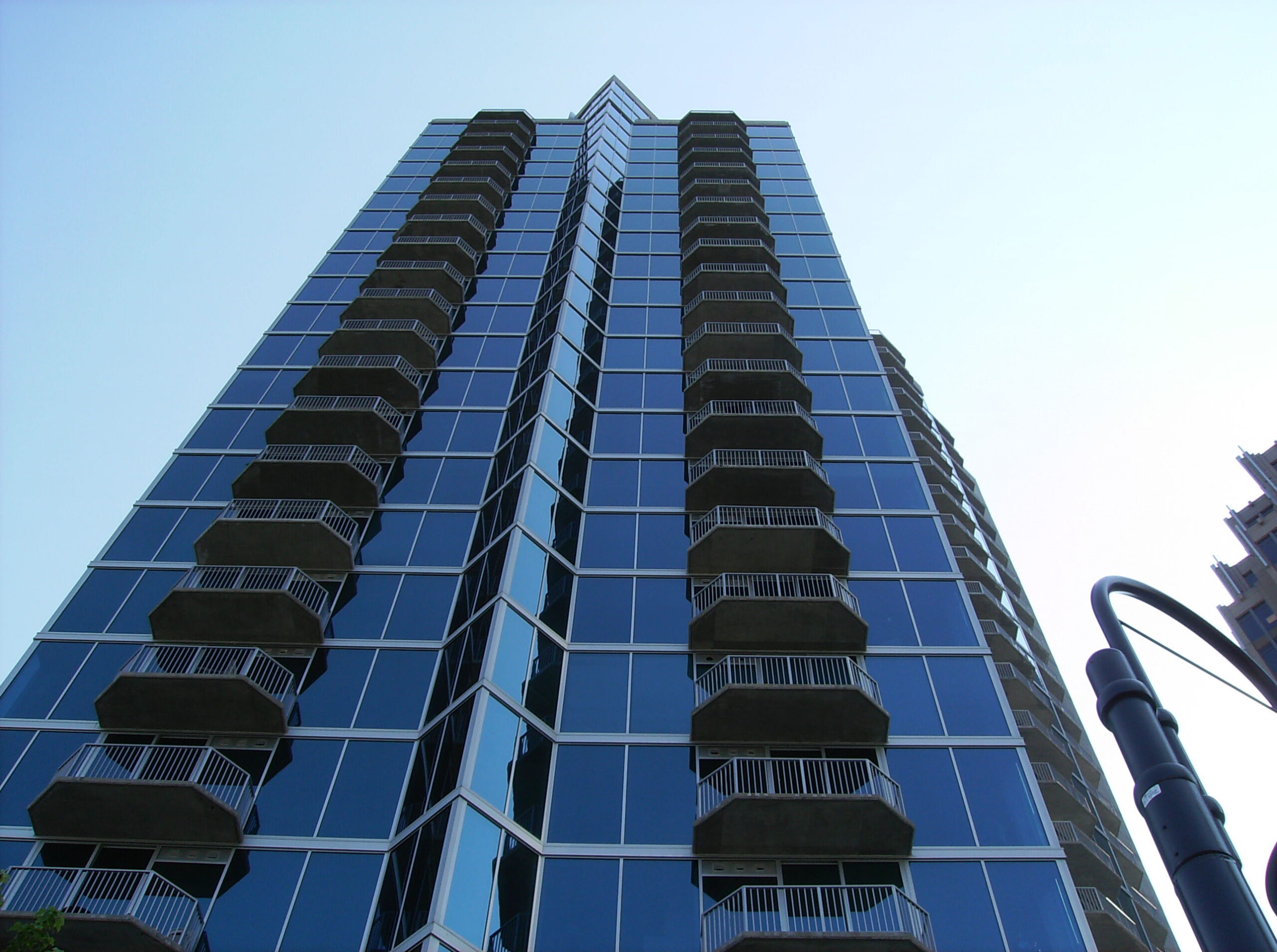
Competition is for Sissies: Buy Straw Hats in Uptown Charlotte
“Buy straw hats in the winter because summer will surely come.”
Bernard Baruch
The competition for Charlotte-area homes is relentless from the buy-side. One local statistic really drives home the point: there is currently an 18-day supply of homes for sale (and 120-days worth is considered a healthy market)! That’s badly seller-skewed.
And I saw a Linked-In post last week from a member of our local Realtor Association, Jonathan Osman:
There are now more than 13,788 Realtor members in our local association of Realtors… and only 1,633 homes for sale in a 7-county region surrounding Charlotte. Happy Monday everybody!
That’s a lot of agents and buyers fighting over a few pieces of cheese. And that doesn’t even factor in the i-buyers like Zillow, OpenDoor, and real estate investment hedge funds that have non-licensed agents scouring the market for unlisted homes to buy. If they are not consistently buying a large quantity of homes, they are not doing their jobs. Supply versus demand is in full effect- Prices continue to climb! 20-30 offers per listing coming in fighting for attention! Competition is fierce!
But there seems to be a bastion of discounted properties located right in the heart of Charlotte in the 28202 zip code that sit undisturbed- Uptown condos! They’re nicely adorned living spaces located in beautiful, tall buildings in what was considered prime real estate. And no one seems to have any interest in them as prices drop. OpenDoor has no current interest and Zillow’s instant offer is at a steep discount to market price.
So why is this packet of Charlotte real estate getting the cold shoulder? I can foster a few guesses:
- “It’s the pandemic, stupid! Everyone is “Zooming” from home and Uptown (and downtown areas in cities everywhere) are obsolete now. Who wants to live in the City when you can be in your PJ’s in the ’burbs?”
Rebuttal:
- The suburbs (and home) can enjoy their time in the sun. Cities are still cool and have lots to do. Companies still value in-person collaboration.
- Huge organizations (Bank of America, Wells Fargo, Duke Energy, Carolina Panthers, etc.) don’t have billions of dollars in leases and real estate office holdings that are going to sit empty one more minute than they have to. When things are thought to be feasibly safe, doors are opening.
- Here’s the path to never getting promoted at work: when the Uptown office opens up and the option comes to work from home or go in, take the home option and continue to work by video. All top leadership will be required to be in the office, so your co-workers will enjoy lunching and working closely with the decision-makers in-person. I wonder who gets promoted… The person who they laugh with at the water cooler or the person they have to sit through yet another Zoom call with to see and never seems to be around? Hmmm…
- It’s tougher to cash flow condos with high monthly HOA fees and, to boot, rents seem to be lower.
Rebuttal:
- True that on the HOA fees to a point. Just keep in mind a few expenses that HOA fees save owners from paying: buying a new roof, monthly insurance, exterior house maintenance, pest issues, water/sewer bills (when vacant), and the threat of vandalism. The actual hit is lighter than it seems.
- Rents are lower because the demand is not there right now to live in Uptown Charlotte with offices largely closed. But that’s why investors buy those straw hats in the winter!
- There are a lot of Uptown condos for rent. There have not been any new Uptown condo buildings built in over a decade, but many apartment buildings have been. That’s a lot of rental competition!
Rebuttal:
- But the rental price points on the newer apartments are higher (and need to be due to higher land/construction costs when they were built and investment cash flow required for the financial institutions who own the buildings).
- The newness factor has largely worn off and now the older units for rent are on largely equal footing (most with better locations)
- There are not many Uptown units that can actually be owned. To your point, no condo buildings for private owners have been built for over a decade. At some point as renters come back to Uptown, they will want to be owners and have limited supply to choose from.
Competition is for sissies! Investors may want to buy the unpopular Uptown condos now and then wait to reap the benefits in the summer when straw hats are back in vogue.
Happy Landlording!
Learn More
Noah’s Ark & Real Estate Investing: Can You Persevere?
Noah’s ark is a crazy story. God tells Noah, some ordinary guy, that He is heartbroken with how sinful mankind has become and is going to flood the Earth and start again. He tells Noah that he is going to spare him, his family, and all the animals if he builds an ark. Noah takes God at His word and builds the ark, gathers the animals and provisions, and loads the ark up.
Everyone knows it rained for 40 days and 40 nights, but Noah and his crew were safe because they were floating on top of this massive amount of water. The lesser talked about part of this story is that they did not walk out of the ark on Day 41 ready to repopulate the Earth; there was way too much standing water (they were floating above mountains, for goodness sake!). They were actually stuck on the ark for over a year before it was sufficiently dry enough to get out on land and walk around.
The children’s Bible I was reading my son surmised that it wasn’t boring because they had so much to do. They had daily routines to feed and care for all the animals, put out fires (so to speak), and take care of themselves and the ark. Wash, rinse, repeat. If anything was neglected, there were problems. Survival for mankind and the animal kingdom was at stake and duties needed to be carried out diligently or there would be dire consequences. The carrot was that if they kept to the plan, they would be free of the confines of the ark at some point and the whole beautiful world would be waiting for them to enjoy.
It reminded me of real estate investing.
Like the ark, rental homes require constant diligence. They need to be fixed up, repaired, and maintained. Tenants need to be acquired, serviced, and replaced. The mortgage, insurance, and taxes need to be paid. The HOA and government entities need to be catered to. These duties need daily attention; if they are neglected, the financial boat can start taking on water and sinking can become a real possibility.
The carrot of real estate investing is owning the property someday. As it rains (roof needs replacing, tenant evictions, tenants not paying because of a pandemic), it seems like that day is far off. Sometimes it seems like it would be better to abandon the ark and swim without it.
But persevering and waiting for the ark door to finally open to dry land has its benefits. Free cash flow, a higher net worth, and assets that can be liquidated for college tuition or passed on to children are great financial prizes.
But tending the smelly animals is a pain day-after-day (ever try to pick up after 1,000’s of animals?). The lightning is scary. The boat rocks a lot and causes sleepless nights and sea sickness. Some boards on the ark look like they are breaking down. Drowning is a real possibility. Why did I get on this thing to begin with? My friends who stayed behind at least seemed merry before the torrential downpour.
However, amidst the doubts and setbacks… there is belief that one day in the future the sun will come out, the water will recede, and the dove will return with a leaf clenched firmly in its beak. The remaining mortgage payments will be made, the appraised home value will be high, and the financial statement will be solid. Landfall will make it all worth it.
Noah persevered and he and his family were rewarded. Hang in there!
Happy Landlording!
Learn More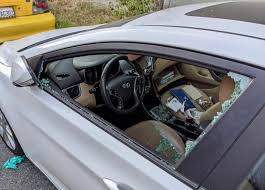
Rental Outcomes: Don’t Bust The Guy Breaking Into Your Car?
It was a sunny Sunday afternoon and I was in my car with my kids to get some exercise in. I wanted to shoot some hoops, so I convinced my kids they did too. It was on.
We parked behind a local school and walked over to where the basketball court was on the other side of it; there was also a small playground 50 yards behind the court. My son and I wanted to play basketball. My daughter also initially wanted to play until she didn’t… then she wandered over to the playground.
It became a volley of walking from the basketball court to the playground and then back again. “Dad! Come see this!” “Dad! Over here!”
On my sixth trip back to the playground, I realized that if I walked far enough into the playground, I could get the sight view past the school to see my car in the distance (which was completely obscured from the basketball court). And I saw a strange man walking suspiciously around my car. I say “suspiciously” because there were no other cars there. What was he doing? He was looking into my windows and did not know he was being watched. How suspenseful! And what to do?
I went through the options. I could yell and let him know I saw him. That would probably prevent any theft or damage to my car. Yawn & boring.
Or I could go (undetected) back to the basketball courts, stash my kids in the bushes, and then sneak around to potentially catch the stranger breaking into my car. Once he broke glass, I could ambush and subdue him; in a perfect world, I could handcuff him with the zip ties in the back of my car. Then I could call 911 and the Charlotte Observer letting them know that a “local hero” had one criminal on ice waiting for them- no charge.
That would be awesome unless… the stranger was bigger than me, good at fighting, and also included kidnapping as part of his criminal repertoire. Then he might drive away in my car with my kids, and leave me bleeding on the pavement. That would be a major fail and one that would be difficult to explain to my wife.
Seriously, what outcome did I want? Though the hero thing sounded pretty good, I needed to get real for a minute. Despite the appeal of potentially getting a key to the city from Mayor Lyles, what was going to be the cost? Realistically, if all went close to best-case scenario (which it rarely does), I’d have a busted car window (that I’d have to pay for and deal with), be waiting a while for the cops to show up (with my knee in a guy’s back who is probably cussing me out), and be babysitting two young children at the same time. That did not seem like a great outcome, even with the best-case scenario.
To me, property management is about creating good outcomes for our clients; the best outcomes come from tenants who stick around a while and consistently:
- Pay the rent
- Maintain the property
- Get along with their neighbors
We recently got a call from the HOA of one of our condo units where they accused our tenants of unkempt living, namely having a unit so disgusting that bugs where infiltrating the homes of neighboring tenants. This was clearly a violation of #2 and #3 above. This was not good, if it was true. They wanted us to evict the tenants immediately (and if we didn’t, they were sending a Sheriff that night to do so).
Despite the sheer illegality and impracticality of such a threat (landlords wish it was this easy to evict bad tenants- “oh, just call the local Sheriff and have him go over the same day to remove them…”), what outcome did we really want? Did we want to remove paying tenants who never had any prior issues? Of course not. We wanted the tenants to correct any cleanliness issues, if applicable, and then continue to stay and pay rent.
So we contacted the tenants and explained what the HOA alleged. Then we let them know we’d be there for an inspection the next afternoon to ensure the HOA there was no issue. The tenants understood and said there was no problem with that.
The next day, our inspection showed a very clean unit. We thanked the tenants and reported the findings to the HOA. There haven’t been any issues since.
The desired outcome was to keep the tenants, not to try to play “gotcha” to catch them violating the lease. That would put ourselves in a position where we would need to make a decision that no one wanted to make- the costly removal of paying tenants.
Viewing issues from a desired outcome perspective, as opposed to the initial bravado impulse, can help make decision-making more clear. It may be “boring”, but “boring” property management is typically the most effective and keeps the checks coming.
Postscript: So I yelled something at the guy at my car and he left. My son hit some shots, my daughter hit the swings, and then we left (unscathed) in a non-damaged car. Yawn…
Happy Landlording!
Learn More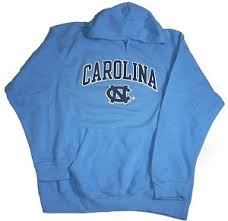
Property Management: Changes for the Better in 2021?
“Everything in moderation, including moderation.”
Oscar Wilde
“…The man who fears God will avoid all extremes.”
Ecclesiastes 7:18
Let me start off by saying I’m not a big clothes shopper.
I was minding my own business the other day at home and my phone buzzed. I looked down at an alert from Amazon Photos with the “From 10 Years Ago” tag; it was a photo of my beautiful wife and I on a date at a Panthers game (awww…).
Two things struck me:
- Look at that guy with his gorgeous, flowing mane of hair (what happened???)!
- The UNC sweatshirt and wooly I was wearing looked eerily familiar… When I glanced in the mirror, I realized I was currently wearing the same exact outfit. I tend to view these things from an optimist perspective (I still fit in my clothes- nice going! Carolina blue really has always really accentuated my eyes…) as opposed to reality (Buy some new clothes, cheapskate!).
OK, sometimes things should be changed; buying some new attire from time to time never hurt anyone.
And sometimes not changing things can hurt people. In 2020, COVID made changing certain in-person business practices necessary for safety reasons; this really accelerated the use of certain technologies in property management, especially self-showings, video virtual tours, and virtual lease signings. These methods have been used and adopted by many in the industry to varying degrees:
- Self-Showings: This is where a prospective tenant is able to access keys through a lockbox to show themselves a property without a company representative being present.
At first take, it seems risky to have strangers in a vacant home when they could just take desired pieces of the property with them when they leave. But this trend has been building and is now commonplace. I think a real estate agent provides limited value being on rental showings. Renters don’t need to be sold into making a decision. At the end of the day, they are taking time to look at rentals because they either want to or have to move; I don’t see a lot of rental home tire-kickers. They want to like the property and get it done with, as opposed to new home buyers who sometimes look for perfect.
However, there obviously needs to be some controls in place (avoiding the “open-barn” theory). It’s important to know who is going into the house and have some concrete, confirmed contact information that can be given to the police if something goes awry. Done properly and moderately, self-showings are efficient and allow renters to view homes on their own schedule. It can work really well.
- Video Virtual Tours for Rentals: I’m still not on the bandwagon on this one. I really want people to visit the rental in-person so they can make sure it is right for them. If someone wants to buy a home from across the country sight unseen, that is fine with me (we live in America, right?); they can spend their money anyway they choose to. But if they wind up disliking the home after purchase, they have no one to complain to. With rentals, they can complain to their landlord for a year or more. No thanks!
I want to provide enough information for people to decide if they want to see the property (pictures, accurate property information, price, etc.). But I’m still not convinced that videos can replicate being there. I also want to be cautious abut adding an expense to our owners to get a tenant we may wind up in a forced bad relationship with (“I don’t like the neighborhood”, “The building is too loud”, or “You purposely videoed away from the wall in the dining room to hide the scuff marks.”).
- Virtual Lease Signings (E-signing Documents): I like this trend, to a point. We’ve used it for a few years for lease extensions with existing tenants and paperwork for our owner clients who needed to add properties. Since COVID, we have even started to e-sign the lease documents prior to meeting the tenants at the property to give them the keys as a precaution.
However, I think this trend has gone too far. It seems like it is a ready excuse not to talk or meet. I like to meet with the tenants and review the lease in-person. There is value to attaching a person with a (masked) face. If we’re going to the property to get our sign and lockbox anyway, why not (safely) say “hello”?
Anyway, in property management and in life, change isn’t always good or always bad- and it often does not need to be wholesale! Treading moderately with new technologies can be the best path forward.
So I think that means I can still wear the sweatshirt and wooly as long as I mix in some new pieces of clothes occasionally, right?
Happy Landlording in 2021!
Learn More
Renters: It’s Not You, It’s Me…
In the annals of relationship-ending conversations, there are many flavors:
Reflective: I think I may hate you
Cooperative: We just don’t complete each other
Corporate: We need to divest
Dramatic: “This” (hands motioning in a circle around both parties) isn’t working for me!
Conditional: We need to either work harder at this or start seeing other people
Non-Committal: I’m not sure about us
Cold: You are altogether awful! Leave me alone forever.
Soft Approach: It’s not you, it’s me!
When a relationship has to end, it’s hurtful, and usually to both parties. People put themselves out there and are vulnerable. It’s tough. And there’s no good way to part ways, even when it has to be done.
In a less personable way, it’s the same situation between renters and property managers.
Renter: This rental house on-line looks enticing!
Property Manager: Come and see it in person!
(later)
PM: Did you like it?
Renter: It smells and is way over-priced! If you think it is the “best house on the street”, you may be as dumb as you look.
PM: Fortunately, I’m not that dumb… I’ll notate your response as “not interested at this time”.
But when the tenant response is favorable…
Renter: I love it! I’ll fill out a rental application!
PM: Woo-hoo!
(later)
PM: Your results are in and things look really good. But, unfortunately, you’re not approved. Thanks for applying.
Renter (confused): What???
PM: We’ll, it’s not you, it’s me!
Renter: Seriously??
Sadly, yes.
The problem is that in Charlotte’s hot real estate market, property managers can get 10-15 different applications for certain homes (typically single family homes $1,300.00/month or less). This makes it tough to pick a tenant. Some of the applications have undisclosed evictions and can be weeded out quickly, but several of them are usually really good. If we had five of the rental house, we could fill them all. But we only have one. And that creates unhappiness for the parties who are not approved for the house, even when they are very “dateable”.
It truly is me, not you. It’s nice to be landlord in this Charlotte market from a vacancy perspective, but we can certainly understand the renter frustration of not getting a house with normally acceptable credentials. It’s tough!
Happy Landlording!
Learn More
You Want the Truth in a Hot Real Estate Market?
“It depends on what the meaning of the word ‘is’, is.”
Former President Bill Clinton
“What is truth?”
Pontius Pilate
I was talking to a client the other day when he mentioned buying a house to live in. He was currently renting and wanted to find a place he could settle and begin to grow roots with his growing family. He had owned houses before and was ready to get into the real estate ownership game again.
However, we discussed that buying a house in Charlotte (and probably across the country) is difficult now. If a home for sale is priced competitively, it usually has multiple offers as soon as it goes on the market. In addition, home prices have escalated. Even with low interest rates that would keep his payment down, he didn’t want to overpay as he was afraid it would take a long time to see any capital appreciation. It was a conundrum- Continue renting or buy?
There was another option he wanted to talk about. He had found a nice house that was in a great area that he thought was priced right. It had been languishing on the market for months and the only reason he could see that it hadn’t been snapped up was that it had a shared driveway. So his question was, “Do people really hate shared driveways that much?”
I didn’t know. At first take, sharing was good. Sharing is caring. How much time do we really spend in the driveway anyway? Surely not enough to be priced $75K below the other nearby houses and not be under contract, right? I never thought that much about sharing a driveway. It would be a nice opportunity to know the neighbor better; maybe share cars occasionally if his was parked in front of mine (especially if his was nicer!).
So what’s the true value of an independent driveway versus a shared one? I told him I didn’t think it should matter that much.
But… at the end of the day, it didn’t matter what I thought the truth was. The truth was the market. The truth was that in the midst of an extremely hot real estate market, this home with a shared driveway was not sold. And I wasn’t sure why this fact would change in a colder real estate market. Bell bottoms may come back into fashion, but I’m not sure about communal driveways on higher end homes.
One thing that I have to come to realize in real estate (and other goods) is that the market is rarely wrong. It happens sometimes and the people who bank on it can make a killing (see multi-billionaire hedge fund manager, David Tepper, the owner of the Carolina Panthers). But usually, the market is the economic truth- it’s efficient and self-corrects quickly.
I had read something a broker wrote (if I remembered where I’d read it, I’d give him the shout-out) about pricing homes that are $500K or less in this hot market. He said something to the effect that if the home was still on the market two weeks after it was listed for sale, the price needed to be reduced. I’d largely extend this to the rental market as well.
A rental home may look like it is worth $2,000/month, but if it is marketed properly and there are no showings or takers, it’s not worth $2,000/month. And let’s be clear, I’m not saying that, the market is.
It’s hard to tell what the truth is sometimes. But in real estate, the market is one of the biggest truth-tellers out there.
Happy Landlording!
Learn More