

Rising Costs of Hershey Bars & Rental Homes: Is Your Lease Keeping Up?
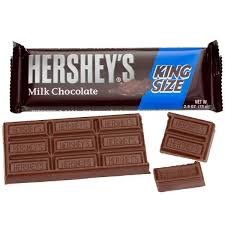
I was in the Harris Teeter grocery store the other day and was waiting in line at the register. As I perused some magazine covers (Prince Henry is doing what??), my eyes wandered over to the candy bars ($3.99 for a king-size Hershey bar??). That price point stuck in my mind. Weren’t these things $1.50 – $2.00 a few years ago??
The first inclination I typically have when I’m personally shocked at the expense of something for sale is to point the finger at myself. “You’re getting old, my old boy. Hard candy doesn’t cost a nickel anymore and the days of .99 gas (while getting it pumped by someone else in NJ!) are long gone. Calm down, son… In the modern world, things just cost more. Relax.”
Once I was able to get my emotions in check, I Googled the question and was met with an AI response: “Candy bars are more expensive due to a surge in cocoa prices, driven by supply shortages from poor harvests and diseases in West Africa. This has led major manufacturers like Hershey to raise prices or reduce package sizes to reflect the high cost of the primary ingredient.”
Hmmm… Makes logical sense. Recent cocoa price surges due to issues in West Africa is the answer to my candy bar conundrum. This is why the Hershey king-size candy bars cost 50-75% more in Charlotte now than five years ago! Maybe… So if that logic holds, then things calming down in West Africa will make my Hershey’s bar go back to costing 2 bucks at some point?
I think the answers provided for some price increases are tough to comprehend or believe. Whether we buy the reasons or not, the price increases themselves are very real nonetheless. And experience shows that the prices rarely come down after the crises pass. Businesses and consumers typically just need to adjust to paying more.
This factors into rental homes.
As a Charlotte property manager, I remember meeting with a new owner client a decade or so ago and the topic of what to charge for rent came up:
Me: It’s a nice- looking home! I think we could get the top of the market price for it- probably around $1,350.00/month. Would that work?
Client: Well, I’d prefer not to charge that much. I own the house and my costs are relatively low. I think with taxes, insurance, and the HOA fee my all-in costs are $500.00/month (oh, the good old days of low costs…). And when repairs come up, I’d like to have some extra rent to cover them. I’d prefer to keep the monthly rent under $1K to keep it affordable for the tenant.
Me: Wow- sure!
I don’t hear anything like that much anymore. It’s tougher to find margin between the actual costs of owning a rental home and the rent. All the cost components of rental home ownership have shot up: mortgage (home values & interest rates), taxes, home insurance, HOA fees, & repairs. “Things just cost more” is the simple real estate explanation for Hershey’s “runaway cocoa prices”.
With higher monthly costs, leases need to keep up with market-rate rent increases to avoid consistent losses. This doesn’t even factor in inevitable, higher costs for a new HVAC or roof which (since COVID) usually cost upward of $8K for smaller homes. Unfortunately, these cost increases are probably not going away. This means that even leases with great, long-term tenants need to be scrutinized if they are kept at an artificially low rate.
Much like Hershey passing on their cost increases to consumers (to my chagrin!), landlords need to factor in their increased costs when setting their rental pricing. Smart landlords will keep close tabs on market rental rates and make adjustments at periods of vacancy or lease renewal.
Happy Landlording!
Learn More
The Bachelor & Long-Term First Leases: Too Much Too Fast?
Those who are serious in ridiculous matters will be ridiculous in serious matters.”
(Cato the Elder (Roman statesman))
“Wisdom gives a man patience…”
(Proverbs 19:11)
The Bachelor became an instant TV hit in 2002 when it first came on the air. What an interesting premise: a single man searching for the woman of his dreams to spend the rest of his life with- and having 25 attractive females to choose from in a captive audience! He gets to essentially speed date all of these women who are all in pursuit of him. And from these brief encounters, he is expected to make the decision to marry one of them.
This lifelong commitment is born out of 6 weeks of dating the supposed “Mrs. Right” while being filmed AND splitting time seeing 24 other women concurrently. It starts on a level playing field; everyone is complete strangers at the beginning of the show and are having their first conversations there. Common sense would dictate that it would be difficult for anyone to know anyone particularly well, let alone have enough to base a serious marriage proposal off of. It’s completely ridiculous, but an engagement is the goal of each season.
So how would it ever work? The Bachelor seems to be big on participants finding their long lost “soulmate”; if they found the right person, they would know they were meant for each other. The rest would fall into place.
But if that “soulmate” even exists, is she even there? And can you have two “soulmates” who are both there? The reality is that this arrangement of strangers trying to make this dating scenario a serious, constructive process leads to plenty of awkwardness. Below are some of the common, absurd conversation snippets heard in most seasons of The Bachelor, courtesy of AI:
[THE BACHELOR] (Eyes glistening)
This has been such an amazing journey. I’m just feeling so many different emotions right now.
[CONTESTANT #1] (Sobbing in confessional)
I just don’t know if he’s here for the right reasons. Like, I’m literally opening up my heart and he’s so connected to the other girls. It’s hard to watch.
[CONTESTANT #2] (Approaching the Bachelor)
Can I steal you for a second? I just… I need some clarity on our connection.
[THE BACHELOR] (Sighs dramatically)
Sure. I feel like we have such a strong foundation. But I also feel like I’m in a really tough spot.
[CONTESTANT #2] I just feel like you don’t see how much I’m falling for you.
[THE BACHELOR] I just need to know that you are fully in this. I’ve never felt like this before in my life.
[CONTESTANT #1] (Steals the Bachelor back)
I’m just so crazy about you.
[THE BACHELOR] Thank you for sharing that with me. That means so much.
In a way, it reminds me of long-term lease requests. As a Charlotte property manager, we are sometimes approached by new rental tenants who want to sign 5+ year leases or longer upon rental application approval.
At first glance, this looks like a great thing! The owner gets a long-term tenant. The tenant gets housing stability. A match made in Heaven!
But what if the tenant signs on and winds up hating the house? Or the tenant loves it, but winds up being a neighborhood nuisance and doesn’t maintain the property? That would be a problem for the owner.
Sometimes starting a long-term leasing relationship right away is too much, too fast. Neither party knows what to expect from each other. Both sides have not had time to assess the situation to see if it makes sense for both parties. Starting out on a 1-year lease is a good first step for most rental situations.
For entertainment purposes, The Bachelor tries to fast forward casual dating into marriage. In contrast, smart landlords are patient and not looking for high drama with their rental tenants. They tend to wait for the second lease (after an initial 1-year lease courtship) to determine if they really found their rental soulmate.
Happy Landlording!
Learn More
Blackjack & Making Lease Extension Offers: You Gotta Hit or Don’t Hit
Blackjack is a classic gambling game pitting card players versus a dealer. The goal is to have the card players’ hands total 21 or as close to 21 as possible, while not going over 21. As the game unfolds, if the card holders’ hands stay under 22, they will be compared to the dealer’s hand (if he stays under 22); whoever has the higher total wins the hand. It can be both exhilarating and frustrating!
The main conundrum for the card players is whether to request an additional card (“hit”) to pad their point totals. The upside is that the closer the players get to 21, the stronger their card hands become and the more likely they are to win. The downside is that if any of the players get over 21, they automatically “bust” (lose) and their bet for that card hand is immediately forfeited.
At casinos, it is not uncommon to hear players loudly talking about their decisions on hitting on their card hands:
“I knew I shouldn’t have hit. I would have won! Ugh!!”
“Yes! I got the King I needed to hit 21. Great hit!”
“No hit for me. Dealer is going to bust!!!”
Both hitting and staying put (taking no cards) can be the right strategy depending on how the cards land. But if a wrong decision is ultimately made, there is no way players can change their minds afterwards. Once players take a card (or don’t and “stay”), their decision is cast and they need to wait to see what happens. There are no “do-overs”.
As a Charlotte property manager, this reminded me of giving lease extension offers to existing tenants.
From a landlord perspective, landlords want to charge the highest rent possible and have the tenant re-sign their lease at that rate. From the tenant perspective, the tenant wants to stay and pay the least rent possible or move to another rental unit that serves their needs better (this could mean lower price, better or different location, different size unit, etc.). Both sides have some disparate interests that need to be rectified before a new lease extension can be signed.
But an initial offer to extend the lease (tendered usually by the landlord) must be made. And the question is what price should be asked for. There are usually no “do-overs”. The price offered is going to be what the tenant ultimately makes a decision off of. Whatever it is, it needs to be strong and not wishy-washy. Wishy-washy can create problems:
Landlord: Good morning, Mr. Tenant! Your lease is up at the end of next month and I wanted to see if you were looking to sign for another year.
Tenant: I was thinking about it. What are the terms?
Landlord: Well, I was going to raise the rent $200. How does that sound?
Tenant: Not that good. I thought I was overpaying now.
Landlord: How about no rent increase. Will that work?
Tenant: I’m not sure. I need to talk to my wife and think about it. We’re going in the right direction, though!
Landlord: How about $200 less than you are paying now. Would that work?
Tenant: Now you’re talking! That’s more in line with what I think this dump is worth. I’ll get back to you.
Landlord: How about $300 less?
This can create a slippery slide.
Much like Blackjack, landlords need to look at their situation and decide how much risk they want to take on with potentially losing the tenant they already have in place. Then they need to make the offer (hit) and wait to see what decision the tenant makes. Sometimes, the offer doesn’t matter because the tenant was going to vacate regardless. But often, the price is the motivating factor on whether the tenant decides to stay.
Smart landlords will think hard about how much they will raise the rent (hit) or whether they will offer it at the same rate (stay). There is no middle ground- you gotta hit or don’t hit! They know that once that card is played, there is little chance to do it over and take it back.
Happy Landlording!
Learn More
Building God’s Temple & Lease Extensions: Are You Ready?
“King David rose to his feet and said: “Listen to me, my fellow Israelites, my people. I had it in my heart to build a house as a place of rest for the ark of the covenant of the Lord, for the footstool of our God, and I made plans to build it. 3 But God said to me, ‘You are not to build a house for my Name, because you are a warrior and have shed blood.’”
(1 Chronicles 28:2-3)
“If you fail to plan, you are planning to fail.”
Benjamin Franklin
King David loved God; they were tight. Towards the end of his life, he wanted to do something grand for God- so grand that he aspired to build the greatest temple in the world for Him! David shared this with Nathan, his resident spiritual advisor, and asked him to see if God would approve. Nathan inquired and relayed that God was not amenable to King David doing it; however, He told him that Solomon, his son and future successor, could build it.
King David did not use this as an excuse to sit on his hands. He asked God exactly what He wanted and proceeded to write down specific plans for Solomon to use. He not only detailed plans to build the temple and the surrounding buildings themselves, but for the all the items that would be kept in the temple. He mapped everything out precisely, even the weights of the lamps and tables and how the priests who would work there would contribute. All Solomon would need to do is dust off the plans and enact them when he was coronated. He would be ready to go!
For smart landlords, this is how lease extensions should be approached. When leases are expiring in the near future or tenants are proactively in contact about extending their leases, landlords should not be scrambling! A well-thought-out plan should be in place ready to be enacted.
As a Charlotte property manager, retaining good tenants is paramount. If we don’t hear from tenants prior to 80 days before their leases’ expiration, we start the “Lease Extension Plan”. This begins by running the nearby comparables to determine market price, checking their payment ledger to ascertain tenant quality, and making a recommendation to the owner on what we feel the lease extension price and terms should be.
Once we have finalized our lease extension offer, we e-mail it to the tenants somewhere between 60-75 days prior to lease expiration. This gives them plenty of time to ask any questions and make a decision. We also incentivize tenants to commit earlier as the proposed rental price is offered in tiers based on when they let us know their plans (example: “Let us know by 6/15, and the price will be $1,500.00/month… or if after 6/15, the price will be $1,600.00/month.”). We also offer options for month-to-month lease extensions (at a 10-20% premium to the existing rent based on current market conditions) and multi-year extensions (incentivized by allowing the rent to stay the same over the life of a longer lease term).
Other important factors we incorporate in the “Lease Extension Plan”:
- The new lease is written on the latest version to make sure that the owner has the best legal protection incorporating any recent changes to landlord law
- The tenant information is updated: Did anyone leave or is now joining the household? Did anyone get married/divorced? Name change(s)? New children? New pets to be accounted for?
- Are there any issues that we want to address with the tenant (or vice-versa) before we reup with them for another year or more?
Though King David was disappointed he would not be the one to build the temple, he made sure approved plans were prepared and ready when Solomon got the green light. Smart landlords will follow his example! With increased repair costs on rental home turnovers, keeping tenants by signing lease extensions is becoming more and more important to achieve rental home ROI.
Happy Landlording!
Learn More