

Charlotte Property Management Weekly: The “Additional Security Deposit” Letter Exchange

Dear Property Manager,
I am very interested in the rental house you have listed! I think it will be perfect for our family. However, when you asked me for an additional month of security deposit, it made me concerned. Money doesn’t grow on trees these days and I thought the rental ad said you only needed one month down. We also have to come up with the first month’s rent and pet fees, so you’re talking about a pretty big sum already. I’ll be honest, I just don’t have it.
I explained our situation to you. The economy had turned against us, but we’re past it! My wife is employed again and getting you the rent will be no problem. Haven’t you ever had anything happen to you before? Have a heart! We’d take great care of the home, but just need the security deposit reduced. My business is booming so things will be fine! Don’t worry! You’ll get your money!
So what do you say? Can you help me out?
Sincerely,
Mr. Tenant
P.S. My wife thought you looked exquisite in your emerald blazer! It’s a bold move to wear it in 97 degree heat, if you ask me, but it’s better to look good than feel good, right?
Mr. Tenant,
Thank your wife for the kind words about my blazer. Typically they run the air conditioning at 40 below (so I try to stay prepared), but it didn’t work well when we moved outside. Emerald has sort of grown on me as I’ve gotten older. I think it complements my eyes, but opinions sometimes vary. You know, you make a call on the outfit every morning and sometimes you hit it out of the park and sometimes you whiff. Truth be told, I’d settle for hitting singles in the clothing department!
As for the request for additional security deposit monies, I understand your concern. Let me explain our rationale.
I understand you hit a rough spot a year ago; that happens. It’s obviously not just you; we see applications like this everyday. We also rent to a lot of people who have hit rough spots before! It’s not a deal-killer.
But there are other mitigating factors. Let’s look at your credit application and income. Your scores are obviously not good, but I’m not overly worried about that. There looks to be some recent 30-day late payments on power bills and cable. Your current landlord said that you had a few late payments as well during their lease (at an amount less than you would be paying now). You gave us your business bank statements to show your income, but it’s not clear how much of that actually makes it to you. This information collectively gives me pause about your financial condition.
My job as a property manager is to mitigate risk for our client, the owner of the home you want to rent. I personally think you would be a great tenant; anyone who compliments my wardrobe is good in my book! But if something happened to you that turned into a decent size expense, I can’t say with much certainty (with the information we have) that your lease wouldn’t be at risk. If an extra thousand dollar deposit is a deal-killer from your end, what would happen if your car stopped running next week? You obviously would need to fix that first to get to work. The owner of the home would be left waiting for their payment. And we wouldn’t be doing our job well.
If you have something that addresses these concerns, please send this information over so we can consider it! We make money by filling properties, so we want to approve you! We just have to protect our clients first.
I hope this letter clears the air. Thank you for your interest in our home and I hope we can work together in the future.
Sincerely,
Your Property Manager
P.S. On your suggestion, I’m wearing a short-sleeved cotton blend shirt today, no jacket. It feels good- thanks for the suggestion!
Learn MoreCharlotte Property Management Weekly: The Cheap Rental Home Game: A Saga of Ups & Downs- 10 Tips for Survival
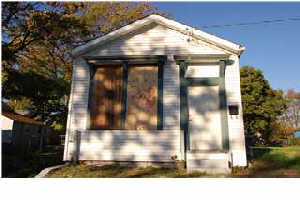
Cheap rental homes remind me of buying electronics off the street.
Street Urchin: “$50 Bucks! Flat screen television for $50! Why are you even thinking about it? This is a great deal- CHEEP!!”
My mind (definitely thinking about it): “Hmmm… I need a flat screen, but this thing is either stolen or a piece of garbage. But, if it’s not (and his uncle really died and bequeathed it to him), this is a great deal!”
My mouth: “OK, I’ll give you forty-five for it.”
This is the type of deal I see people making to buy homes for as little as $10K. It’s really a gamble, but can be a lucrative one if it works out. I mean, the ups can be great!
For example, a $20K house’s payments come to approximately $130/month (believe it or not, there are no HOA fees to worry about!). The home can rent for $400. That’s a positive cash flow of $270/month, which is not bad! With a $100K credit line, this could equal 5 homes. I like the math, $270 multiplied by five homes equals $1,350/month. That’s a monthly return of 13.5%. Oh yeah! So the flat screen works and works well! I’ve got a great television and an even better story of my tough negotiating tactics to match.
But then, there are the down times. The house is cheap and old, and things start breaking down. The tenants (savvy to the system) call the city’s code enforcement department, who find a lot more stuff that’s not at code. The landlord is required to fix them (or face fines) which eats into the return. Several of the tenants think that requests for rent are merely suggestions; they promise payment, but it never comes (even after thousands of dollars in repairs are done). Evicting them is a double-whammy as no rent is coming in and the attorney fees are going out. The house becomes vacant and vandals begin to smash windows; neighborhood kids start using the home as a party pad. After filing ineffective police report after police report, it’s clear that the police don’t want to be in the neighborhood unless absolutely necessary. Then again, neither does the landlord.
So now “you get what you pay for” begins to ring true. The flat screen has stopped working and has somehow completely shot the electric system of my condo. A detective from the police department has left a business card on my door. Unfortunately, I threw away my old television set (“Good riddance, 20th Century!” I said…) and am now forced to read a lot more.
So how do people make money off of cheap homes? Well, the margin is there so some savvy investors have figured it out. A guy I used to work with told me his system:
1. Thoroughly inspect to see what’s broken and on the verge of wearing out. Include this in the upfront cost of the home.
2. Leave the home broken up until someone moves in. Then repair it.
3. Never have carpet in the house; always use vinyl or a hard surface that cleans off well for flooring.
4. Get tenant referrals from good existing tenants
5. Find out when pay day is and show up in person on that day. Accept cash and carry a gun.
6. Find a handyman who lives in the community to take care of the needed maintenance/repairs.
7. Understand that evictions and losses are part of the game sometimes. There will rarely be months where something doesn’t happen. It’s not upsetting, it’s business.
8. The homes will probably never go up significantly in value and will be difficult to impossible to sell on the market. This is purely a cash flow play.
9. Buy these homes in bulk and spread the gains and losses across many homes.
10. Make enough cash flow to hire someone else to do the dangerous duties (aka visiting the properties).
Cheap homes are meant for the savvy investor with a system, not the guy looking for a deal on an inexpensive set on the street. A steel stomach doesn’t hurt either!
Brett Furniss is the President & Owner of BDF Realty (“Charlotte’s Most Innovative Property Management & Investment Company”), and Rent-To-Sell Realty (“When You Need a New Solution to Sell Your Home”) which specialize in rent-to-own (lease options) and rent-to-sell homes. His newest book, A Real Estate Agent’s Complete Guide to Representing Rent-To-Own (Lease Option) Tenants (Delight Clients, Fill Vacant Homes, and Earn $2,250* Upfront! (*Minimum!)
Learn MoreCharlotte Property Management Weekly: Is “Final Tenant Approval” Desirable For Landlords?

As I was thinking about this question the other day, I had a flashback to my high school history class. The first thing I learned from this trip down memory lane was that it is indeed possible to daydream about hours of daydreaming.
The second thing I learned was the strange applicability of our class’s discussion on democracy in regards to approving prospective tenant applications. The question was whether a true democracy (everyone makes the decisions) or a representative democracy (“experts” were voted in to make the decisions) was better.
The effectiveness of a true democracy was illustrated by a story that Aristotle told. It goes something like this:
You’re on a big cruise ship with 100 other passengers. Everything is going fine until it is clear a major storm is on the horizon. The ship is about to navigate a tight channel where it could easily be dashed upon the rocks if steered incorrectly. Any wrong move would spell imminent disaster for all the passengers. What to do?
A true democracy would offer a vote to everyone on the ship to determine which way to steer the rudder (“Raise your hand if you think we should steer right. Okay, after the final count of hands, the ‘Lefts’ have it.”). Aristotle said he’d prefer to rely on the captain and his crew to make that decision. This discourse lead to our founding fathers (many years later) settling on a representative democracy as America’s form of government; a true democracy sounds better, but wouldn’t work as well in practice. The captain, due to his experience and expertise, would know best.
Tenant selection is one of the most important duties a property manager performs for landlords. Tenants make or break (unfortunately, literally sometimes) a rental property. They will pay and treat the property well, or they won’t. Knowing who they are as people and their background greatly mitigates this risk. This is why the front end tenant screening by a property manager is so vital. And experience in tenant selection counts!
Some landlords want to be hands-on in this process. I don’t have an issue to this prior to going to market. But if the hands-on treatment is expected to go on for the duration of the tenant selection process, there is little need for a property manager. I would recommend posting a few rental ads and going the “do-it-yourself” route. This works for some people. It also (potentially) saves money, but greatly increases the risk.
It reminds me of my favorite all-time television show, 24. Kiefer Sutherland (Jack) would only try to bandage people with life-threatening injuries in the field if it was an absolute emergency. Most of the time he would just send them to CTU’s medical clinic for treatment. And, at no point did he ask Chloe (from CTU’s IT staff) to give him pointers on bandaging the wound. He trusted the professionals.
And so should landlords. “Final tenant approval” can be used as a cop-out by property managers. If things go south with a tenant, “final tenant approval” makes it very easy for the property manager to say, “Well, you gave final approval for the tenant we placed, so what happened isn’t really my fault.” I even sometimes see property management companies advertise this “feature”, making it appear to be desirable! All I can say is that if my sister died on the operating table and the doctor came to me and said, “You know, I asked you for “final removal approval” on which part of her organ to cut out… you said ‘OK’…” I would be incredulous! I mean, what do I know about medical procedures? Why would he ask me what to do? I’m paying for his expertise!
True democracy may sound good, but a representative democracy works much better in practice. Let the “final tenant approval” come from the expert you hired!
Brett Furniss is the President & Owner of BDF Realty (“Charlotte’s Most Innovative Property Management & Investment Company”), and Rent-To-Sell Realty (“When You Need a New Solution to Sell Your Home”) which specialize in rent-to-own (lease options) and rent-to-sell homes. His newest book, A Real Estate Agent’s Complete Guide to Representing Rent-To-Own (Lease Option) Tenants (Delight Clients, Fill Vacant Homes, and Earn $2,250* Upfront! (*Minimum!)
Learn MoreCharlotte Property Management Weekly: Too Many Repair Requests? 5 Methods To Stop The (Cash Flow) Bloodshed

As a property management company, we work to maximize the cash flow of our clients. Period. We don’t have a problem admitting that.
Sometimes things break in rental homes and that decreases the cash flow our clients receive. They don’t like it, and we don’t either. However, it is part of the game (pardon my street talk), so it is a necessary expense. Sometimes.
Normally if a repair policy is explained to tenants properly at the lease signing, there aren’t any problems. The landlord is responsible for operational issues; that is, if there isn’t any evidence of negligence by the tenant (if there is, the “Sorry if you smashed your toilet because your girlfriend dumped you for being volatile, but the bill goes to you…” message is sent). Then the easy stuff (changing light bulbs, air filters, etc.) is taken care of by the tenant. It’s simple stuff and everyone gets along grandly.
If the home is on the newer side and maintained, there just aren’t that many maintenance calls. Most people want their homes to operate properly (“hey, it’s nice to have the dryer dry clothes in less than 3 hours, so maybe I’ll clean the lint filter occasionally”), so they do the small things to keep it that way.
However, there are some tenants that seem to discover an awful lot of problems that they want the owner to fix. And when they are compared to other tenants, their identity becomes painfully obvious. The calls and the e-mails of their problems continue month-after-month. It gets to the point that everyone involved with managing the property has the tenant’s contact information memorized (“Oh, 704-xxx-xxxx? Mrs. X must be calling from work today.”) Sometimes, the repair requests are a string of bad luck and legitimate; often the tenant is trying to take advantage of the landlord’s altruism and is under the impression they don’t have to lift a finger because someone else will take care of them.
Repairs really hurt cash flow. But if the repairs aren’t done, unhappy tenants also hurt cash flow by trying to use their seemingly one point of leverage (holding back rent) to get what they want done. So what to do?
Before getting to some techniques to ward off unwarranted repair requests, I want to first iterate that almost all tenants (that I’ve worked with, at least) are reasonable with their repair requests. Most have busy lives and can’t be bothered will illegitimate claims. It’s not a huge problem on a whole. I find that doing the repairs that are requested builds trust and keeps everything running smoothly. So requested repairs should usually be done.
For the tenants that abuse the repair system, here are the top techniques to stop the illegitimate request flow:
1. Recalibrate expectations on repairs: Before the next repair is done, a meeting should be set with all principals on the lease. The purpose of the meeting (or call) is to reexamine the lease and go over exactly what is covered by the landlord and what is not. Also, it is probably time to schedule a walk-through of the house to make sure the maintenance agreement is being followed.
2. Alert the repair vendors that fraud is suspected: Vendors who visit the home should be put on alert. They can provide information about what claims are legitimate. If a claim is due to non-compliance with the maintenance agreement or rough play, the tenant needs to be billed for the issue, not the landlord!
3. Push back: If it was your house, what would you be calling a repairman fix, and what would you be doing yourself? That question is a good start to figuring out what repairs may be unnecessary for the landlord to cover.
4. Keep at code: The landlord is responsible, by law, to keep the rental home at building code. Nothing more. What is being requested beyond that?
5. Relocation: Maybe it’s worth asking the tenants if they would be more comfortable in someone else’s home?
Though this issue isn’t overly common, it can be uncommonly expensive and will continually siphon cash flow. If you find yourself signing over the monthly rent to the handyman month-after-month, it may be time to try something new!
Learn MoreCharlotte Property Management Weekly: “Free” Repair Quotes on Rental Homes Can Cost You Money

Everyone wants to save money! But to what lengths (and for what) does it make sense to find “deals”? It really depends on the urgency level of the need. Here are three scenarios of high, middle, and no urgency:
High urgency (nurse): “Your daughter needs the heart transplant now! Do we have your consent? …I don’t know how much it costs, sir… it will be itemized on your bill later, I suppose… No, there is no AAA discount on this procedure… I’ve never seen a coupon like that- it looks like you typed up ‘50% OFF’ and then wrote ‘Group-On’ on top of it… No, I suppose we don’t want to lose your business to a competitor… We’re losing her!! Yes, we do validate parking.”
Middle urgency (property manager): “The house needs one bedroom painted, the carpets cleaned, and the outside power washed before we can put it on the market… You said you want 3 quotes per repair?”
No urgency (sales clerk at Best Buy): “The new iphone detachable screen is really cool! You’re a loser if you don’t get one! We only have 10 million of these left, but when they’re gone, we’ll call our factory in China to make more… $199 for a screen to put on top of your screen (that already works) is a bargain. This is as cheap as it gets (until next week when ‘Detachable Screen Mini’ comes out). There is no discount; it’s under $200 bucks already, man! Go to another store then! …Fine, don’t call me crying when you are shunned socially and professionally for your weak iphone accessorizing…”
So the point of these scenarios is to illustrate that “high urgency” scenarios need to be acted on immediately, with no time to haggle. And “no urgency” scenarios allow time to shop vendors for price; time is on your side (yes, it is)!
But what about “middle urgency” scenarios? We run into these sometimes when tenants move out and the rental home needs to go back on the market. Houses need to be repaired, and some landlords want to quote out every repair multiple times to get the lowest price. This sounds reasonable, even prudent. The repairs do need to be made in a reasonable time, but not tomorrow or next week. Time is on their side (yes, it is?) to get repair quotes. Right?
Well, it’s a “middle urgency” scenario (not a “no urgency” scenario) because there are other factors in play. Every investment home has some combination of costs that accrue every day it’s vacant: mortgage payments, HOA fees, lawn care, utilities, property taxes, etc. For easy math, let’s say these come to $900/month. $900 split into a 30-day month is $30/day. This is a very real cost; the meter is running daily.
For this example, let’s say the initial repair quote comes in at $500. After getting 3 quotes per repair item, the repair quote is whittled down to $400. Congratulations- that’s a 20% savings of $100!
But, wait, is it really? Getting those additional quotes took 10 days. 10 days of vacancy multiplied by 30 days equals $300. So, to save $100, it cost $300. The net loss is $200, plus all the time and headaches it took to coordinate vendors and sort through repair quotes.
Unfortunately, this is not the totality of the loss sometimes. Empty homes are risky! Talk to any police officer and ask them whether they have any problems with vacant rental homes being broken into in this economy. If this happens, stolen appliances and break-in damages escalate the costs upward substantially. Remember: the longer the home is vacant, the higher the risk.
“Free” repair quotes can cost a lot! Don’t over-quote yourself into a financial loss!
Brett Furniss is the President & Owner of BDF Realty (“Charlotte’s Most Innovative Property Management & Investment Company”), and Rent-To-Sell Realty (“When You Need a New Solution to Sell Your Home”) which specialize in rent-to-own (lease options) and rent-to-sell homes. His newest book, A Real Estate Agent’s Complete Guide to Representing Rent-To-Own (Lease Option) Tenants (Delight Clients, Fill Vacant Homes, and Earn $2,250* Upfront! (*Minimum!)
Learn MoreCharlotte Property Management Weekly: Recruiting Great Tenants- Your Team Is Only As Good As Your Players

It’s been said the most important part of major college coaching is recruiting. A team’s ultimate potential is limited by their talent level. Sure, good coaching can make good players better, but great players are the reason teams win championships and are consistently good.
I started thinking about this the other day when a friend of mine called. He told me that a friend of his bought a property management company inCharlotteand it is proving to be a nightmare. The company he bought has sloppy books, awful employees, and a large cache of substandard properties that are in disrepair. But most importantly, they have a lot of tenants that have not been paying rent and have stayed in the houses rent-free for months. His friend is watching his investment go up in flames as he tries to salvage what’s left.
This made me think. What would be the characteristic that would be most important to measure the strength of a property management company? Is it good employees, growing cash flow, long-term contracts in place, sound business procedures, or something else? They are all obviously very important. But what’s the ultimate key to success?
As I thought more about it, my head began to hurt and my mind drifted to sports:
Why did Coach Nick Nolte agree to buy Ricky a new truck in the movie, Blue Chips? Why are there so many recruiting scandals in college athletics? Why do I read about “tampering” charges in the professional leagues when teams illegally contact players when they are not allowed? Why are college coaches only allowed to send potential recruits a limited number of text messages and are restricted on how often they can call them? Why do coaches work harder in the offseason traveling to visit recruits than they do during the season? Why do the Charlotte Bobcats think they can rebuild the team with late round draft picks?
Then the answer occurred to me. The players are the most important thing. They directly dictate the success of a coach. If a team has great players, they will be a good team (no matter the coaching quality). That is why recruiting is so important and organizations are willing to push the envelope on wooing potential stars.
As a rule, every top-tier athletic team puts a premium on signing great players. And this is the same mentality that top-tier landlords and property managers, like you, must have to build a strong property management company and investment portfolio. It’s about getting great tenants for your properties. They will directly dictate your success.
When a great tenant applies for a property, it is imperative to let them know that you want them. You need them. You will treat them like gold if they would just sign with you (on the lease). Text and call them every hour (there are no contact restrictions in business, only the weirdness factor of over-communication). Add incentives. Buy them the pony they always wanted, as long as it is munching the grass in your rental home’s yard! Let them know your love will never end if they can out down a deposit today.
Great tenants provide so many great benefits! They pay on-time and in full providing consistent cash flow. They take care of the properties so they don’t fall into neglect. They let you know if your employees are lacking or slacking. They even take care of minor repairs on their own!
Your team, investment, and/or company is only as strong as the players it has signed. Maniacally pursue the best, get them under contract, and rest will take care of itself!
Brett Furniss is the President & Owner of BDF Realty (“Charlotte’s Most Innovative Property Management & Investment Company”), and Rent-To-Sell Realty (“When You Need a New Solution to Sell Your Home”) which specialize in rent-to-own (lease options) and rent-to-sell homes. His newest book, A Real Estate Agent’s Complete Guide to Representing Rent-To-Own (Lease Option) Tenants (Delight Clients, Fill Vacant Homes, and Earn $2,250* Upfront! (*Minimum!)
Learn MoreCharlotte Property Management Weekly: With Obama & Landlords, You Can’t Legally Withhold Payment

Taxpayer: “This country is going down the drain quickly with no end in sight! Obama is proving himself to be a bum like the rest of them. “Change to believe in”? I’m laughing too hard to retort. You wanna know what? I’m not funding this incompetent government anymore and will not be a party to it. I’m not paying taxes until this country is fixed!”
Tenant: “This house is killing me! This week the faucet broke. A month before it was the air conditioner. It took 48 hours for the landlord to get the maintenance guy to fix it in 98 degree heat! 98 degrees my family put up with! My sweet daughter, Abby, must have gone through at least 20 popsicles. “Daddy, why is it so hot?” she quietly bleated as she read “Seventeen” Magazine with a cold washcloth lain across her forehead (with the few remaining ice cubes that our (too small) freezer could muster). The landlord should be paying us to live in this house! I’m certainly not paying him this month! Next month’s payment is “under review” too; we’ll see how the faucet repair goes.”
Obama and (diplomatic and highly educated) landlords: “I feel your pain! Once, my radiator broke in my dorm room at Harvard and it just wasn’t fair that it took over 72 hours to repair! The economy is weak and jobs are scarce. Injustices like this need to be made right! But… like with all things that are dearest to us, these things sometimes take time. In the meantime, if you don’t pay me, your house will be taken away.”
The point of these fictitious quotes is that tenants and American citizens do not have to like what is going on with their house or country, respectively. But they still have to pay.
There seems to be a common misconception that home repairs and rental payments are linked. Legally, they are not. If the house is falling apart, the lease still stands. If the country is (hypothetically) suffering high unemployment and being financially run into bankruptcy, citizens still have to pay their taxes. It’s the law.
However, this is not an open invitation for landlords to not complete necessary repairs in a timely fashion. Slow and incomplete repair work makes tenants very unhappy; keeping tenants as happy as possible is paramount to having them stick around! Plus, there are other painful avenues unhappy tenants can take to legally have a home that is functioning to building code. It just can’t happen through rent abatement.
But I’ve seen this played out. Tenants go to court thinking that repairs not being done to their satisfaction will get them a free pass from eviction from a judge. This is just not the case. They find out quickly that their repair issues (even if extremely legitimate) are a moot point in an eviction hearing; these arguments are not heard because it’s not the place for them to be arbitrated. In an eviction hearing, it comes down to one question, “Do you have payment or proof of payment?” If the answer is “yes”, the tenant wins. If the answer is “no, but”, they don’t.
Rental payments and repair work are two separate issues. Tenants are obligated to pay by contract. That’s it.
You don’t have to like Obama, but you don’t want to try not paying him!
Brett Furniss is the President & Owner of BDF Realty (“Charlotte’s Most Innovative Property Management & Investment Company”), and Rent-To-Sell Realty (“When You Need a New Solution to Sell Your Home”) which specialize in rent-to-own (lease options) and rent-to-sell homes. His newest book, A Real Estate Agent’s Complete Guide to Representing Rent-To-Own (Lease Option) Tenants (Delight Clients, Fill Vacant Homes, and Earn $2,250* Upfront! (*Minimum!)
Learn MoreCharlotte Property Management Weekly: How To Handle Evictions And The Reasons To Avoid Them

Handyman: I was over working on your property and your tenant seemed to be really happy.
Owner: You would be too if you were living rent-free.
When tenants don’t pay, it is not good for anyone. Inevitably, things get put in motion. The owner gets upset and wants to know why they haven’t gotten their money. The property manager is spurred to issue threats to lower the hammer on non-payers. The tenants typically try to go “dark” (incommunicado), as Jack Bauer (and those in the spy game) would say.
I think of the Tupac song that I was mistakenly listening to a few years back. It talked about the deep pride he felt about having the ability to pay the rent. I believe that people do want to pay, but they can’t give what they don’t have. Life happens and things cost money. If the rent is not getting paid, it is never the only expense that is being neglected.
Unfortunately, there really isn’t much to do as a landlord but file for eviction if the rent money doesn’t come in. However, due to the costs, stress, and actual time, it is something o be avoided if at all possible! There are two common avoidance techniques that have minimal success:
1. Payment plans to catch up on rent: I’ve been burned on these! If the tenant is on a fixed income and is living paycheck-to-paycheck, there is really no way for them to get out of the hole. The plans seldom work. I really have to have history with the tenant and think highly of their character to entertain these.
2. Negotiated exits: this allows the tenant to leave without an eviction and saves the owner money for the court stuff. The only problem with this is, “How does the tenant have money to pay another landlord when he’s not paying you?”
So, how does one file for eviction as a private landlord? Well, in NC, this is how a normal eviction goes:
1. Make sure the tenant always receives a rental statement with what’s owed on the first of the month (this is your “demand for rent” letter). We e-mail them.
2. The first day evictions can be filed is the 11th of the month. You’ll need to go down to the courthouse with a copy of the lease, a few stamped envelopes, and cash. Ask someone where evictions are filed, go there, wait in line, fill out the paperwork and envelopes, and give these items to the clerk.
3. Once you receive the nod from the clerk, exit stage right (or left); just get out of there. Hanging out at the courthouse isn’t that fun. Or cool (unless you’re a high-priced lawyer working for Lockhart-Gardner).
4. Wait for the eviction court date to arrive in the mail in one of the envelopes you provided. The show up to court on that day 20 minutes early to fill out the paperwork that you’ll need for the trial. Do what the judge says. You should “win”.
You are now thinking, “Yeah! It’s over! I won! I knew I should have forgone mortuary school (stupid “Six Feet Under”!) and been a lawyer instead!” Uh, no. Not quite. The next steps which cost more money and take a month to complete are as follows:
1. Wait 10 days to file a “Writ of Possession”. This can be accomplished at the same desk at the courthouse. Please bring a new stash of stamped envelopes, cash, and the eviction notice you received in the mail from the court. You’ll repeat basically the same process for the eviction in step #2 with the new “Writ of Possession” paperwork.
2. Get out of there. Don’t mingle. Your head needs to be down and a beeline made for your escape vehicle. Pretend to be talking on your cell phone while speed walking. Wipe profusive sweat off of your brow. Wear a hood to cover your head, if weather appropriate.
3. Wait for the sheriff to call you to let you know when they will be at the house to change the locks. This takes a week or two. After they call, you’ll need to call a locksmith and schedule them to meet you at the house when you meet the sheriff.
4. Show up and be really uncomfortable. Watch the sheriff remove tenants from the home and the locksmith change the locks. Give the locksmith cash after he hands you the new keys.
5. The tenant now has 10 days to remove their things. They will call you to schedule a time for you to let them in the house. If their things are not removed within 10 days, you are required to store anything of value at your expense if they want it later (because you’re so nice (!) and it’s the law).
6. Begin the process of fixing up the house to get it in market shape.
I hope this is enough evidence showing that evictions are not desirable! To avoid these costly evictions, utilize thorough tenant screening procedures upfront!
Brett Furniss is the President & Owner of BDF Realty (“Charlotte’s Most Innovative Property Management & Investment Company”), and Rent-To-Sell Realty (“When You Need a New Solution to Sell Your Home”) which specialize in rent-to-own (lease options) and rent-to-sell homes. His newest book, A Real Estate Agent’s Complete Guide to Representing Rent-To-Own (Lease Option) Tenants (Delight Clients, Fill Vacant Homes, and Earn $2,250* Upfront! (*Minimum!)
Learn MoreCharlotte Property Management Weekly: Talking To Your Tenant Will Cost You Money

“Talk is Cheap.” (Keith Richards)
“Talk can be expensive!” (Property Manager)
There are “hands-off” owner clients. And then there are the “hands-on” varieties.
The “hands off” clients just want to know the rent money is in their account on the day they expect. If there are repairs that are going to cost them money, they want to know that too. They just want the bare bone facts with no fluff. That’s fine.
Then there are the “hands-on” owners. They want to be continually updated if there is any news at all about their properties. “What repairs are needed now?” “Is the tenant caring for the lawn?” That’s fine. “How did Felicia do on her math test last Friday?”
What??? Who’s Felicia?
As I pull the property folder and scan through the lease, “Felicia” is listed as an 8-year old occupant. Unfortunately, no math test scores were listed. Darn!
As a property manager, we work for the owners. However, we want to have good relationships with our tenants as well. When executed properly, we serve as a cordial buffer between them. That is a valuable service!
However, we can’t get too friendly with tenants, as much as we’d like to with many of them. We don’t work for them. If we get involved talking about their families and what’s going on with Felicia, we can’t do our jobs effectively. For example, what happens when they don’t pay rent and we need to evict them? The relationship gets really personal; personal to the effect of your “friend” calling you screaming that you’re heartless, they can’t understand why you would evict them when you know she lost her job, and how we felt about Felicia being homeless? Yeah, that’s not a good conversation.
Any decent property manager (with any length of experience) quickly learns to keep a professional distance so this type of scenario doesn’t happen. Dealing with these types of situations where bad things happen in our residents’ lives is part of the job (not a good part!). But we know how to deal with them.
This is where the “hands-on” owner sometimes gets in trouble. They decide to contact the tenant in their home and forge a bond. Instead of relying on the property manager for home updates, they go straight to the source. And this is where talk leaves the “free zone” and becomes expensive. Here are a few examples:
1. The owner calls the tenant regularly and asks how things are going. The tenant brings up any minor issue with the home. The owner feels compelled to ask us to send a repairman there.
2. The property manager asks for a rental price increase. The tenant calls the owner directly and makes their case on why they can’t afford it. The rent stays the same.
3. The tenant is late paying rent and the eviction is scheduled to begin. The tenant calls the owner and swears to pay soon. The owner asks us to call of the eviction. This usually doesn’t work out and the owner loses more money.
My favorite all-time story on this topic is the owner who called us about rescinding a rental increase planned for his tenant. When we asked why he didn’t want the extra money, he said:
“It’s not worth it to me to hear him griping night-after-night about it. To even it up, he’d just make me pick up more rounds at the bar anyway.”
When owners talk to tenants, it takes their relationship from a business to a personal one. And it’s tough for most to say “no” to a friend, even when it means taking a financial loss.
So save some money and resist the urge to talk to your tenant. Rest assured, Felicia’s very capable math teacher is doing her job!
Brett Furniss is the President & Owner of BDF Realty (“Charlotte’s Most Innovative Property Management & Investment Company”), and Rent-To-Sell Realty (“When You Need a New Solution to Sell Your Home”) which specialize in rent-to-own (lease options) and rent-to-sell homes. His newest book, A Real Estate Agent’s Complete Guide to Representing Rent-To-Own (Lease Option) Tenants (Delight Clients, Fill Vacant Homes, and Earn $2,250* Upfront! (*Minimum!)
Learn MoreCharlotte Property Management Weekly: When Tenants Want Out, Let Them Go: 3 Tips to Negotiating Early Lease Terminations

“Let my people go.” (Moses to Pharaoh)
Happiness. Everybody wants it. That goes for tenants, property managers, puppies, you name it. To accomplish it, sometimes a change of scenery is necessary. I mean, you want to go where everybody knows your name. And they’re always glad you came. Right?
Occasionally, we have tenants who are not happy with their home. They want to break their lease and move out immediately! Things are not fixed up the way they want, the neighbors are unpleasant, and work is too far away. Utility bills are too high, the building complex is too noisy, and their “party friends” found out where they were living.
Some tenants want to take this frustration out on their property managers (I’ll pause briefly for your feelings of sympathy/empathy). Unhappiness can be like gangrene, infecting everyone in its path. It’s not desirable, or necessary! I just want to write them a letter:
Dear Beloved Tenant,
Why so glum, friend? It seems like we’ve had a tough time connecting recently. All relationships have rough patches. We can get through this!
I’m sorry you are unhappy with the house. This happens! It’s tough to know exactly what is best when looking at a house for only a short time. I mean, over 50% of couples who are around each other everyday for years wind up unhappy and divorcing (remember the story you told me about that with your Aunt Cathy and the one-armed sailor?); sometimes our judgment when making long-term commitments isn’t what it should be! But take heart! I understand. We can talk through this!
I know threatening to not pay rent may seem like a good idea now, but it’s not a path that is good for anyone. If you really want to leave, we can work something out. Life is too short and you seemed like such a happy person when we first met (with your rhinestone-collared Shitzu in tow)! Oh, how we laughed as she frolicked! Let’s get you back to that place!
Sincerely,
Your PM
P.S. We need to hug soon. Please pet Mitsy for me.
Keeping unhappy tenants locked into their leases isn’t a “best practice”. It can actually be counterproductive and less profitable than letting them go!
It’s all about how the negotiation is handled. First, let’s establish the needs and concerns of each party:
1. The tenants want to move out. They’re concerned about facing legal and credit score consequences for breaking their lease.
2. The owner wants someone sending them money every month to pay for their home investment. They are concerned about vacancy, costs to get their property into market condition, and marketing costs for a new tenant.
So where is the win-win? Here are three tips in getting there:
1. The rental home goes on the market immediately. The tenant agrees to keep the home in immaculate showing shape and be extremely accommodating for prospective renters wanting to view it.
2. The tenant gives a 30-day notice to vacate and pays a 2-month lease termination fee. If the house is filled prior to 60 days, this falls to a 1-month lease termination fee that will be refunded to the tenant (incentives are important!).
3. The tenant is required to leave the home in move-in condition (including steam cleaning the carpets and a thorough cleaning). The security deposit is insurance of this. (Note: make sure this side agreement for early termination is in writing)
The owner should be kept whole financially with a new paying renter, and the tenant gets their freedom in 30 days with no consequences. A win-win situation is achieved.
Then we can all go back to being happy again. Cheers!
Brett Furniss is the President & Owner of BDF Realty (“Charlotte’s Most Innovative Property Management & Investment Company”), and Rent-To-Sell Realty (“When You Need a New Solution to Sell Your Home”) which specialize in rent-to-own (lease options) and rent-to-sell homes. His newest book, A Real Estate Agent’s Complete Guide to Representing Rent-To-Own (Lease Option) Tenants (Delight Clients, Fill Vacant Homes, and Earn $2,250* Upfront! (*Minimum!)
Learn More