


Purpose of Upside-Down Nametags and Fewer Rental Home Photos
Early in my business career, I attended a networking event at a local restaurant. I went to the sign-in table and was enthusiastically greeted by Susie. “Welcome! What’s your name?”
As Susie found my name on the sign-in sheet, she dutifully checked a box and pointed me to a nearby table with white sticker nametags and black Sharpie markers on top. “Write your name, your business name, and go meet some great people!” Then she quickly repeated the same spiel to the fellow behind me.
I did what I was told and uncomfortably started to mill around the room while simultaneously straining to read the other attendees’ nametags around me.
Me: “Hi, Jim. I’m Brett. What do you do for Hillman’s Autobody?”
Jim: “I fix cars. What does ‘BDF’ stand for? Oh, that’s really interesting…”
It was painful for me, as it was for Jim. As I moved on in the room, I saw a slightly overweight, middle-aged man standing by himself against a far wall with his nametag on upside-down. I went over to him and then unwittingly stepped into his trap.
“Excuse me… Joel?” I tried to awkwardly read his name by crooking my neck. “Your nametag is on upside-down. I just wanted you to know.”
“Oh, thanks! What a klutz I am, Brett!”, he appreciatingly said while reading my nametag. He then unstuck his nametag and put it on correctly.
“But do you know what else is klutzy? Not having life insurance, Brett! Let me tell you about it.”
And that was the opening that of his 10-minute monologue. He was very concerned that my grief-stricken family members would potentially being stuck paying for my funeral costs (thousands of dollars!) and what a stain that would be for my deceased self’s legacy.
When the conversation came to its merciful conclusion, I politely excused myself and headed to the exit. When I got to my car, I realized I had forgotten my coat and backtracked back to the restaurant. I retrieved my coat from its hook and was on my way out when I saw Joel standing by himself again… with his nametag on upside-down.
Wait a minute…
So I fell for Joel’s little ruse. I definitely felt duped. But, to Joel’s credit, he knew why he was there and what he was trying to do. Sales is a numbers game. His purpose was to talk to enough people and expect that one would be in the market for life insurance. The right conversation with the right person would lead to a sale.
In the rental home game, landlords are trying to find qualified tenants to apply for and rent their homes as quickly as possible. So, they set the bait in the form of on-line rental ads.
Prospective renters visit these on-line rental home websites with the purpose of finding the best home for their needs. To do so, they add some filters to the search criteria (cost, # of bedrooms, size, area, etc.), look through these narrowed down rental home listings, and then click through the details of specific homes to find a few finalists. Then they schedule times to see these top choices in person before applying for them.
In my mind, the purpose of rental ads is to be one of the homes that is visited in person, not just a home clicked on thousands of times. The more in person visits, the more chance that a home will be applied for and rented. Most people do not want to keep visiting rental homes without picking one. If a landlord can create intrigue with the promise of a renter finding their “diamond-in-the-rough” property, this intrigue can generate more visits.
So how does a landlord create intrigue? One way is to use fewer photos. As the saying goes, “you don’t know what you don’t know”. It may seem helpful to prospective renters to be able to narrow down properties by seeing 50 photos and a virtual tour, but landlords shouldn’t want their properties to be narrowed down and eliminated from consideration. If only 8-10 great photos are posted, it can create a taste of a property that can only be sated by a home visit. More photos can actually bring up more reasons to cross a rental home off a list, especially in light of hundreds of available homes to choose from.
The purpose of Joel’s upside-down nametag was to start conversations to ultimately generate life insurance sales. Smart landlords remember that the purpose of landlord rental ads is to generate home visits to induce rental applications.
Happy Landlording!
Learn More
Trump Versus Institutional Homebuyers: Opportunity for “Landlords on Purpose”?
“Every adversity, every failure, every heartbreak, carries with it the seed of an equal or greater benefit.”
(Napolean Hill)
In recent news, President Trump is working on banning institutional homebuyers (firms owning 1,000 or more residential homes) from buying more homes. These institutional buyers (IB’s), like Progress Residential, Invitation Homes, American Homes 4 Rent, and others, own about 3% of the homes in America.
The Trump administration rationale is that IB’s with unlimited checkbooks are outbidding families for the same homes which makes achieving the American dream of homeownership harder for regular citizens. IB’s are typically vultures in the market eagerly trying to buy affordable homes (around $200-400K in Charlotte), so there is truth in that. After they buy them, they usually fix them up (laminate wood flooring, new paint, new stainless-steel appliances, etc.) and make them higher-priced rental homes. Then instead of a family owning a home, the family is paying high rent to an IB.
The picture painted above of an IB is not a glamorous one! IB’s would tell the story a little differently than the Trump administration. They would say that they provide liquidity for the home sales market as a motivated buyer; this helps American families move on to buy other houses or cash out on their real estate investments. They would say they fix up houses that are in disrepair and introduce new, needed rental homes to the market for American families to live in. They are an instrumental partner in keeping American housing stock current and from neighborhoods incurring decay from dilapidated and abandoned homes.
As someone who regularly sells homes in this price range, I like dealing with the IB’s. They always pay cash, don’t quibble with repairs, and close on time. They are in the business of accumulating homes that fit their investment profile and they are good at it. The agents who work for them are cordial and non-emotional; they don’t hold a grudge when we reject their offer initially and they are still willing to make a deal months later if we call them out of the blue. Their offers are not usually outlandishly low; some are actually above what we expected to get from a non-IB buyer. They are a nice option for sellers to have!
In short, I think IB’s are both bad and good. But I don’t make the rules! I just try to work my best within them for our landlords, their rental homes, and the tenants.
If IB’s are banned, there will be fewer rental homes available. And in Charlotte at least, we need more rental homes for the influx of 157 people a day that are moving into our metro-area. Where will they come from? The Trump administration says they expect the void to be filled by Mom & Pop investors (aka you and me).
So here is the opportunity. I saw a statistic the other day that said that 51.5% of all US mortgages are below 4%. I also saw (and have experienced) that the home sales market has been relatively stagnant for the past 3 years. Many people believe the past low mortgage rates are causing the slow market. This has been labeled as the “lock-in effect” where sellers don’t want to lose their low interest rate to buy a house with a much higher interest rate. Their great past interest rate is “locking” them into their existing house. That makes sense to me.
Reviewing the information below:
IB’s being banned or curtailed would create fewer rental homes (less supply)
Strong rental home demand continues as experts say that not enough homes have been built and there is undersupply (strong demand)
Previously bought homes with sub-4% mortgages can cashflow better than buying investment homes now at higher interest rates (lower monthly cost)
Buying a new home in a buyer’s market is favorable (lower prices, more negotiation room, & less competition)
Real estate is considered a great investment that adds portfolio diversity while hedging against inflation
I would conclude (drumroll please), it might be a great time for smart investors to rent out their “locked-in” rate house and buy a new one to live in! There are families ready to rent them.
As opposed to an “Accidental Landlord” who is forced to turn a non-selling home into a rental, a “Landlord on Purpose” could be a profitable way to ride today’s market trends.
Happy Landlording!
Learn More
A Pair Should Beat a Full House? Reassessing Security Deposit Wear Guidelines
“Where there are no oxen, the manger is clean…”
(Proverbs 14:4)
I remember several years back we had a couple come in and apply to rent a home from us. They had eight children and seemed abnormally well-rested and together. I was an admirer of these parents who were gracefully taking care of business with almost three times the youth constituency I’m currently trying to navigate. Warriors!
This was going to be a full house! Fair housing laws prohibit any type of discrimination based on family size, so the sheer number of inhabitants wasn’t a factor on their application decision. But common sense dictated that a house with ten people was going to have more wear than a house with two. And wear on a house costs landlords money.
In rental home poker math, a pair should beat a full house. Less occupants means there is less potential for things to break and be worn down. Avoiding and accounting for wear has come more to the forefront as repair and renovation costs have skyrocketed post-COVID.
I started to think about the wear assumption while I was out in the field doing interior home inspections earlier this month. I hadn’t done this many personally since pre-COVID and things were different this time around! I visited around 25 rental homes during business hours and was shocked that 85% of the homes had people present. Schools were in session and it was not a holiday of any sort. I thought most people would be working outside of the home. This was not the case.
The last time I was out doing inspections, almost all of the homes were vacant when I stopped in; the process was sort of robotic and boring. This time it was nice to be able to see some of our tenants and talk. But it was unexpected. And it made me think of how much more foot traffic these houses take now than then.
Wear is probably less of a function of how many people are in a house, but how many hours people are in a house actively using it. So if ten people are living in a house but travel for work and school most of the week, there is not going to be much wear. But if these ten people never leave the house, the wear rate would be very high.
When calculating wear expenses for deduction from a tenant security deposit, property managers will use general guidelines for the life of new carpet or paint (typically 7-10 years); these guidelines have been around for a long time. But if adult tenants are not leaving their homes during work hours, should these numbers be adjusted downward (6-9 years)? Rental homes are incurring a higher rate of wear after COVID jolted the work system and it’s not cheap to renovate.
Wear rate will never be an exact science! I remember doing the walk-through after the aforementioned ten-person family vacated after several years of occupancy. The home looked better than it did when they moved in. Go figure.
But, generally-speaking, wear has increased in rental houses post-COVID. Smart landlords will reassess their security deposit deduction guidelines periodically as wear has become an even larger expense driver.
Happy Landlording!
Learn More

A Thanksgiving Rental Home Vendor Question: “What Do You Even Do???”
Property managers have a lot of things under their purview. Different types of things break or need to be serviced on a rental home. Most are handled by specialists in some regard who know how to work within the confines of what landlords require (no gold-plated toilets, please). And sometimes it can be tough to find specialists who are a good fit.
One of the vendors that has historically been a difficult find for BDF Realty is a good, reliable lawn company. When the service area is as large as the Charlotte-Metro area, it’s understandable that not every company works everywhere we have rental homes; it’s tough to justify driving 20 minutes to mow one stray lawn! Then properties are constantly in flux (vacant ones need to be mowed and rented ones don’t, and this changes constantly); this can be administratively difficult to keep straight as their weekly routes need to be constantly updated due to our needs. Not being able to work due to rainy days adds another wrinkle of difficulty to keeping yards look consistently good. Finding one, let alone several, companies that can accommodate us has been challenging. Then they need to be reasonably priced, reliable, friendly, have sound accounting to boot!
In my quest I stumbled on to a lawn company and met with the owner. He was a nice guy, easy to talk to. He ran a smaller shop and thought he could help us out. We started to send him our properties.
Shortly after, I noticed that I stopped hearing from him except when he acknowledged he received our house changes and sent us invoices. Occasionally, he would let me know he saw something askew at a house that we might want to check out. But for the most part, he went dark on BDF Realty.
But the yards were always mowed! We stopped getting calls from tenants and agents complaining about overgrown lawns that hadn’t been cut for weeks. The bills showed up on time and accurately. We weren’t paying for lawns that were still on the schedule when they had previously been taken off the master list. The landscaping part of the business seemed to be quietly humming along.
If I hadn’t been in the business of trying to find good lawn companies for so long, I might have thought something was wrong. “Why don’t I hear from this guy? Why do we pay him so much money? Should I be pitting another lawn company against him? What does he even do that’s so special?” But experience and age gave me appreciation on what a gift this peace of mind was. He really kept us clean from a lawn service perspective. I appreciated it!
From a Charlotte property management perspective, this is what we aim for. We want to be like our lawn service provider, keeping all of our clients clean. The question of “What do you even do?” is one I hope every client has. That usually means that the rent comes in every month, tenant leases are regularly extended, house turns are smooth, tenants are calm and satisfied, and the property management side of the business is quietly humming along. When it looks easy from the outside, it’s running as designed.
Speaking of… A special “Thanksgiving” shoutout to our vendors who do such tireless, great work every day for our tenants, clients, and us. I could ask the question, but I know what you do!
And a thank you, as always, to our clients- if it weren’t for you, there would be no BDF Realty.
Happy Thanksgiving & Happy Landlording!
Learn More
Carolina Panthers Quarterbacks & Landlords: Can You Make Good Decisions Under Pressure?
“Wisdom gives a man patience…”
Proverbs 19:11
I was watching the Carolina Panthers play the Buffalo Bills yesterday and it was not pretty for us Charlotte folk. The football game turned into an old-fashioned whooping, 40-9.
The Carolina Panthers quarterback, Andy Dalton, had a bad game. He was intercepted once, fumbled twice, and took seven sacks. One of the reasons for his poor play was that he held on to the ball for too long. The Buffalo’s pass rush was coming furiously each down and he needed to make a quick decision on where he was going to pass the ball. Instead, he was indecisive; he held on to it and his team suffered the consequences of all the lost yardage from the sacks he took.
However, the biggest detriment to the team were the turnovers he created. When Dalton tried to be decisive and go for the big play, he had an interception and two fumbles. Lost yardage from sacks is certainly bad, but turning the ball over to the other team is much more of a killer. A general truth in football is that the team that turns the ball over more usually loses. In fact, statistically, if a team turns it over 3 or more times, they win less than 10% of the time.
This reminded me of general truths that I’ve learned as a Charlotte property manager. They are “general truths” (and not “truths”) because they do not happen 100% of the time, but they definitely get my attention when I see them. For example, in my experience, it is common to receive below-average rental applications from prospective tenants who are:
- Overly-complimentary of a rental house
- Really nicely dressed and/or wearing a suit when we meet
- In a big rush to get approved and move-in
The focus of this blog is on #3.
After BDF Realty gets a rental application, we communicate to the prospective tenants that we’ll try to have an answer on their approval in 2-3 business days. The actual length of time usually depends on things outside our control like when past landlords return our calls, how well the rental application is filled out, when we receive proof of income, and how busy we are. Most tenants understand that running rental applications takes a certain amount of time.
However, sometimes certain tenants begin a drip campaign of pressuring us for an early decision on Day 1. We’ll get e-mails about how they need an answer right away in order to give proper notice to their current landlord, how their last (approved) rental house had fallen through which put them in a bind, they’re approved for another house and are going to go with that one if we can’t give an answer soon, and they need a signed lease to immediately submit to school/aid/jobs/etc.. These jabs begin on Day 1 of submitting the application and start to crescendo on Day 2. Now we’re receiving phone calls and e-mails every hour or two wondering what the hold up is and when we can give them an answer.
At this point, we’re feeling like Andy Dalton. The prospective tenant pass rush is mounting and we are feeling the heat. The tenant is pushing us for a decision and our owner clients sure would like to have an approved tenant for their empty rental home. The only party that is holding things up is the property manager, us. Why are we taking so long?
Dalton drops back to pass and doesn’t see anyone open. Does he force it to a covered receiver and hope he can come up with the contested ball? Or wait a little longer to see if another receiver is able to run himself into enough open space so he can fire in a pass but risk taking the sack? Or does he throw the ball away to avoid a sack, interception, or fumble?
It can be a tough call. We all want to be the hero and make the big play!
I believe smart landlords need to hang tough. To extend the analogy, sacks (losing tenants who demand a quick answer before getting all the data back) and throwing the ball away (losing tenants who do not provide all the required applicant information) can be good plays to avoid turnovers (bad tenants). Turnovers lose games. Bad tenants are really costly: missed rents, home damages, attorney fees, sleepless nights, stress, and wasted energy. The cost of missing on a risky tenant in exchange for extra vacant days on the market pales in comparison.
Andy Dalton is successful if he can make quick decisions and avoid turnovers. Smart landlords want to avoid turnovers (bad tenants) as well, but can afford to be less quick to come to a decision. However, both need to make good decisions under pressure regardless!
Happy Landlording!
Learn More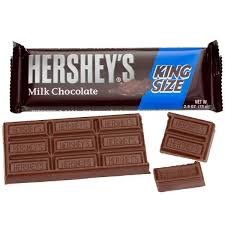
Rising Costs of Hershey Bars & Rental Homes: Is Your Lease Keeping Up?
I was in the Harris Teeter grocery store the other day and was waiting in line at the register. As I perused some magazine covers (Prince Henry is doing what??), my eyes wandered over to the candy bars ($3.99 for a king-size Hershey bar??). That price point stuck in my mind. Weren’t these things $1.50 – $2.00 a few years ago??
The first inclination I typically have when I’m personally shocked at the expense of something for sale is to point the finger at myself. “You’re getting old, my old boy. Hard candy doesn’t cost a nickel anymore and the days of .99 gas (while getting it pumped by someone else in NJ!) are long gone. Calm down, son… In the modern world, things just cost more. Relax.”
Once I was able to get my emotions in check, I Googled the question and was met with an AI response: “Candy bars are more expensive due to a surge in cocoa prices, driven by supply shortages from poor harvests and diseases in West Africa. This has led major manufacturers like Hershey to raise prices or reduce package sizes to reflect the high cost of the primary ingredient.”
Hmmm… Makes logical sense. Recent cocoa price surges due to issues in West Africa is the answer to my candy bar conundrum. This is why the Hershey king-size candy bars cost 50-75% more in Charlotte now than five years ago! Maybe… So if that logic holds, then things calming down in West Africa will make my Hershey’s bar go back to costing 2 bucks at some point?
I think the answers provided for some price increases are tough to comprehend or believe. Whether we buy the reasons or not, the price increases themselves are very real nonetheless. And experience shows that the prices rarely come down after the crises pass. Businesses and consumers typically just need to adjust to paying more.
This factors into rental homes.
As a Charlotte property manager, I remember meeting with a new owner client a decade or so ago and the topic of what to charge for rent came up:
Me: It’s a nice- looking home! I think we could get the top of the market price for it- probably around $1,350.00/month. Would that work?
Client: Well, I’d prefer not to charge that much. I own the house and my costs are relatively low. I think with taxes, insurance, and the HOA fee my all-in costs are $500.00/month (oh, the good old days of low costs…). And when repairs come up, I’d like to have some extra rent to cover them. I’d prefer to keep the monthly rent under $1K to keep it affordable for the tenant.
Me: Wow- sure!
I don’t hear anything like that much anymore. It’s tougher to find margin between the actual costs of owning a rental home and the rent. All the cost components of rental home ownership have shot up: mortgage (home values & interest rates), taxes, home insurance, HOA fees, & repairs. “Things just cost more” is the simple real estate explanation for Hershey’s “runaway cocoa prices”.
With higher monthly costs, leases need to keep up with market-rate rent increases to avoid consistent losses. This doesn’t even factor in inevitable, higher costs for a new HVAC or roof which (since COVID) usually cost upward of $8K for smaller homes. Unfortunately, these cost increases are probably not going away. This means that even leases with great, long-term tenants need to be scrutinized if they are kept at an artificially low rate.
Much like Hershey passing on their cost increases to consumers (to my chagrin!), landlords need to factor in their increased costs when setting their rental pricing. Smart landlords will keep close tabs on market rental rates and make adjustments at periods of vacancy or lease renewal.
Happy Landlording!
Learn More
The Bachelor & Long-Term First Leases: Too Much Too Fast?
Those who are serious in ridiculous matters will be ridiculous in serious matters.”
(Cato the Elder (Roman statesman))
“Wisdom gives a man patience…”
(Proverbs 19:11)
The Bachelor became an instant TV hit in 2002 when it first came on the air. What an interesting premise: a single man searching for the woman of his dreams to spend the rest of his life with- and having 25 attractive females to choose from in a captive audience! He gets to essentially speed date all of these women who are all in pursuit of him. And from these brief encounters, he is expected to make the decision to marry one of them.
This lifelong commitment is born out of 6 weeks of dating the supposed “Mrs. Right” while being filmed AND splitting time seeing 24 other women concurrently. It starts on a level playing field; everyone is complete strangers at the beginning of the show and are having their first conversations there. Common sense would dictate that it would be difficult for anyone to know anyone particularly well, let alone have enough to base a serious marriage proposal off of. It’s completely ridiculous, but an engagement is the goal of each season.
So how would it ever work? The Bachelor seems to be big on participants finding their long lost “soulmate”; if they found the right person, they would know they were meant for each other. The rest would fall into place.
But if that “soulmate” even exists, is she even there? And can you have two “soulmates” who are both there? The reality is that this arrangement of strangers trying to make this dating scenario a serious, constructive process leads to plenty of awkwardness. Below are some of the common, absurd conversation snippets heard in most seasons of The Bachelor, courtesy of AI:
[THE BACHELOR] (Eyes glistening)
This has been such an amazing journey. I’m just feeling so many different emotions right now.
[CONTESTANT #1] (Sobbing in confessional)
I just don’t know if he’s here for the right reasons. Like, I’m literally opening up my heart and he’s so connected to the other girls. It’s hard to watch.
[CONTESTANT #2] (Approaching the Bachelor)
Can I steal you for a second? I just… I need some clarity on our connection.
[THE BACHELOR] (Sighs dramatically)
Sure. I feel like we have such a strong foundation. But I also feel like I’m in a really tough spot.
[CONTESTANT #2] I just feel like you don’t see how much I’m falling for you.
[THE BACHELOR] I just need to know that you are fully in this. I’ve never felt like this before in my life.
[CONTESTANT #1] (Steals the Bachelor back)
I’m just so crazy about you.
[THE BACHELOR] Thank you for sharing that with me. That means so much.
In a way, it reminds me of long-term lease requests. As a Charlotte property manager, we are sometimes approached by new rental tenants who want to sign 5+ year leases or longer upon rental application approval.
At first glance, this looks like a great thing! The owner gets a long-term tenant. The tenant gets housing stability. A match made in Heaven!
But what if the tenant signs on and winds up hating the house? Or the tenant loves it, but winds up being a neighborhood nuisance and doesn’t maintain the property? That would be a problem for the owner.
Sometimes starting a long-term leasing relationship right away is too much, too fast. Neither party knows what to expect from each other. Both sides have not had time to assess the situation to see if it makes sense for both parties. Starting out on a 1-year lease is a good first step for most rental situations.
For entertainment purposes, The Bachelor tries to fast forward casual dating into marriage. In contrast, smart landlords are patient and not looking for high drama with their rental tenants. They tend to wait for the second lease (after an initial 1-year lease courtship) to determine if they really found their rental soulmate.
Happy Landlording!
Learn More
Blackjack & Making Lease Extension Offers: You Gotta Hit or Don’t Hit
Blackjack is a classic gambling game pitting card players versus a dealer. The goal is to have the card players’ hands total 21 or as close to 21 as possible, while not going over 21. As the game unfolds, if the card holders’ hands stay under 22, they will be compared to the dealer’s hand (if he stays under 22); whoever has the higher total wins the hand. It can be both exhilarating and frustrating!
The main conundrum for the card players is whether to request an additional card (“hit”) to pad their point totals. The upside is that the closer the players get to 21, the stronger their card hands become and the more likely they are to win. The downside is that if any of the players get over 21, they automatically “bust” (lose) and their bet for that card hand is immediately forfeited.
At casinos, it is not uncommon to hear players loudly talking about their decisions on hitting on their card hands:
“I knew I shouldn’t have hit. I would have won! Ugh!!”
“Yes! I got the King I needed to hit 21. Great hit!”
“No hit for me. Dealer is going to bust!!!”
Both hitting and staying put (taking no cards) can be the right strategy depending on how the cards land. But if a wrong decision is ultimately made, there is no way players can change their minds afterwards. Once players take a card (or don’t and “stay”), their decision is cast and they need to wait to see what happens. There are no “do-overs”.
As a Charlotte property manager, this reminded me of giving lease extension offers to existing tenants.
From a landlord perspective, landlords want to charge the highest rent possible and have the tenant re-sign their lease at that rate. From the tenant perspective, the tenant wants to stay and pay the least rent possible or move to another rental unit that serves their needs better (this could mean lower price, better or different location, different size unit, etc.). Both sides have some disparate interests that need to be rectified before a new lease extension can be signed.
But an initial offer to extend the lease (tendered usually by the landlord) must be made. And the question is what price should be asked for. There are usually no “do-overs”. The price offered is going to be what the tenant ultimately makes a decision off of. Whatever it is, it needs to be strong and not wishy-washy. Wishy-washy can create problems:
Landlord: Good morning, Mr. Tenant! Your lease is up at the end of next month and I wanted to see if you were looking to sign for another year.
Tenant: I was thinking about it. What are the terms?
Landlord: Well, I was going to raise the rent $200. How does that sound?
Tenant: Not that good. I thought I was overpaying now.
Landlord: How about no rent increase. Will that work?
Tenant: I’m not sure. I need to talk to my wife and think about it. We’re going in the right direction, though!
Landlord: How about $200 less than you are paying now. Would that work?
Tenant: Now you’re talking! That’s more in line with what I think this dump is worth. I’ll get back to you.
Landlord: How about $300 less?
This can create a slippery slide.
Much like Blackjack, landlords need to look at their situation and decide how much risk they want to take on with potentially losing the tenant they already have in place. Then they need to make the offer (hit) and wait to see what decision the tenant makes. Sometimes, the offer doesn’t matter because the tenant was going to vacate regardless. But often, the price is the motivating factor on whether the tenant decides to stay.
Smart landlords will think hard about how much they will raise the rent (hit) or whether they will offer it at the same rate (stay). There is no middle ground- you gotta hit or don’t hit! They know that once that card is played, there is little chance to do it over and take it back.
Happy Landlording!
Learn More
Savannah Bananas Redux & Tenants: Getting Stuck Until the Game is Over
Savannah Bananas Event Schedule:
- Early Merchandise Sales: 10:00 AM – 1:00 PM
- Pre-Game Party & Player Appearances: 2:00 PM
- “Before the Peel” Show: 3:00 PM
- Gates Open: 4:30 PM
- Show Starts: 6:30 PM
- First Pitch: 7:00 PM (ET)
As I had written a few months ago, my family had the “privilege” of buying tickets to the Savannah Bananas baseball game in Charlotte earlier this month. We had never been and the Charlotte community was whipped into a frenzy for this event at Bank of America Stadium. It was sold out for both nights in the 74,000-capacity stadium! Local social media was ablaze:
Were you one of the lucky ones who were able to buy tickets in the lottery that started 6 months prior???
Oh, you’ve never been?? It’s such an amazing experience! So funny! Fun for the whole family! Better get there early! The Pre-Game Party is not to be missed!
Now that my family had the “golden tickets”, logistics had to be sorted out. Real life things such as: how are we getting there (traffic will be a nightmare in Uptown), what time should we actually show up (2 PM is the start of the vaunted “Pre-Game Party”, but the game itself didn’t start until 7 PM), how long could the family with younger children last at this event (is 2 PM – 10 PM realistic?), and what and when were we eating?
Complicating the situation was a small disclosure at the bottom of the hype material:
The Pre-Game Plaza is a ticketed space, fans must have tickets to the game to access the Plaza. Re-entry after exiting the venue is prohibited.
I thought we had a chance of success if we could float in and out of the 5-hour pre-game activities. But reentry was apparently not an option. The “Pre-Game Plaza” was held on the closed down roads and area directly outside of Bank of America Stadium. We would have to go through security (bringing in no outside food and drink) and then stay on premises once admitted. Once we were in, we were in, until we were out for good.
After some serious thought, the executive decision was made that we would take the marketing at its word and get the fullest Savannah Bananas experience we could. We were going to go early by light rail and take it all in!
We made it to the stadium around 3 PM. Initially, there was much fanfare and excitement! Yellow everywhere, buzzing children, ear-to-ear smiles all around!
Then real life set in. It was really hot, the Pre-Game Plaza was mostly in the sun (unless you packed in where the stadium’s shadow offered some shade), the pre-game show on the stage was not visible for shorter folk (re: my kids), and it was not overly interesting to us. I looked at my watch showing 3:45 PM and wondered how we were going to make it until 6:30 PM. At least we were being paid to be there (wait a sec…).
It turns out the way one kills three disinterested hours in the hot sun is deflecting complaints and taking down multiple $15.00 drinks and burgers. With a captive audience (no pun intended), the only other choice was to leave and cut losses. In hindsight, I wish I had shown a little more discipline and did some research deeper than soaking in Savannah Banana marketing e-mails. Once we got there early and had our ticket scanned, we were stuck and needed to stick it out.
In a way (with my Charlotte property manager hat on), it reminded me of the importance of placing quality rental tenants.
Landlords have these nice houses that they spend a good amount of money preparing for tenants. Then the rental home goes on the market and prospective tenants fill out applications highlighting what good candidates they would be. If one cares to listen, tenants will tell you how they will pay on time and meticulously care for the home. And they proclaim they have the first month’s rent and security deposit in hand and are ready to move in ASAP once they get the go-ahead! Their marketing pitches can be very convincing as landlords have rental properties that are costing them money each vacant day.
But once the lease is signed and the tenants move in, there is “no reentry” until their tenancy is complete; once they are in, they are in. The landlord is stuck with them until lease expiration or they are forced out by eviction. The house could be taking heavy wear, misuse, and late/missing payments. For an investment in which the landlord should be making money, it can turn into one that is costs them even more. A rushed decision based on emotion and fear can turn out to be financially and mentally draining.
Much like prospective tenants, the Savannah Bananas proclaim they are the greatest show on Earth and will be one you never want to forget! But things do not always turn out as well as advertised. Smart landlords will make sure to do the requisite research and ensure it is a game with tenants they want to be stuck with!
Happy Landlording!
Learn More
Pete Rose’s Reinstatement & Evictions: Worth Reaching for a Win-Win?
“It depends upon what the meaning of ‘is’ is. If the- if he- if ‘is’ means is and never has been, that is not- that is one thing.”
President Bill Clinton pleading his case during the Monica Lewinski grand jury trial
Growing up, I remember having some of Pete Rose’s baseball cards in my collection; they were good ones! Not only was he the all-time hit leader in Major League Baseball (MLB) history, he was the consummate ballplayer. He was gritty, ran out every groundball, and earned the nickname “Charlie Hustle”; he was consistently lauded for “playing the game the right way”. During his 24-year career, he won three World Series and more regular season games (1,972) than any other professional player in any sport. He loved baseball and was considered a surefire Hall-of-Famer.
But off the field when his playing career was over, he did not always conduct himself the right way and broke a major, unforgiveable rule- gambling on baseball. With the integrity of the competitiveness of the sport at stake, gambling had always been banned by MLB. Outcomes of games would not be tainted by it. It was a simple, Draconian regulation: if you gambled on baseball while involved, you were banished.
Rose was accused of betting on his own baseball games while he was manager of Cincinnatti Reds. He denied the accusations. When concrete evidence was discovered showing his guilt, he continued to lie about it. The commissioner of baseball permanently banned Rose from the game of baseball (including the ability to be voted into the Hall of Fame) in 1989. Afterwards, he still showed no remorse for his actions, even after finally admitting to gambling on baseball in a book he wrote years later. A storied career ended in infamy.
Pete Rose died last year.
But last week, the newest commissioner of MLB, Rob Manfred, reinstated Pete Rose. This lifted his ban and made him posthumously eligible for Hall of Fame induction.
But he broke the unforgivable rule! How is reinstatement possible? Doesn’t this send a bad message to other MLB personnel? Or have times changed now that gambling is more mainstream? Baseball fans seem to have split feelings. But, regardless, Pete Rose not being in the Hall of Fame is a regrettable lose-lose for Rose and MLB.
The same line of questioning can be used in property management on eviction guidelines. Most residential leases have rent due on the 1st of each month and allows for evictions to be promptly filed on the 2nd if rent has not been received. But that doesn’t happen often. In fact, most evictions aren’t filed until the 16th at the earliest. Why?
It’s because it is in everyone’s best interest (tenant, owner, and property manager) for the tenant to pay. And giving the tenant additional time to the 16th of the month usually allows a second paycheck to come in so the tenant square the balance. Once eviction is filed, attorney fees and court costs begin to accrue to the tenant which can make a perilous financial situation worse. If this happens, the tenant will probably never get caught up before the eviction is recorded, leading to the owner never receiving the rent, and leading to the tenant being forced out of the house. It creates a true lose-lose situation.
What about if the tenant gave a compelling case that full payment could be made if he was granted an extension past the 16th of the month? This is where it gets sticky. All the letters sent and communications continually reinforce that the 16th is it. There is no tomorrow. Full payment needs to be made by then or, unfortunately, eviction must be filed. Rarely can most tenants in a non-payment situation get caught up after being a full month behind anyway.
But does it need to be a hard and fast rule? Shouldn’t every effort to avoid lose-lose situations be exhausted? Is there a case to be made that sometimes the 16th isn’t it?
I believe there is. Pushing the deadline is always by a case-by-case basis, and candidly, most situations don’t warrant it. But some do. Property managers should be always aiming to avoid lose-lose situations.
Doesn’t everyone believe that the all-time hit leader in MLB history should be enshrined in baseball’s Hall-of-Fame? Of course! Hits are one of the most important baseball metrics and he had 4,256 of them.
Yes, it might be sticky if he ever gets voted in and enshrined. Fans may revolt in anger. Players may look at this as a precedent that gambling is a forgivable sin now. No one knows if there will be future negative ramifications.
However, a tenant paying and Pete Rose in the Hall of Fame are ideal win-win scenarios. But getting there requires discernment because there is always a chance of getting burned. Smart landlords (and MLB commissioners) should tread carefully.
Happy Landlording!
Learn More