


Take it From NFL Quarterbacks: Be Thankful for Your Vendors
“…the Chiefs quarterback opted to go big with his show of appreciation for his offensive line with this year’s presents. Mahomes hooked up his protectors with sets of TaylorMade golf clubs, complete with custom bags featuring their jersey numbers and a box of balls for good measure.”
(Nick Selbe in Sports Illustrated: 12/21/22)
“Hi, I’m Dan Marino, and if anyone knows the value of protection, it’s me. So I take care of the hands that take care of me with Isotoner gloves.”
(Ace Ventura 1994)
“Rejoice always, pray without ceasing, in everything give thanks; for this is the will of God in Christ Jesus for you.”
(1 Thessalonians 5:16-18)
Every year I see articles talking about what Christmas presents NFL quarterbacks give to the members of their offensive line (typically around 10 guys). Looking at past gifts from the quarterbacks below, they seem to be pretty nice items and run the gamut:
Mac Jones (New England Patriots): Bitcoin
Carson Wentz (Indianapolis Colts): Bourbon, some meats, & Yeti coolers
Jalen Hurts (Philadelphia Eagles): Louis Vuitton travel bags
Dak Prescott (Dallas Cowboys): Air Jordan 11 Retro sneakers
These are not cheap gifts. When your livelihood (and long-term health!) depends on these offensive lineman preventing defenders from taking your head off, it is imperative to make sure they know they are appreciated. And now all the starting quarterbacks in the league make it a point to give nice gifts to the guys that try to keep them upright every game.
On that vein, I was listening to a video the other day and the instructor was talking about running a property management company. He reasoned that the main component of success was the ability to retain tenants; then he began his discourse into specific reasons why tenants did not re-sign their leases. The #1 reason, by far, was that repairs were not completed in a timely fashion. He argued that fixing things promptly is the silver bullet to keep tenants. Landlords can try other things like offering gift cards or flat screen TV’s as lease re-sign bonuses, but they offer little benefit if a tenant’s heating system hadn’t been functioning for 3 weeks the previous winter (like a now ex-neighbor told me recently had happened to him). To his point, most dissatisfied tenant’s Google reviews against property managers stem from delayed repair resolutions.
How does a landlord avoid lingering repair issues? First of all, work orders must get off the landlord’s desk and be directed to the appropriate vendors ASAP. Then, it’s all about vendor quality that will drive tenant satisfaction and property management success.
So, the lesson is… hire great vendors! Hire vendors who care. Hire vendors that realize that having the heat go down on a Friday afternoon means that it is going to be an awful weekend for the tenant if the work order is pushed until Monday. I’m amazed (and thankful!) that many of our vendors voice disappointment when they can’t get there the same day or a repair they made didn’t hold. They have empathy that it could be their families who are shivering at night or have no working plumbing. It takes a servant’s heart to put someone else’s family before your own.
Once a landlord finds these core, caring vendors and puts them to work, it is time to play the role of the thankful NFL quarterback. I’m not sure that necessarily means Louis Vuitton travel bags or TaylorMade golf club gifts (maybe some Isotoner gloves?), but I’d recommend the following four things we try to give our vendors:
- Loyalty: We give most of our business to our best vendors and keep it there
- Payment: We make sure invoices are paid consistently, in full, and when expected. They should be able to worry about their jobs, not exerting energy to collect due funds from us.
- Grace: Everyone messes up from time to time. Taking off people’s heads for honest mistakes isn’t going to help anyone. And when you do this long enough, you know that grace is a two-way street.
- Thankfulness: Let them know how much you appreciate their effort on a day-to-day basis. We all like to feel like what we do is noticed positively.
NFL quarterbacks may have millions of dollars to shower their guys with Bitcoin “thank you” gifts, but sometimes the smaller gestures above can go even further. Give thanks and take care of the hands that take care of you!
Have a wonderful Thanksgiving & Happy Landlording!
Learn MoreYou Break It, You Bought It! Avoiding Rental Home Repair Costs
The dreaded scenario…
You enter the “4th Century Priceless Vases” store with your 3-year old child sleeping in his stroller. “While he’s sleeping I might as well find a birthday present for Uncle Milt,” you quietly say to yourself as you peruse the priceless artifacts (surprisingly all with prices on them…). As you turn to the shop owner to ask if there is a chance that the price of the orange vase had mistakenly had too many zeroes added to it (a simple clerical issue could happen to anyone!), you hear a crash behind you.
Looking at the shards of glass on the floor and your giggling, (temporarily) smiling son, you realize this could be an expensive trip. The shop owner, with arms crossed on his chest, points to the antique sign on the wall:
“You Break It, You Bought It!”
Ouch!
A better scenario for everyone would be that “4th Century Priceless Vases” decided years ago to elevate every shelf in the store to a minimum of 4 feet off the ground and added a feather-coated floor. The most expensive vases were put behind locked glass and could only be accessed by store personnel. This way they were able to decrease breakage and save money.
On a similar vein as a Charlotte property manager and fellow real estate investor, it pains me (sad, but true) when I get repair calls from tenants on things that could have been avoided. By spending money on features (“being nice”), it winds up costing in service calls and replacements for years.
My 3 main culprits on optional home amenities that always seem to break:
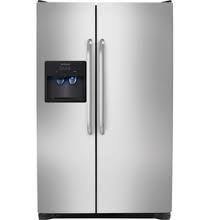
- Icemakers on refrigerators (ugh!!)
- Washers & dryers
- Gas fireplaces
Most leases say that if something is working when a tenant moves in, it is the landlord’s responsibility to pay to keep it working (aka “promptly repair all appliances and facilities” under Landlord Responsibilities in the NC standard Realtor lease). This costs money.
But what about if you took a page out of the “4th Century Priceless Vase” store’s playbook and made breaking these things close to impossible? Sounds good! But how?
Don’t own them! Nowhere in the lease does it say you have to have these things in your rental house. So don’t!
I see no rent difference in Charlotte single family residences in whether you have these niceties or not. So, I would highly recommend dealing with my main 3 culprits in the following manner:
- Icemaker on refrigerator: when you replace your refrigerator, get one without one!
- Washer & Dryer: sell them on Craig’s List the next time your house is vacant
- Gas fireplace: turn it off and let the tenant know it is not to be used. If they insist, let them know they are responsible for its upkeep.
Some parts of maximizing rental home ROI is addition by subtraction. It’s tough to break expensive vases when you can’t get to them, and you don’t need to perform maintenance on items that aren’t there. When there is less to break, there is less to be bought!
Brett Furniss is the head property manager of BDF Realty (Charlotte Residential Property Management), the trusted real estate advisor for Charlotte landlords & Home of $100 Flat Fee Property Management. BDF Realty utilizes their innovative Pod System for exceptional customer service in residential property management, home repairs, and home sales for single-family homes, Uptown condos, and town homes in the Charlotte-Metro Area. Contact Us Today!
Learn MoreWhat Rental Home Repairs Should A Landlord Pay For?

Oh, home repairs… One of the aspects of rental home investing that can really eat into a landlord’s financial return. Landlords and tenants both want to have a perfect home, but debate on who should pay for it.
In 10 years of practicing property management in Charlotte, I’ve found that the responses of who should pay for what repairs are unanimous (depending on what faction of people you ask):
Q: Who should pay for broken stuff at the rental house?
A. The owners!! (results tallied from 100% of the tenants)
Supporting testimony: “This house is a piece of garbage! They are lucky I’m a great tenant and renting it. I pay on-time every month; the least the owner can do is make some needed repairs around here. I guess Ebenezer is too busy counting his money to remember the little guy living in one of the houses in his vast real estate empire.”
Contradictory facts: House was lived in by owner prior to tenant move-in. Everything worked fine. Actual real estate holdings of owner are 2 houses.
B. The tenants!! (results tallied from 100% of the owners)
Supporting Testimony: “The house was in perfect condition when the tenant moved in. I lived there for 5 years and everything worked. Now they want every little thing fixed? Who cares if the screen door has a little rip in it? It didn’t kill my family, but the tenant can’t live with a flea once in a while? Please! He doesn’t even have children!”
Contradictory facts: “Little rip” in screen would allow full grown vulture entry. Perfectly conditioned homes would be violently offended at this owner’s shoddy home being placed in the same category as them.
And this is why property management can be challenging at times.
“To pay to repair or not to repair”, that is the question. And it is one that has no clear-cut answer. But, with that being said, there should be some methodology applied to make fair decisions.
My take on some parameters:
1. The house must be kept at code. Major systems (plumbing, heat, electricity, appliances) need to work properly. This includes working air conditioning nowadays (I know the old-school hardliners just stopped reading). I’m aware it used to be a luxury item, but that was a long, long time ago.
2. If it worked when they moved in, it should work throughout their tenancy (some exceptions apply on really high-cost or not-being-manufactured-anymore items). Example: a home was rented with a working gas fireplace. The fireplace stopped working in the middle of the tenancy. The manufacturer went out of business for the parts that were needed to fix it. In my opinion, the owner is not responsible to pay $3K for a replacement fireplace for home that rents for $1K a month.
3. If tenant negligence clearly causes something to break (example: a bottle cap found blocking a garbage disposal from working), the tenant should be billed back for the repair. But a tie goes to the tenant. Think of this as more of a criminal trial (where the tenant is innocent until proven guilty) than a civil trial (only requires a preponderance of evidence). There is a higher standard of evidence required before a tenant can be billed back for a repair (it must be really obvious).
4. Operational items need to be repaired; aesthetic items (aka how the house looks) do not. It should be made clear to the tenant during the lease signing that the home looks the way it looks now and nothing will be done by the owner about it.
5. Just because the tenant is renting the house, it does not mean that they will never spend money on the house. Maintenance items are required (air filters, light bulbs, lawn care, etc.) and are not paid by the owner.
This is obviously not a comprehensive repair policy, but it is a good start. Good luck!
Brett Furniss is the President & Owner of BDF Realty (Charlotte Residential Property Management), the trusted real estate advisor for Charlotte landlords & Home of $100 Flat Fee Property Management. BDF Realty utilizes their innovative Pod System for exceptional customer service in residential property management, home repairs, and home sales (including Rent-To-Sell) for single-family homes, condos, and town homes in the Charlotte-Metro Area. Contact Us Today!
Learn MoreReviewing the Lease: 3 Simple Things Good Tenants Should Do (And How to Check!)
As Charlotte property managers, we meet with each new tenant and review the rental lease packet (lease, maintenance addendum, move-in inspection form, and, if applicable, the pet addendum) with them before we both sign it. We even send the lease packet via email to the tenants a week before move-in so they can review it and ask any questions prior to our meeting (before they potentially sign their lives away!).
This brings up the million dollar questions-
1. Is this largely a waste of time?
2. Does anyone really read through up to 13 pages of legalese gibberish?
3. Is it necessary to send it to them for early review and then go through it in person?
Answers:
1. No… it only feels like it sometimes…
2. Some actually do read all of it and are prepared with questions (10% – 20%)
3. Definitely!
Why “Definitely!”?
I like sending the lease to the tenants for early review. In the United States, ignorance is no excuse for breaking the law. Providing a clear, reasonable path for tenants to digest, question, and understand the expectations of their lease agreement is a good thing. This shifts the onus on knowing the lease from reasonable negligence (“I saw the lease for the first time when we sat down to get the house keys! If I didn’t sign it, I wouldn’t have a place to live!”) to passive acceptance (“Hmmm… It was provided to me, but I chose not to read it over…”).
In terms of reviewing the lease in person with a new tenant, I don’t think it is necessary to go over it point-by-point. Most of the things in the lease govern what would happen in worst-case scenarios; being able to answer any questions the tenants have about obscure items in the lease should suffice. However, the following three things that make for a good tenant should be spelled out (and if the tenant screening is done correctly, we’ve already checked on these during the application process):
1. Good tenants pay in full and on-time: this is why we do credit checks (do they pay other people on time?), landlord checks (did they pay their previous landlords?), and employment and income checks (can they afford the place?)
2. Good tenants maintain the house: this is why we do landlord checks (did they keep and leave their prior place in good shape?) and include the maintenance addendum (the things they need to do to keep the house up- change air filters, mow the lawn, etc.)
3. Good tenants get along with their neighbors and society at large: this is why we do criminal background checks, landlord checks (did you have any issues during their rental period?), and pet addendums (if your pet does things we don’t like, we can legally ask you to remove it from the home within 48 hours)
If you can narrow the focus to the lease signing (and tenant screening) to these 3 points, you should be in for an enjoyable tenancy!
Brett Furniss is President & Owner of BDF Realty (Charlotte Residential Property Management), the trusted real estate advisor for Charlotte landlords. BDF Realty manages single-family homes, Uptown condos, and town homes in the Charlotte-Metro Area with services that include property management, home repairs, and home sales (including Rent-To-Sell).
Learn MoreCharlotte Property Management Weekly: Too Many Repair Requests? 5 Methods To Stop The (Cash Flow) Bloodshed

As a property management company, we work to maximize the cash flow of our clients. Period. We don’t have a problem admitting that.
Sometimes things break in rental homes and that decreases the cash flow our clients receive. They don’t like it, and we don’t either. However, it is part of the game (pardon my street talk), so it is a necessary expense. Sometimes.
Normally if a repair policy is explained to tenants properly at the lease signing, there aren’t any problems. The landlord is responsible for operational issues; that is, if there isn’t any evidence of negligence by the tenant (if there is, the “Sorry if you smashed your toilet because your girlfriend dumped you for being volatile, but the bill goes to you…” message is sent). Then the easy stuff (changing light bulbs, air filters, etc.) is taken care of by the tenant. It’s simple stuff and everyone gets along grandly.
If the home is on the newer side and maintained, there just aren’t that many maintenance calls. Most people want their homes to operate properly (“hey, it’s nice to have the dryer dry clothes in less than 3 hours, so maybe I’ll clean the lint filter occasionally”), so they do the small things to keep it that way.
However, there are some tenants that seem to discover an awful lot of problems that they want the owner to fix. And when they are compared to other tenants, their identity becomes painfully obvious. The calls and the e-mails of their problems continue month-after-month. It gets to the point that everyone involved with managing the property has the tenant’s contact information memorized (“Oh, 704-xxx-xxxx? Mrs. X must be calling from work today.”) Sometimes, the repair requests are a string of bad luck and legitimate; often the tenant is trying to take advantage of the landlord’s altruism and is under the impression they don’t have to lift a finger because someone else will take care of them.
Repairs really hurt cash flow. But if the repairs aren’t done, unhappy tenants also hurt cash flow by trying to use their seemingly one point of leverage (holding back rent) to get what they want done. So what to do?
Before getting to some techniques to ward off unwarranted repair requests, I want to first iterate that almost all tenants (that I’ve worked with, at least) are reasonable with their repair requests. Most have busy lives and can’t be bothered will illegitimate claims. It’s not a huge problem on a whole. I find that doing the repairs that are requested builds trust and keeps everything running smoothly. So requested repairs should usually be done.
For the tenants that abuse the repair system, here are the top techniques to stop the illegitimate request flow:
1. Recalibrate expectations on repairs: Before the next repair is done, a meeting should be set with all principals on the lease. The purpose of the meeting (or call) is to reexamine the lease and go over exactly what is covered by the landlord and what is not. Also, it is probably time to schedule a walk-through of the house to make sure the maintenance agreement is being followed.
2. Alert the repair vendors that fraud is suspected: Vendors who visit the home should be put on alert. They can provide information about what claims are legitimate. If a claim is due to non-compliance with the maintenance agreement or rough play, the tenant needs to be billed for the issue, not the landlord!
3. Push back: If it was your house, what would you be calling a repairman fix, and what would you be doing yourself? That question is a good start to figuring out what repairs may be unnecessary for the landlord to cover.
4. Keep at code: The landlord is responsible, by law, to keep the rental home at building code. Nothing more. What is being requested beyond that?
5. Relocation: Maybe it’s worth asking the tenants if they would be more comfortable in someone else’s home?
Though this issue isn’t overly common, it can be uncommonly expensive and will continually siphon cash flow. If you find yourself signing over the monthly rent to the handyman month-after-month, it may be time to try something new!
Learn MoreCharlotte Property Management Weekly: “Free” Repair Quotes on Rental Homes Can Cost You Money

Everyone wants to save money! But to what lengths (and for what) does it make sense to find “deals”? It really depends on the urgency level of the need. Here are three scenarios of high, middle, and no urgency:
High urgency (nurse): “Your daughter needs the heart transplant now! Do we have your consent? …I don’t know how much it costs, sir… it will be itemized on your bill later, I suppose… No, there is no AAA discount on this procedure… I’ve never seen a coupon like that- it looks like you typed up ‘50% OFF’ and then wrote ‘Group-On’ on top of it… No, I suppose we don’t want to lose your business to a competitor… We’re losing her!! Yes, we do validate parking.”
Middle urgency (property manager): “The house needs one bedroom painted, the carpets cleaned, and the outside power washed before we can put it on the market… You said you want 3 quotes per repair?”
No urgency (sales clerk at Best Buy): “The new iphone detachable screen is really cool! You’re a loser if you don’t get one! We only have 10 million of these left, but when they’re gone, we’ll call our factory in China to make more… $199 for a screen to put on top of your screen (that already works) is a bargain. This is as cheap as it gets (until next week when ‘Detachable Screen Mini’ comes out). There is no discount; it’s under $200 bucks already, man! Go to another store then! …Fine, don’t call me crying when you are shunned socially and professionally for your weak iphone accessorizing…”
So the point of these scenarios is to illustrate that “high urgency” scenarios need to be acted on immediately, with no time to haggle. And “no urgency” scenarios allow time to shop vendors for price; time is on your side (yes, it is)!
But what about “middle urgency” scenarios? We run into these sometimes when tenants move out and the rental home needs to go back on the market. Houses need to be repaired, and some landlords want to quote out every repair multiple times to get the lowest price. This sounds reasonable, even prudent. The repairs do need to be made in a reasonable time, but not tomorrow or next week. Time is on their side (yes, it is?) to get repair quotes. Right?
Well, it’s a “middle urgency” scenario (not a “no urgency” scenario) because there are other factors in play. Every investment home has some combination of costs that accrue every day it’s vacant: mortgage payments, HOA fees, lawn care, utilities, property taxes, etc. For easy math, let’s say these come to $900/month. $900 split into a 30-day month is $30/day. This is a very real cost; the meter is running daily.
For this example, let’s say the initial repair quote comes in at $500. After getting 3 quotes per repair item, the repair quote is whittled down to $400. Congratulations- that’s a 20% savings of $100!
But, wait, is it really? Getting those additional quotes took 10 days. 10 days of vacancy multiplied by 30 days equals $300. So, to save $100, it cost $300. The net loss is $200, plus all the time and headaches it took to coordinate vendors and sort through repair quotes.
Unfortunately, this is not the totality of the loss sometimes. Empty homes are risky! Talk to any police officer and ask them whether they have any problems with vacant rental homes being broken into in this economy. If this happens, stolen appliances and break-in damages escalate the costs upward substantially. Remember: the longer the home is vacant, the higher the risk.
“Free” repair quotes can cost a lot! Don’t over-quote yourself into a financial loss!
Brett Furniss is the President & Owner of BDF Realty (“Charlotte’s Most Innovative Property Management & Investment Company”), and Rent-To-Sell Realty (“When You Need a New Solution to Sell Your Home”) which specialize in rent-to-own (lease options) and rent-to-sell homes. His newest book, A Real Estate Agent’s Complete Guide to Representing Rent-To-Own (Lease Option) Tenants (Delight Clients, Fill Vacant Homes, and Earn $2,250* Upfront! (*Minimum!)
Learn MoreCharlotte Property Management Weekly: With Obama & Landlords, You Can’t Legally Withhold Payment
Taxpayer: “This country is going down the drain quickly with no end in sight! Obama is proving himself to be a bum like the rest of them. “Change to believe in”? I’m laughing too hard to retort. You wanna know what? I’m not funding this incompetent government anymore and will not be a party to it. I’m not paying taxes until this country is fixed!”
Tenant: “This house is killing me! This week the faucet broke. A month before it was the air conditioner. It took 48 hours for the landlord to get the maintenance guy to fix it in 98 degree heat! 98 degrees my family put up with! My sweet daughter, Abby, must have gone through at least 20 popsicles. “Daddy, why is it so hot?” she quietly bleated as she read “Seventeen” Magazine with a cold washcloth lain across her forehead (with the few remaining ice cubes that our (too small) freezer could muster). The landlord should be paying us to live in this house! I’m certainly not paying him this month! Next month’s payment is “under review” too; we’ll see how the faucet repair goes.”
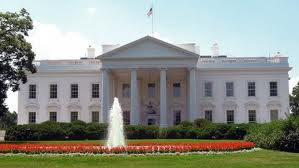
Obama and (diplomatic and highly educated) landlords: “I feel your pain! Once, my radiator broke in my dorm room at Harvard and it just wasn’t fair that it took over 72 hours to repair! The economy is weak and jobs are scarce. Injustices like this need to be made right! But… like with all things that are dearest to us, these things sometimes take time. In the meantime, if you don’t pay me, your house will be taken away.”
The point of these fictitious quotes is that tenants and American citizens do not have to like what is going on with their house or country, respectively. But they still have to pay.
There seems to be a common misconception that home repairs and rental payments are linked. Legally, they are not. If the house is falling apart, the lease still stands. If the country is (hypothetically) suffering high unemployment and being financially run into bankruptcy, citizens still have to pay their taxes. It’s the law.
However, this is not an open invitation for landlords to not complete necessary repairs in a timely fashion. Slow and incomplete repair work makes tenants very unhappy; keeping tenants as happy as possible is paramount to having them stick around! Plus, there are other painful avenues unhappy tenants can take to legally have a home that is functioning to building code. It just can’t happen through rent abatement.
But I’ve seen this played out. Tenants go to court thinking that repairs not being done to their satisfaction will get them a free pass from eviction from a judge. This is just not the case. They find out quickly that their repair issues (even if extremely legitimate) are a moot point in an eviction hearing; these arguments are not heard because it’s not the place for them to be arbitrated. In an eviction hearing, it comes down to one question, “Do you have payment or proof of payment?” If the answer is “yes”, the tenant wins. If the answer is “no, but”, they don’t.
Rental payments and repair work are two separate issues. Tenants are obligated to pay by contract. That’s it.
You don’t have to like Obama, but you don’t want to try not paying him!
Brett Furniss is the President & Owner of BDF Realty (“Charlotte’s Most Innovative Property Management & Investment Company”), and Rent-To-Sell Realty (“When You Need a New Solution to Sell Your Home”) which specialize in rent-to-own (lease options) and rent-to-sell homes. His newest book, A Real Estate Agent’s Complete Guide to Representing Rent-To-Own (Lease Option) Tenants (Delight Clients, Fill Vacant Homes, and Earn $2,250* Upfront! (*Minimum!)
Learn More