

Love, Kindness & Gratitude: Setting the Tone in Property Management

“Beloved, let us love one another, for love is from God, and whoever loves has been born of God and knows God. Anyone who does not love does not know God, because God is love.” I John 4:7-8
Man, it’s nice when people are nice.
We have a tenant, Monica, who just goes out of her way to be easy to work with. If we need her to do something for us, she does it. There is no complaining, back biting, or procrastination. Communication with her is a joy. And she is soooo nice and gracious. When we perform repairs (aka our job), she is so gracious and thankful. Her rent is always on time. She and her family go out of their way to perform maintenance to the house. And at the end of her positive and funny e-mails, she always includes the Bible verse above.
We have another client, Mike, who goes out of his way to compliment us for working on his home; once again, for just doing our job. Small things don’t escape his notice. His level of graciousness is astounding. Truthfully, we should be thanking Mike much more than he thanks us. We made a good amount of money working for Mike: we helped him buy houses, repair them, manage them, and finally, sell them. These are all things we collect fees for. But he would let us know how much he appreciated our efforts, even if the work was imperfect at times.
I think back to how our relationships started. It would be easy to say that they were “good folks” and that they get along with everyone (they probably do!). But why?
They set a positive tone with us early. Early conversations were easy, paperwork was complete and accurate, and meetings were punctual. They were easy going about details as we got to know each other. They got the things they needed from us, but their requests were made in a graceful and kind manner.
Property management can be a difficult business. At the face of it, a property manager is the middle man between two parties with divergent interests, the owners and tenants. Both would prefer that the other party pay for anything that breaks. The owners want the rules of the lease followed precisely to protect their investments, while the tenants want to use the house as they see fit. The property manager is hired by owners and is tasked with protecting their investments, but can’t get it done well without tenant involvement and buy-in. It’s a balancing act that produces many colorful (and costly) stories of when the relationship breaks down.
But Monica and Mike also show that it can be a rewarding business with warm relationships.
As the property manager, our job is to always set the tone early with kindness, love, and gratitude. The tenants need to feel this from us, their point of contact, from the moment of their first inquiry. Even if we wind up having to reject a tenant application, we can do it kindly. But if we wait for the clients to set the tone, it might not happen. And it needs to.
So set the tone early! This will allow landlords to reap the benefits of a mutually fulfilling partnership and make property management a joy.
Thank you to our clients (Monica, Mike & many others) who make coming to work a pleasure.
Happy Landlording!
Brett Furniss is a property manager at BDF Realty (Charlotte Residential Property Management), the trusted real estate advisor for Charlotte landlords & Home of $100 Flat Fee Property Management. BDF Realty utilizes their innovative Pod System for exceptional customer service in residential property management, home repairs, and home sales for single-family homes, Uptown condos, and town homes in the Charlotte-Metro Area. Contact Us Today!
Learn MoreLong Term Real Estate Planning is (Politically) Correct!

If you knew you were running for president someday, you’d probably do many things differently. You may rethink all your controversial letters to the Charlotte Observer loudly demeaning the local politicians (those idiots!!); you may need their help someday campaigning on your behalf. That Election Day when you were in the throes of a “House of Cards” marathon, scarfing down Jet’s Pizza, and didn’t quite feel like driving to the polls? Better get up, wipe the sauce of your mouth, punch your chad, and make it look like you care about the political process! The video your friend made of you acting like a fool with the pool boy on that cruise a few years back? Better make sure that doesn’t find its way to Facebook because Glenn Beck will have a field day with it during the primaries.
This whole accountability thing can be scary! But if you know what you want to do in the future, you can plot your moves (and non-moves) and optimize your future plans.
Real estate works the same way and requires taking a long term planning view. What do you want your real estate to accomplish for you? And over what time period?
From being a Charlotte property manager for over a decade, we’ve had clients who have had many differing reasons why they are holding real estate. We try to put together a strategy to cater to these needs individually. Here are a few examples:
- “I have a house that I don’t have enough equity to sell right now. I want to rent it out until the market turns up again.”
With that in mind, we want to minimize fix-up costs (touch-up paint & carpet steam clean when turning over the property between tenants) before we see the market improve. Once it does, we’ll look to replace the carpet and give the home a full paint job to sell at the top of the market.
2. “These houses are my retirement. I want to keep them forever and live off the residual income.”
We’d look to find long-term tenants on the private market (multi-year lease only) or Section 8 tenants (who now, after 18 months of vacancy in one house, cannot move until they leave the program). We’d also look to more actively make optional repairs to maximize the enjoyment of the tenant.
3. “I want to have the option to stay in or get out depending on market conditions!”
We’ll keep you apprised of the market sales and rental prices 60-75 days prior to the current lease expiration. Then you can let us know which way you want to go, rental or sale. We’ll also let you know when an opportunity comes up when one of our investors is looking to buy an investment home with a tenant already in place to create a win-win for both of you.
The best way to get the outcome you want tomorrow is to wisely plot your moves (and non-moves) today. There are very few people who are politically incorrect, like Donald Trump, to whom this (apparently) doesn’t apply! But, in real estate, long term planning will save you both time and money.
Happy Landlording!
Brett Furniss is the head property manager of BDF Realty (Charlotte Residential Property Management), the trusted real estate advisor for Charlotte landlords & Home of $100 Flat Fee Property Management. BDF Realty utilizes their innovative Pod System for exceptional customer service in residential property management, home repairs, and home sales for single-family homes, Uptown condos, and town homes in the Charlotte-Metro Area. Contact Us Today!
Learn MoreDo Your Rental Home Repair People Care? 2 Lessons Learned

“People don’t care how much you know until they know how much you care.”
Theodore Roosevelt
“We have met the enemy and he is us.”
Walt Kelly (Pogo)
When you’re in the property management business, many different things in houses will break. It’s a sad reality, but it is also the reality that keeps property managers in business (so we keep our complaints to a minimum!).
Contrary to popular thought in Charlotte, we really don’t know everything (please laugh!). So like most property management companies, we employ repair professionals to work on things that break (plumbing, roofs, appliances, HVAC, painting, etc.). They are, in effect, an extension of us at BDF Realty.
So how do we know if the repair people we use are any good? The simple answer is if things are fixed and tenants are not calling us to say their issue did not stay resolved. And if the issue recurs (which happens to the best of them), how does the repair person handle it? Do we get charged for another visit to the house? Do these recurring issues happen often? How long does it take for them to get back to do the repair again?
So skill-wise, we can figure out if a repair person is any good in a reasonable amount of time. Let’s call those the hard skills. But what about the soft skills? Are they kind? Conscientious?
Do they care?
That’s tougher. We can’t go on every service call with our repair people. And if they can’t at least fake being nice and caring during those calls, they weren’t going to last anyway. So how can you tell if they care?
I’ve learned 2 lessons over the years:
- If any tenants call to complain about a repair person, there is probably something wrong with the repair person. Two calls and there is definitely something wrong.
It takes time and effort to locate the property manager’s information, call them, and detail your experience without sounding like a whiner. Most tenants don’t care enough unless something is really off.
Several years ago, I used a really nice, reasonably priced handyman to work on many of our homes. When I would see him in person, he was sharp as a tack and would bend over backward to resolve issues. But I started getting a few tenant calls about chronic lateness and “shady” people he was bringing with him to work on jobs. We had to sever ties with him. He’s still a nice guy, but he just didn’t care enough to show up on time and be professional.
- If the repair person is treating us poorly, chances are they are doing the same to the tenants.
Recently, we had a repair person work on an issue at a vacant home for us. We gave him the lockbox code so he could get in and do the work. The next day we were at the property and found the house key in the lockbox, broken in half. We called the repair person and he said he had broken the key in the lock and forgotten to call us about it.
To me, that’s sort of a big deal, but not the key breaking per se. I will be the first to tell you that things happen. As Charles Swindoll said, “Life is 10% of what happens to me and 90% of how I react to it.” I’m not going to give someone a hard time over things breaking; truthfully the lock was tough and anyone could have broken a key in it. But not thinking it was important enough to let me know immediately about? I have to ask, “Does he care?”
Having repair people that care matters. Being a property manager who cares is important too. And the two are exactly the same to the tenants we serve.
Happy Landlording!
Brett Furniss is the head property manager of BDF Realty (Charlotte Residential Property Management), the trusted real estate advisor for Charlotte landlords & Home of $100 Flat Fee Property Management. BDF Realty utilizes their innovative Pod System for exceptional customer service in residential property management, home repairs, and home sales for single-family homes, Uptown condos, and town homes in the Charlotte-Metro Area. Contact Us Today!
Learn MoreSection 8 Offers “Free Rent”? 5 Reasons Many Landlords Still Choose Not To Participate

I saw an ad for a Section 8 speaker touting their government-sponsored rental assistance program as “Free Rent” for landlords. I had to laugh. As we’ve been told our whole lives, nothing worthwhile is free. And the Section 8 program is not an exception to the rule.
For the uninitiated, the Section 8 housing program allows people who earn under a certain income to receive a housing voucher to partially subsidize or pay for their rent in full. This seems like a boon for landlords.
The process looks like this: For the tenants, they need to scour rental home ads and find landlords who are willing to accept Section 8 vouchers. For the landlords, they need to willingly accept them. The problem is that many landlords choose not to accept them, which seems strange. The landlords do not want government-guaranteed “free rent”?? Well, maybe free isn’t always so free…
A big misconception is that the tenants are the reason landlords hesitate to accept Section 8 vouchers. To me, this is patently false. Some of our nicest and best tenants use Section 8. Really, on our rental applications for Section 8 tenants, we run them the way we typically do, but deemphasize income and credit score requirements as Section 8 has them partially backstopped.
So, if the tenants are good, why not accept Section 8? The 5 main reasons many landlords choose not to accept Section 8 vouchers:
1. Too much paperwork. It’s not easy for landlords, especially non-real estate professionals, to navigate the process.
2. The governmental standards for housing are really high and your house will fail the inspection. Slum lords (ex: the type of people who ask if tenants really need clean, running water) are not the only people that fail; almost everyone fails the inspections. I can speak from personal experience, anecdotal evidence, and conversations with the inspectors. I asked one inspector what percentage of homes passed their first time and he laughed. “Seriously? Zero percent. I’m not kidding.” He went on to say that his own house wouldn’t pass a Section 8 inspection. Our latest fail report had paint splatter on a strike plate and a loose electrical outlet as reasons it failed. When there are hundreds of items that the inspectors are looking for, you are behind the eight ball.
3. Customer service is typically unresponsive. I don’t really blame the employees. The workload that is saddled on them is immense. I asked an inspector the other day a question about a failed item on the inspection report and she exhaustedly told me she couldn’t remember- she conducts 15 different home inspections every day! So, bottom line, getting anything accomplished with them takes a lot of time, energy, and follow-up.
4. Waiting is the hardest part. We had a house that took 5 weeks to get an initial inspection. So, for 5 weeks, we ate the rent and utilities as the house stood vacant. There was no “free rent” or sympathy. After the home inevitably failed, there was another 2 week wait for a reinspection. The combined 7 weeks of non-recoupable utility and mortgage payments hurt. So did the vandalism that occurred as the house sat empty.
5. Re-inspection failures and rent abatement really hurt. So, let’s say you pass the initial inspection and the tenant moves in. At the ten-month mark of the tenancy, there is a reinspection where the Section 8 inspectors look for housing violations. We used to occasionally pass these, but that hasn’t happened in the past few years due to stricter regulations. The inspectors will find new things that happened during the tenancy; sometimes they find things they missed on the first inspection. Our latest fail was partially for a loose banister.
The problem with failing reinspections is that you are given one chance to fix the items. They provide a punch list so it should be as simple as giving it to a handyman to fix, right? Well, the descriptions detailing what is wrong are nebulous and getting the inspectors on the phone to ask them to remember your home and a specific issue is not likely. The handyman does the best he can, but when it fails, you enter into the unfriendly world of rent abatement.
Rent abatement is how property managers get fired and cash flow becomes difficult. It starts with the failed second inspection. This letter comes a week after the inspection letting you know what items you failed. You are instructed to fix the outstanding items and then schedule a final reinspection. During this time, not only is rent deducted for the abated period while waiting for the final inspection (your bank account is debited the following month on the 1st when payments are made), there is no rent paid for the coming month. For example:
Your rent due is $900/month and your abated 2-week period costs you ($450).
On the first of the month after abatement, not only do you not receive the $900 due (and the tenant is still living in your rental home and the bank wants your mortgage payment), you are clawed back $450 (payable immediately). This essentially puts you in the hole $1,350 (not counting the funds for the repairs on the home). Cash flow becomes a big issue. This is when “free rent” becomes “free rent” for the government. You’re a great citizen to do this, but you don’t feel so great when this happens.
If you pass on your final reinspection, you will get the $900 back the following month (the $450 is gone forever). If you fail, your contract with Section 8 is terminated and the tenant is free to leave. This presents a much bigger problem as the tenant usually doesn’t have money to pay rent, Section 8 is not paying you, and the tenant needs to enter the arduous, time-consuming process of finding a new Section 8-eligible home (while living rent-free in yours).
In closing, Section 8 can be a good program if you know it well and have repair people very familiar with their changing requirements. However, “free rent” for landlords is a gigantic misnomer and is about as far away from the truth as you can get. It can be intelligently argued that Section 8 vouchers are much more risky than working with non-subsidized tenants. “Nothing is free” is the true mantra!
Brett Furniss is President & Owner of BDF Realty (Charlotte Residential Property Management), the trusted real estate advisor for Charlotte landlords, managing single-family homes, condos, and town homes in the Charlotte-Metro Area. BDF Realty’s services include property management, home fix-ups, and home sales, including Rent-To-Sell (“When You Need a New Solution to Sell Your Home”). His newest book is A Real Estate Agent’s Complete Guide to Representing Rent-To-Own (Lease Option) Tenants (Delight Clients, Fill Vacant Homes, and Earn $2,250* Upfront! (*Minimum!) which is available on-line now.
Learn MoreCharlotte Property Management Monthly: 5 Crucial Expectations to Set Verbally With Your Tenants at Lease Signing
I’m a big believer in setting expectations in relationships; it seems to make things go more smoothly. If you know clearly what you’re supposed to do and I know what I’m supposed to do, there is less opportunity for hurt feelings and animosity. A beautiful, life-long relationship can blossom! (Cue the romantic music…)
This is why many married couples say the first year of marriage is the hardest. There is no book of set expectations for each partner; it’s created on the fly. The idyllic vision of married life begins to fade quickly when real life is thrust upon them. Who pays the bills? How many days are you staying out late with your buddies? You want me to iron the clothes? These fun questions need to be addressed and expectations of conduct need to be negotiated so both spouses are (mostly) satisfied. There is no marriage contract that explicitly spells this out.
Fortunately, a landlord-tenant relationship is governed by a set of rules known as “the lease”; this should theoretically make things easy! A lease is a perfect way to express your expectations to your tenant. That sounds good, but how come there often seems to be hurt feelings and bickering in leasing relationships? From the landlord’s perspective, the tenant should read the contract and follow it to the letter, right? If the tenants did everything the lease said, there would be no issues. So, of course, the issue lies with bad, rebellious tenants.
Wrong. The problem is a society who doesn’t have the time to read anymore. You are in the minority that you have made it past the Twitter-restricted 180 characters and are on to the fourth paragraph of this blog. Congrats! Pat yourself on the back!
And the standard lease is not exactly a page turner! It is legal jargon with no cool pictures or diagrams that goes on for page after long page…
If you want your tenant to know what you want them to do, you must verbally tell them. They will remember what you say and will usually act accordingly. Your leasing relationship will be the better for it! Guaranteed.
Tell the tenants what you expect (the Cliff Notes version please!) and what you are going to do for them (and won’t do for them!). The five most important things I make sure I cover with tenants in our lease signings:
1. The date the rent is due (the 1st of the month), the day it is late (it must be RECEIVED by the 5th of the month), and the day eviction is filed (the 16th) if we don’t hear from them and work something out. I also mention the late, bad check, and eviction fees that would be due in each scenario.
2. Where their security deposit is, what it is for, when it will be returned (within 30 days after move-out), and under what conditions some of it may be withheld.
3. Explaining that aesthetically the home is “as is”. When things stop working (HVAC, plumbing, etc.), what the repair process is and how it is handled.
4. I explain the 3 keys to a good tenancy: paying your rent on time, getting along with your neighbors, and keeping the home in good shape (including standard maintenance).
5. How early lease terminations are handled. Life happens and this is how you can get out of your lease and keep your credit intact. (Note: We ask that a 30-day notice be given along with 2 months of rent as a lease termination fee, in addition to the rent due up to the vacancy date)
6. Bonus item message to give for property managers: “We are not the owner of this home. We are the messenger. We don’t always like being the messenger, because messengers get shot sometimes. You don’t need to shoot us. We’d actually really appreciate it if you didn’t.”
This isn’t a comprehensive list, but it is important to remember that attention spans are not endless. These five points should be helpful in having a great relationship with your tenant!
Brett Furniss is the President & Owner of BDF Realty (Charlotte Property Management) which works with Charlotte real estate investors and homeowners and Rent-To-Sell Realty (“When You Need a New Solution to Sell Your Home”) which specialize in rent-to-own (lease options) and rent-to-sell homes. His newest book, A Real Estate Agent’s Complete Guide to Representing Rent-To-Own (Lease Option) Tenants (Delight Clients, Fill Vacant Homes, and Earn $2,250* Upfront! (*Minimum!)
Learn More
Charlotte Property Management Monthly: Cash Flow Happens On Both Ends: After You Check Your Rental Comps, Do the “Bank Thang”

A property manager’s most important task is to maximize their client’s cash flow. This includes looking at most of the inflows (good!) and outflows (bad!) of the property.
Cash Inflows: Rent from the tenants (typically the biggest or only inflow)
Cash Outflows: Repairs, management fees, & vendor fees
What is out of the property manager’s control, however, is typically the largest outflow for landlords- the financing of the property. This is the mortgage payment that goes to the bank each month. If this outflow can be sizably reduced, all other expenses (outflows) seem minimal.
So does that mean I need to start doing the “bank thang” (defined as giving up total control of your personal information and providing a ridiculous amount of documentation)? Unfortunately, yes.
You may not like dealing with the banks again (I didn’t either!). And you may think that the Fed is crushing the value of our dollar by printing money (I do too!). But one of the positive results of the Fed’s “Quantitative Easing” we read about in the news is that it has pushed interest rates on mortgages to historic lows (for now). And, as a landlord, you need to explore taking advantage of these low rates and minimizing your biggest outflow. And that means having a conversation with the banks about refinancing options.
The three ways to deal with refinancing (from best to worst option):
1. Read the mail the banks send you, especially the letters that come via UPS and FedEx. I got a letter from Chase (one of my existing lenders) the other day via UPS that offered to reduce my interest rate from 6.875% to 4.25% on one of my rental properties. I called them and it was legitimate (no closing costs and limited documentation needed). This took my payment down 30% on this house. That is a good outflow reduction!
2. Proactively call the lenders who hold your home loans and see if they can do anything for you. Mention government programs like HARP, HAMP, and HARP2. Then hope they know what you’re talking about.
3. Call a mortgage broker and ask them to look over your loans and see if they can refinance any of them with favorable rates.
Property managers can run rental comps to make sure their landlord clients receive the highest possible rents and try to minimize other costs. But landlords, especially in this historically low interest rate environment, need to do their part to maximize cash flow. And that means doing the “bank thang”!
Brett Furniss is the President & Owner of BDF Realty (“Charlotte’s Most Innovative Property Management & Investment Company”), and Rent-To-Sell Realty (“When You Need a New Solution to Sell Your Home”) which specialize in rent-to-own (lease options) and rent-to-sell homes. His newest book, A Real Estate Agent’s Complete Guide to Representing Rent-To-Own (Lease Option) Tenants (Delight Clients, Fill Vacant Homes, and Earn $2,250* Upfront! (*Minimum!)
Learn MoreCharlotte Property Management Monthly: If You Can’t Sell, Rent: 3 Steps to Get a Great Tenant

Rental homes are in a full-on, undeniable uptrend! A recent real estate article headline blared, “Property Managers Set to Rule the World! 1.8M new tenants to enter the rental pool in the next two years.” Exciting stuff for us stodgy property managers!
While this leads to raised glasses (no plastic cups- they’re actual glass now!) in the property management industry, it is unwelcome news for homeowners trying to sell their homes. The math is easy to calculate: there is roughly the same amount of people moving into homes every year. So if 1.8 million more of them are now renting, there are 1.8 million less of them buying.
So people with homes they can’t personally live in anymore have to do something. The “selling the house and moving on” thing isn’t working for most due to an uncooperative real estate market. Some are letting their houses go back to the bank via the foreclosure route. It’s not a great option in terms of stress and credit damage, but it does solve the problem. Others are going the rental and rent-to-sell route to fill their homes. Some might argue that this is more stressful than the foreclosure route!
But why is it stressful? It boils down to one thing- the tenant. If you get a great tenant, they pay on time, care for your home, and don’t bother you. If you get a bad tenant, you never get paid on-time, enjoy a myriad of excuses for this non-payment, wind up in costly eviction proceedings, and are rewarded with a busted-up house at the end.
So how do you get a great tenant? Let’s define a great tenant first. They:
1. Pay on time and in full every month
2. Respect the home (aka like keeping it clean and undamaged)
3. Get along with the neighbors, the HOA, and you!
To get someone like this, there are 3 steps to follow:
1. Gather information: Order credit and criminal background checks, verify income and employment (request copies of the tenant’s last two paystubs and call the employer), and call the tenant’s past two landlords. You’ll want to ask the prospective tenant, employer, and past landlords as many questions as it takes to get a comfort level of what type of person wants to rent your home:
a. “Mr. Prospective Tenant, it is a pleasure to speak to you again! I never tire of your hilarious tales of amazing coincidences, which seem to be your hallmark. The honeymoon beach story with your two ex-wives somehow being on the same beach as you and your soon-to-be third ex-wife? Priceless! Now, why didn’t you pay your light bill in 2008? Why is there a collection account with Macy’s? What would your last landlord say about you?”
b. “Mr. Employer, if I may humbly ask, is Mr. X’s employment part-time, full-time, or contract work? How long has he been working there? Is he in good standing?”
c. “Mr. Landlord, your azure eyes must have been killing the ladies for years! At a risk of wasting your precious time with my inquiries that are so well beneath you, would you rent to this tenant again? Why or why not? How many times have they paid late? What did the house look like when they moved out? Is your superior intelligence a product of extensive domestic schooling, a plethora of renowned international boarding schools, or ‘Good Will Hunting’-like genetics?”
2. Analyze the data collected. Does the prospective tenant have stable employment? Do they make enough money to afford the rent and their other expenses realistically? What about if there is a slight bump, like a big car repair- can they still afford the home? Do they pay other people they commit to pay? What did their last landlord think of them? Would I feel unsafe renting to them if I had to give them bad news? Am I being overly optimistic about their merits or am I making a solid business decision?
3. Make the call. If they pass the smell test, approve them and move forward. If your gut is telling you to pass on their application, then pass! There is more than one fish in the sea.
There are many great tenants out there! Get a lot of data on the applicant, analyze it objectively, and make the decision on whether to approve them. It will work out most of the time!
Brett Furniss is the President & Owner of BDF Realty (“Charlotte’s Most Innovative Property Management & Investment Company”), and Rent-To-Sell Realty (“When You Need a New Solution to Sell Your Home”) which specialize in rent-to-own (lease options) and rent-to-sell homes. His newest book, A Real Estate Agent’s Complete Guide to Representing Rent-To-Own (Lease Option) Tenants (Delight Clients, Fill Vacant Homes, and Earn $2,250* Upfront! (*Minimum!)
Learn MoreCharlotte Property Management Weekly: The “Additional Security Deposit” Letter Exchange

Dear Property Manager,
I am very interested in the rental house you have listed! I think it will be perfect for our family. However, when you asked me for an additional month of security deposit, it made me concerned. Money doesn’t grow on trees these days and I thought the rental ad said you only needed one month down. We also have to come up with the first month’s rent and pet fees, so you’re talking about a pretty big sum already. I’ll be honest, I just don’t have it.
I explained our situation to you. The economy had turned against us, but we’re past it! My wife is employed again and getting you the rent will be no problem. Haven’t you ever had anything happen to you before? Have a heart! We’d take great care of the home, but just need the security deposit reduced. My business is booming so things will be fine! Don’t worry! You’ll get your money!
So what do you say? Can you help me out?
Sincerely,
Mr. Tenant
P.S. My wife thought you looked exquisite in your emerald blazer! It’s a bold move to wear it in 97 degree heat, if you ask me, but it’s better to look good than feel good, right?
Mr. Tenant,
Thank your wife for the kind words about my blazer. Typically they run the air conditioning at 40 below (so I try to stay prepared), but it didn’t work well when we moved outside. Emerald has sort of grown on me as I’ve gotten older. I think it complements my eyes, but opinions sometimes vary. You know, you make a call on the outfit every morning and sometimes you hit it out of the park and sometimes you whiff. Truth be told, I’d settle for hitting singles in the clothing department!
As for the request for additional security deposit monies, I understand your concern. Let me explain our rationale.
I understand you hit a rough spot a year ago; that happens. It’s obviously not just you; we see applications like this everyday. We also rent to a lot of people who have hit rough spots before! It’s not a deal-killer.
But there are other mitigating factors. Let’s look at your credit application and income. Your scores are obviously not good, but I’m not overly worried about that. There looks to be some recent 30-day late payments on power bills and cable. Your current landlord said that you had a few late payments as well during their lease (at an amount less than you would be paying now). You gave us your business bank statements to show your income, but it’s not clear how much of that actually makes it to you. This information collectively gives me pause about your financial condition.
My job as a property manager is to mitigate risk for our client, the owner of the home you want to rent. I personally think you would be a great tenant; anyone who compliments my wardrobe is good in my book! But if something happened to you that turned into a decent size expense, I can’t say with much certainty (with the information we have) that your lease wouldn’t be at risk. If an extra thousand dollar deposit is a deal-killer from your end, what would happen if your car stopped running next week? You obviously would need to fix that first to get to work. The owner of the home would be left waiting for their payment. And we wouldn’t be doing our job well.
If you have something that addresses these concerns, please send this information over so we can consider it! We make money by filling properties, so we want to approve you! We just have to protect our clients first.
I hope this letter clears the air. Thank you for your interest in our home and I hope we can work together in the future.
Sincerely,
Your Property Manager
P.S. On your suggestion, I’m wearing a short-sleeved cotton blend shirt today, no jacket. It feels good- thanks for the suggestion!
Learn MoreCharlotte Property Management Weekly: The Cheap Rental Home Game: A Saga of Ups & Downs- 10 Tips for Survival
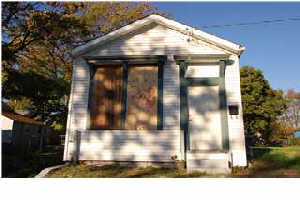
Cheap rental homes remind me of buying electronics off the street.
Street Urchin: “$50 Bucks! Flat screen television for $50! Why are you even thinking about it? This is a great deal- CHEEP!!”
My mind (definitely thinking about it): “Hmmm… I need a flat screen, but this thing is either stolen or a piece of garbage. But, if it’s not (and his uncle really died and bequeathed it to him), this is a great deal!”
My mouth: “OK, I’ll give you forty-five for it.”
This is the type of deal I see people making to buy homes for as little as $10K. It’s really a gamble, but can be a lucrative one if it works out. I mean, the ups can be great!
For example, a $20K house’s payments come to approximately $130/month (believe it or not, there are no HOA fees to worry about!). The home can rent for $400. That’s a positive cash flow of $270/month, which is not bad! With a $100K credit line, this could equal 5 homes. I like the math, $270 multiplied by five homes equals $1,350/month. That’s a monthly return of 13.5%. Oh yeah! So the flat screen works and works well! I’ve got a great television and an even better story of my tough negotiating tactics to match.
But then, there are the down times. The house is cheap and old, and things start breaking down. The tenants (savvy to the system) call the city’s code enforcement department, who find a lot more stuff that’s not at code. The landlord is required to fix them (or face fines) which eats into the return. Several of the tenants think that requests for rent are merely suggestions; they promise payment, but it never comes (even after thousands of dollars in repairs are done). Evicting them is a double-whammy as no rent is coming in and the attorney fees are going out. The house becomes vacant and vandals begin to smash windows; neighborhood kids start using the home as a party pad. After filing ineffective police report after police report, it’s clear that the police don’t want to be in the neighborhood unless absolutely necessary. Then again, neither does the landlord.
So now “you get what you pay for” begins to ring true. The flat screen has stopped working and has somehow completely shot the electric system of my condo. A detective from the police department has left a business card on my door. Unfortunately, I threw away my old television set (“Good riddance, 20th Century!” I said…) and am now forced to read a lot more.
So how do people make money off of cheap homes? Well, the margin is there so some savvy investors have figured it out. A guy I used to work with told me his system:
1. Thoroughly inspect to see what’s broken and on the verge of wearing out. Include this in the upfront cost of the home.
2. Leave the home broken up until someone moves in. Then repair it.
3. Never have carpet in the house; always use vinyl or a hard surface that cleans off well for flooring.
4. Get tenant referrals from good existing tenants
5. Find out when pay day is and show up in person on that day. Accept cash and carry a gun.
6. Find a handyman who lives in the community to take care of the needed maintenance/repairs.
7. Understand that evictions and losses are part of the game sometimes. There will rarely be months where something doesn’t happen. It’s not upsetting, it’s business.
8. The homes will probably never go up significantly in value and will be difficult to impossible to sell on the market. This is purely a cash flow play.
9. Buy these homes in bulk and spread the gains and losses across many homes.
10. Make enough cash flow to hire someone else to do the dangerous duties (aka visiting the properties).
Cheap homes are meant for the savvy investor with a system, not the guy looking for a deal on an inexpensive set on the street. A steel stomach doesn’t hurt either!
Brett Furniss is the President & Owner of BDF Realty (“Charlotte’s Most Innovative Property Management & Investment Company”), and Rent-To-Sell Realty (“When You Need a New Solution to Sell Your Home”) which specialize in rent-to-own (lease options) and rent-to-sell homes. His newest book, A Real Estate Agent’s Complete Guide to Representing Rent-To-Own (Lease Option) Tenants (Delight Clients, Fill Vacant Homes, and Earn $2,250* Upfront! (*Minimum!)
Learn MoreCharlotte Property Management Weekly: Too Many Repair Requests? 5 Methods To Stop The (Cash Flow) Bloodshed

As a property management company, we work to maximize the cash flow of our clients. Period. We don’t have a problem admitting that.
Sometimes things break in rental homes and that decreases the cash flow our clients receive. They don’t like it, and we don’t either. However, it is part of the game (pardon my street talk), so it is a necessary expense. Sometimes.
Normally if a repair policy is explained to tenants properly at the lease signing, there aren’t any problems. The landlord is responsible for operational issues; that is, if there isn’t any evidence of negligence by the tenant (if there is, the “Sorry if you smashed your toilet because your girlfriend dumped you for being volatile, but the bill goes to you…” message is sent). Then the easy stuff (changing light bulbs, air filters, etc.) is taken care of by the tenant. It’s simple stuff and everyone gets along grandly.
If the home is on the newer side and maintained, there just aren’t that many maintenance calls. Most people want their homes to operate properly (“hey, it’s nice to have the dryer dry clothes in less than 3 hours, so maybe I’ll clean the lint filter occasionally”), so they do the small things to keep it that way.
However, there are some tenants that seem to discover an awful lot of problems that they want the owner to fix. And when they are compared to other tenants, their identity becomes painfully obvious. The calls and the e-mails of their problems continue month-after-month. It gets to the point that everyone involved with managing the property has the tenant’s contact information memorized (“Oh, 704-xxx-xxxx? Mrs. X must be calling from work today.”) Sometimes, the repair requests are a string of bad luck and legitimate; often the tenant is trying to take advantage of the landlord’s altruism and is under the impression they don’t have to lift a finger because someone else will take care of them.
Repairs really hurt cash flow. But if the repairs aren’t done, unhappy tenants also hurt cash flow by trying to use their seemingly one point of leverage (holding back rent) to get what they want done. So what to do?
Before getting to some techniques to ward off unwarranted repair requests, I want to first iterate that almost all tenants (that I’ve worked with, at least) are reasonable with their repair requests. Most have busy lives and can’t be bothered will illegitimate claims. It’s not a huge problem on a whole. I find that doing the repairs that are requested builds trust and keeps everything running smoothly. So requested repairs should usually be done.
For the tenants that abuse the repair system, here are the top techniques to stop the illegitimate request flow:
1. Recalibrate expectations on repairs: Before the next repair is done, a meeting should be set with all principals on the lease. The purpose of the meeting (or call) is to reexamine the lease and go over exactly what is covered by the landlord and what is not. Also, it is probably time to schedule a walk-through of the house to make sure the maintenance agreement is being followed.
2. Alert the repair vendors that fraud is suspected: Vendors who visit the home should be put on alert. They can provide information about what claims are legitimate. If a claim is due to non-compliance with the maintenance agreement or rough play, the tenant needs to be billed for the issue, not the landlord!
3. Push back: If it was your house, what would you be calling a repairman fix, and what would you be doing yourself? That question is a good start to figuring out what repairs may be unnecessary for the landlord to cover.
4. Keep at code: The landlord is responsible, by law, to keep the rental home at building code. Nothing more. What is being requested beyond that?
5. Relocation: Maybe it’s worth asking the tenants if they would be more comfortable in someone else’s home?
Though this issue isn’t overly common, it can be uncommonly expensive and will continually siphon cash flow. If you find yourself signing over the monthly rent to the handyman month-after-month, it may be time to try something new!
Learn More