

Charlotte Property Management Weekly: Rental Home Walk-Throughs: 4 Ways to Protect Yourself
“You know you have a good compromise when both sides are slightly unhappy.” (Many Authors Credited)
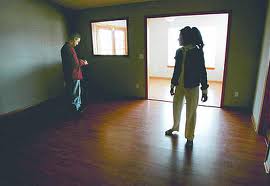
As a Charlotte property manager, my least favorite part of the job are the end-of-lease walk-throughs; that is, when the tenant moves out, and we visit the property to check out its condition. If there are damages, we need to decide whether they are “normal wear and tear” (no charge to the tenant) or damages that need to be repaired from the tenant funds. It’s very subjective.
There are three scenarios when it comes to these property manager walk-throughs. The house is left in:
1. Great condition: The tenant gets their security deposit back and the owner doesn’t have to pay much to get the home in market shape. Everyone is happy.
2. Mediocre Condition: Some of the damage is normal wear and tear, and some of it was caused by too much rough play by the tenant. This is where the greatest conflicts occur between owner and tenant.
3. Poor Condition: The security deposit is basically conceded by the tenant. They know they don’t deserve anything back and hope that there is no future contact concerning the property. The owner is able to use the security deposit to mitigate repair costs.
I’m going to focus on the most challenging situation, the home left in “mediocre condition”. This can elicit two different responses from the same walk-through report:
Owner: “You’re killing me! That tenant treated my home like a kid’s tree house and they are only being charged $500 for damages? Add a zero please! They should be put in jail! Did they ever think to cover the food in microwave so it didn’t erupt all inside of it? Did they decide to save money on towels and wipe their hands on the walls? The carpet was new when they moved in! You’re being easy on them! You represent me, remember? Why do you like them so much?”
Tenant: “You’re killing me! I treated that home like my own! I cleaned it daily. We took our shoes off when we were inside (which we shouldn’t have even bothered with, being that the carpet was shoddy-looking when we moved in- I told you this!! Remember??) There might have been a couple things wrong, but I could have fixed them for like $50! $500? Are you crazy?? I thought you liked me! This is highway robbery! You’ll be hearing from my attorney!”
Property managers are really trying to do the right thing, but are stuck in the middle of competing interests. It’s sort of like being friends with both the wife and the husband when they are in the midst of a divorce. You want to be friends with both (like usual), without either of them feeling slighted. Practically-speaking, that can be tough to do!
To make this experience as clean and easy as possible, I’d offer the following four suggestions to landlords:
1. Trust your instincts- there is no “right” answer and it is usually impossible to make both parties entirely happy
2. Be specific on damages and document repair costs
3. Have a consistent methodology on how costs are assessed
4. Take pictures or use video during the walk-through so tenants can see the damages they are being charged for
Though rental home walk-throughs can’t always be pain-free, there are ways to limit potential fall-out from this necessary part of the property management business.
Brett Furniss is the President & Owner of BDF Realty (“Charlotte’s Most Innovative Property Management & Investment Company”), and Rent-To-Sell Realty (“When You Need a New Solution to Sell Your Home”) which specialize in rent-to-own (lease options) and rent-to-sell homes. His newest book, A Real Estate Agent’s Complete Guide to Representing Rent-To-Own (Lease Option) Tenants (Delight Clients, Fill Vacant Homes, and Earn $2,250* Upfront! (*Minimum!)
Learn MoreCharlotte Property Management Weekly: 3 Approaches to Fixing Up a Rental Home

We sometimes take over management of homes that have been treated in, diplomatically-speaking, less than desired regard. It’s frustrating for the owners (and the property management company), especially in difficult economic times when cash is scarce.
The purpose of this article is not to talk about the root cause of this destruction (usually poor tenant screening), but rather the options available when faced with a rental home in bad shape.
It comes down to 3 potential approaches:
- Total Fix-Up: This is when everything is fixed so the home is in tip-top shape. New carpet, new paint, new everything! The upside to this approach is that the home will command top rent and a top tenant, while the downside is that it will demand top dollar to be spent by the owner. ROI on a 1-year rental with this approach is debatable.
- Partial Fix-Up: This is when the most pressing demands of the house are met. The house is cleaned well, the walls are touched up with paint, and the carpet is steam-cleaned. The goal is to make the house look like a good rental, not a show home. The upside to this approach is that it is much less expensive and will entice a good renter, while the downside is that it will not command top rent and the tenant will usually not be a neat-freak (we love neat freaks!!).
- No Fix-Up: This is when the home goes to market “as is.” Little to nothing is done to fix the home aesthetically and the tenant is asked to “have an open mind” and the property is listed as a “handyman’s special.” The upside to this approach is that repair costs are low and the home can be put on the market immediately. The downside is tough. Rents have to be lowered considerably, the quality of tenant suffers, and the house will be in even worse shape (think catastrophic) when the tenant moves out (evicted or otherwise).
So which is the best approach? The answer is the universal response in business school to any question- “it depends.” At different times and situations, each approach is appropriate. Many times this answer is dictated by finances. I mean, if you have no extra money, you are forced to use approach #3, right? And if your rental home has gotten to the point that it is absolutely disgusting, you probably have to opt for approach #1 at some point.
Generally-speaking, I’m a fan of approach #2. I try to stretch #2 as long as possible before I’m faced with the decision that the house has to go to approach #1 (or #3). Once I’m at that point, my preference is approach #1 (if finances allow).
The approach chosen for home fix-ups is a huge component on their ROI. One size does not fit all (as some are wont to do). Choose carefully (and profitably!)!
Brett Furniss is the President & Owner of BDF Realty (“Charlotte’s Most Innovative Property Management & Investment Company”), and Rent-To-Sell Realty (“When You Need a New Solution to Sell Your Home”) which specialize in rent-to-own (lease options) and rent-to-sell homes. His newest book, A Real Estate Agent’s Complete Guide to Representing Rent-To-Own (Lease Option) Tenants (Delight Clients, Fill Vacant Homes, and Earn $2,250* Upfront! (*Minimum!)
Learn More