

Charlotte Property Management Weekly: Pricing Rental Homes- List Above, At, or Below Market Value?

I have to admit, pricing rental homes is an issue that I struggle with. As a property manager in Charlotte for the past 6 years, I really should have a good grip on the right approach; however, I’m still constantly debating myself over the correct way to do it. And my therapist says this self-banter does not mean that I’m crazy.
So… it is safe to say that pricing is an inexact science. It is simply impossible to know what the optimal dollar figure is for any product or service. For example, let’s say you are a manager at The Gap (with the traditional logo intact). You put 5 sweaters on the rack for sale at $50 each. It takes 5 days and they all sell. Is this good? Was $50 the optimal price?
You’ll never know! Maybe you could have priced them at $55 each and still sold them in 5 days. Then you would have really screwed up; retail has been a tough field to be in for the past few years and the extra $25 in profit would have really helped The Gap’s stock price! Or maybe the sweaters should have been priced at $45 and they would have sold in 1 day. In this scenario, the lower profit would have been offset by the larger saving in inventory costs. But then again, who knows? Maybe at $45 each, customers would have perceived the sweater’s quality to be less and they would’ve taken 10 days to sell. It’s tough to figure out!
With rental homes, the confusion is similar. Below are the 3 pricing options available to every property owner:
1. Price Above Market Value: This is good if prospects will actually visit the rental; they may just look at the other rentals listed at or below market value. However, if the prospect visits and says they will take the place if the rent is knocked down a bit, that’s fine! The price can still be at or slightly above market value and the prospect is ecstatic they can tell their friends that they got a great deal.
2. Price at Market Value: An average amount of prospects will visit the rental and someone will take it in due time. The only issue is if the prospect says they will only rent the home if $100 is taken off of the monthly rent amount. Now the owner must decide if they want to lock into a below-market rate for a year, or roll the dice and wait for another qualified prospect. (Note: Rent negotiators usually turn out to be good renters. Unqualified or barely qualified prospects rarely try to negotiate the rental price. That takes chutzpah! It’s like getting into a bar at age 17 and arguing over the prices of shots.)
3. Price Below Market Value: Prospects will flock to the house and applications should roll in. Some people will still try to negotiate rent, but being that so many people are interested, these requests can be quickly (and justifiably) rebuffed. Locking into below market rates isn’t great in terms of ROI, but does provide the piece of mind of an occupied property with a good tenant (you can be choosy!).
So what’s the right answer? It depends. I know that’s not an overly helpful answer, but I’m not trying to be evasive. There are many factors that need to be considered besides the obvious ones (risk tolerance and financial wherewithal of the owner). Here are a few to ponder:
- If the property is 1 of 15 rentals in a neighborhood, pricing below market value could be a good point of differentiation. Conversely, if the rental is the only one in the neighborhood, it may be wise to price above market value.
- If it is probable that a real estate agent will bring a tenant in on a property, the pricing should be above market value. The reason? They will probably look to negotiate the rent down. If the tenant will probably come in from an ad, pricing at or below market value is probably the best strategy because they will be focused on the list price.
- If a downturn of activity is expected because of seasonality (like the Thanksgiving holiday through New Years), it would probably be smart to price below market value for the first few weeks of November. Having an empty house in November and December is going to kill the ROI; a rental reduction upfront in November will definitely have a better total net return than a month or two of extra vacancy.
So the moral is that pricing rental homes ain’t easy. Different times and situations call for different strategies. One size rarely fits all!
Brett Furniss is the President & Owner of BDF Realty (“Charlotte’s Most Innovative Property Management & Investment Company”), and Rent-To-Sell Realty (“When You Need a New Solution to Sell Your Home”) which specialize in rent-to-own (lease options) and rent-to-sell homes. His newest book, A Real Estate Agent’s Complete Guide to Representing Rent-To-Own (Lease Option) Tenants (Delight Clients, Fill Vacant Homes, and Earn $2,250* Upfront! (*Minimum!)
Learn More
Charlotte Property Management Weekly: The Options Available to Owners of Vacant Homes

As a Charlotte property manager specializing in lease options (rent-to-own and rent-to-sell), we get many calls from home sellers “exploring their options” about their vacant properties (unlike Obama, my puns are typically not intended). So, as a public service, I’ll run through the available options:
- Strategic default (I think this is what it is being called): Stop paying the mortgage and taking the credit score beating like a man
- Put the property on the market for sale: If the home is special and priced well, it will sell in some period of time. If not, eat the mortgage every month until the banks start lending again.
- Rent the property out: Get most of the mortgage paid every month by the tenant. Keep a tenant in the property until the market comes back and then place the home up for sale.
- Rent-to-sell the property: Put a rent-to-own tenant into the property who will pay the mortgage and potentially buy the home during their lease period.
- Rent out the property and then put it on the market: In my experience, this leads to disappointed sellers and upset tenants.
- Arson: Not recommended. And, no, this is not a service we offer!
All of these approaches obviously have pros and cons (like jail time). Depending on each respective person’s needs and tolerance for risk, each approach could be the appropriate one.
And to conclude the public service announcement, please contact your local property manager for further details.
Brett Furniss is the President & Owner of BDF Realty (“Charlotte’s Most Innovative Property Management & Investment Company”), and Rent-To-Sell Realty (“When You Need a New Solution to Sell Your Home”) which specialize in rent-to-own (lease options) and rent-to-sell homes. His newest book, A Real Estate Agent’s Complete Guide to Representing Rent-To-Own (Lease Option) Tenants (Delight Clients, Fill Vacant Homes, and Earn $2,250* Upfront! (*Minimum!)
Learn More
Charlotte Property Management Weekly: Your Rental Home Wants You to Wait Until It’s Ready

Every client we’ve ever had has wanted as little vacancy time for their rental as possible. Zero days are optimal; every day after zero winds up costing them money in utilities, mortgage payments, and maintenance. Not wanting to lose any money leads to a mentality of getting the home on the market as soon as possible, regardless of condition and resident situation.
So some clients want us to put their homes on the market prior to them being ready for occupancy. What I mean by this is that the home has not been completely repaired and there are still personal items in the house. They (or their current tenants) also are within the process of moving.
The rationale, by itself, is sound. The greater the length of time the house is on the market, the greater amount of potential tenants that can see it. If more potential renters see it, the law of large numbers would dictate that someone at some point would love it and want it.
However, does this really work? I would argue it doesn’t. Huh? Why’s that? Isn’t it common sense?
Simply, the American consumer’s mind works differently now. There is an inundation of information being flung at them on a constant basis. Most of it is ignored; however, there are some marketing messages that get through (like a rental listing). If the consumer takes the time and makes an inquiry to visit the property, there is typically one shot to get them. Their attention span is limited.
This one shot means that the house has to look perfect. This visit needs to conclude with the prospective tenant loving the house. If they see or feel something they don’t like, it will probably turn them off and they will want to find another home. And there are many other rental houses on the market that look very similar. The competition is fierce!
So why does this matter? Maybe the diamonds in the rough that aren’t turned off by the home’s uncleanliness will be unearthed and they’ll take it. It’s certainly possible. But are renters who don’t care about the condition of the home desirable? If so, there may be disappointment when move-out time arrives and the home doesn’t look so great. Clean people typically want clean homes.
The other main reason is that once the marketing of the property begins, momentum is started. The rental is on the top of all the searches from rental websites, people who are waiting for a rental are told about it by their property managers, and it is fresh. This is when things typically happen for an average rental home- the first two weeks. Interested calls, inquiring e-mails, and subsequent showings come quickly. They need to be harnessed and converted into applications and security deposits.
But when the rental house isn’t up to the task, momentum is stunted. Interested, potential renters see the property in less than ideal shape and compare it to better kept homes on the market. The home loses out. Or the current tenant in the home is packing boxes to move and glares at the renter who is interrupting their evening after work. The house looks horrible and the vibe is bad. Potential renters flee to the next home. Can you blame them?
With rental homes, it’s more about quality time on the market and less about total time. Make sure the rental home is ready and most inviting when the most people want to look at it!
Brett Furniss is the President & Owner of BDF Realty (“Charlotte’s Most Innovative Property Management & Investment Company”), and Rent-To-Sell Realty (“When You Need a New Solution to Sell Your Home”) which specialize in rent-to-own (lease options) and rent-to-sell homes. His newest book, A Real Estate Agent’s Complete Guide to Representing Rent-To-Own (Lease Option) Tenants (Delight Clients, Fill Vacant Homes, and Earn $2,250* Upfront! (*Minimum!)
Learn More
Charlotte Property Management Weekly: 3 Approaches to Fixing Up a Rental Home

We sometimes take over management of homes that have been treated in, diplomatically-speaking, less than desired regard. It’s frustrating for the owners (and the property management company), especially in difficult economic times when cash is scarce.
The purpose of this article is not to talk about the root cause of this destruction (usually poor tenant screening), but rather the options available when faced with a rental home in bad shape.
It comes down to 3 potential approaches:
- Total Fix-Up: This is when everything is fixed so the home is in tip-top shape. New carpet, new paint, new everything! The upside to this approach is that the home will command top rent and a top tenant, while the downside is that it will demand top dollar to be spent by the owner. ROI on a 1-year rental with this approach is debatable.
- Partial Fix-Up: This is when the most pressing demands of the house are met. The house is cleaned well, the walls are touched up with paint, and the carpet is steam-cleaned. The goal is to make the house look like a good rental, not a show home. The upside to this approach is that it is much less expensive and will entice a good renter, while the downside is that it will not command top rent and the tenant will usually not be a neat-freak (we love neat freaks!!).
- No Fix-Up: This is when the home goes to market “as is.” Little to nothing is done to fix the home aesthetically and the tenant is asked to “have an open mind” and the property is listed as a “handyman’s special.” The upside to this approach is that repair costs are low and the home can be put on the market immediately. The downside is tough. Rents have to be lowered considerably, the quality of tenant suffers, and the house will be in even worse shape (think catastrophic) when the tenant moves out (evicted or otherwise).
So which is the best approach? The answer is the universal response in business school to any question- “it depends.” At different times and situations, each approach is appropriate. Many times this answer is dictated by finances. I mean, if you have no extra money, you are forced to use approach #3, right? And if your rental home has gotten to the point that it is absolutely disgusting, you probably have to opt for approach #1 at some point.
Generally-speaking, I’m a fan of approach #2. I try to stretch #2 as long as possible before I’m faced with the decision that the house has to go to approach #1 (or #3). Once I’m at that point, my preference is approach #1 (if finances allow).
The approach chosen for home fix-ups is a huge component on their ROI. One size does not fit all (as some are wont to do). Choose carefully (and profitably!)!
Brett Furniss is the President & Owner of BDF Realty (“Charlotte’s Most Innovative Property Management & Investment Company”), and Rent-To-Sell Realty (“When You Need a New Solution to Sell Your Home”) which specialize in rent-to-own (lease options) and rent-to-sell homes. His newest book, A Real Estate Agent’s Complete Guide to Representing Rent-To-Own (Lease Option) Tenants (Delight Clients, Fill Vacant Homes, and Earn $2,250* Upfront! (*Minimum!)
Learn More
Charlotte Property Management Weekly: $200 Rental Application Fees- Genius?
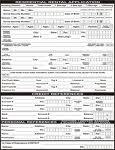
I don’t find myself being amazed at things very often, but I have to admit I was taken aback when I saw a large property management firm change their application fee from $25 to $200.
My initial thoughts were, “who is willing to pay that?” and “how can I justify charging that much for a rental application fee?”
I don’t know why they changed their rental application fee, but I have a guess- they got way too many applications from candidates who would never qualify to rent! Their people were inundated! So they used common sense.
In general, if a company wants less people to apply, then all they have to do is raise their application price. Corporations in every industry do something like this to control demand. If they want to sell less sweaters ($50 retail), then they raise the price to $100. If they want to sell more, they lower the price to $25. Simple.
But a smaller number of applicants equal less people who may rent the house. That’s bad! Maybe… But what if the tenants are screening themselves so that the non-qualifiers don’t even bother applying? If the probable non-qualifiers know they are borderline applicants, they still may be willing to gamble away $25 on an application fee. But $200? Not very likely!
Another thing I liked is that the property management firm refunds the $200 application fee if the tenant is approved. Now, good applicants know there is no risk to applying at $200 a pop. This property management firm is using price to lower the amount of resources needed to screen applicants (by lowering the number of applicants themselves!). They are also freeing their people up to work on higher margin activity (like filling the rental properties with their smaller, but better, applicant pool).
What’s not to like? Should every firm go to $200 per rental application?
As I racked my brain to figure out why I shouldn’t raise our rental application fee to $200, I came up with several reasons:
- Applicants who don’t qualify will get really angry; not $25 loss angry, but $200 loss angry (which could equal the money earned in several days of work). This can really stress out employees and make it so they want to work for someone who has $25 application fees and not get screamed at everyday.
- Employees would need to be prepared to be doggedly challenged on turned-down applications. That means the tenant screening process would need to be super- tight and really easy to explain. This would also remove some (in my opinion) much needed subjectivity in the application screening process.
- The main objective of changing the application price is to save time. Unfortunately, almost every person that calls is new to the firm. That means the $200 rental application fee will have to be explained in every phone call! I’m getting a headache just writing that.
I still think it’s a great idea; I’m curious to see how it will work in practice. I’m still a middle-of-the-road $75 rental application fee believer, but am ready to be convinced otherwise!
Brett Furniss is the President & Owner of BDF Realty (“Charlotte’s Most Innovative Property Management & Investment Company”), and Rent-To-Sell Realty (“When You Need a New Solution to Sell Your Home”) which specialize in rent-to-own (lease options) and rent-to-sell homes. His newest book, A Real Estate Agent’s Complete Guide to Representing Rent-To-Own (Lease Option) Tenants (Delight Clients, Fill Vacant Homes, and Earn $2,250* Upfront! (*Minimum!)
Learn More
Charlotte Property Management Weekly: Delayed Rental Walk-Throughs Cost Everyone Money
Unfortunately, I’m yawning as I’m writing the title of this article. I’m not sure how to jazz it up a little (maybe “Lindsey Lohan falls for property manager during rental walk-through! Then she heads back to rehab.” I’m intrigued at least.
Learn MoreCharlotte Property Management Weekly: Another Ploy in Rental Home Fraud
Perhaps the next “big thing” in rental fraud is high-jacked rental house ads. We just started managing a property and were surprised when potential tenants started contacting us about a different Craig’s List ad on the same house (at a much lower rental rate); they were wondering which of the Craig’s List ads for this rental house was legitimate.
Learn MoreCharlotte Property Management Weekly: Reaction to Proposed FHA Loan Changes for Those in Lease Option Contracts: “No Sweat”
It reminds me of one of my high school friend’s patented lines when he would see one of us wearing an ugly shirt or some God-awful hat, “I didn’t think there was a possible way for you to get even less girls, but you may have found it.”
To extend this wisdom to the real estate industry, if real estate agents didn’t think there was a possible way to do even less brokerage business, FHA may have found a way.
Learn MoreCharlotte Property Management Weekly: Lessons from the Banking Crisis for Properly Structuring Incentives for Rent-To-Sell
Potential clients of ours ask, “Why do you charge a “Realtor Fee” of 5% or 6% when a rent-to-own tenant buys our home (rent-to-sell)? Some of your competitors provide the tenant, keep the upfront option fee, and then let us manage the property. We then only pay the attorney fees when the tenant buys.”
We answer, “So you don’t experience something akin to the banking crisis.”
Learn MoreCharlotte Property Management Weekly: Maybe You Shouldn’t Fix Up your Rental Home?
Unfortunately, trophy rental homes with bells and whistles don’t make money; average homes do. So the key is to keep your rental home average and undifferentiated? That doesn’t sound like good marketing, does it?
Learn More