


Take it From NFL Quarterbacks: Be Thankful for Your Vendors
“…the Chiefs quarterback opted to go big with his show of appreciation for his offensive line with this year’s presents. Mahomes hooked up his protectors with sets of TaylorMade golf clubs, complete with custom bags featuring their jersey numbers and a box of balls for good measure.”
(Nick Selbe in Sports Illustrated: 12/21/22)
“Hi, I’m Dan Marino, and if anyone knows the value of protection, it’s me. So I take care of the hands that take care of me with Isotoner gloves.”
(Ace Ventura 1994)
“Rejoice always, pray without ceasing, in everything give thanks; for this is the will of God in Christ Jesus for you.”
(1 Thessalonians 5:16-18)
Every year I see articles talking about what Christmas presents NFL quarterbacks give to the members of their offensive line (typically around 10 guys). Looking at past gifts from the quarterbacks below, they seem to be pretty nice items and run the gamut:
Mac Jones (New England Patriots): Bitcoin
Carson Wentz (Indianapolis Colts): Bourbon, some meats, & Yeti coolers
Jalen Hurts (Philadelphia Eagles): Louis Vuitton travel bags
Dak Prescott (Dallas Cowboys): Air Jordan 11 Retro sneakers
These are not cheap gifts. When your livelihood (and long-term health!) depends on these offensive lineman preventing defenders from taking your head off, it is imperative to make sure they know they are appreciated. And now all the starting quarterbacks in the league make it a point to give nice gifts to the guys that try to keep them upright every game.
On that vein, I was listening to a video the other day and the instructor was talking about running a property management company. He reasoned that the main component of success was the ability to retain tenants; then he began his discourse into specific reasons why tenants did not re-sign their leases. The #1 reason, by far, was that repairs were not completed in a timely fashion. He argued that fixing things promptly is the silver bullet to keep tenants. Landlords can try other things like offering gift cards or flat screen TV’s as lease re-sign bonuses, but they offer little benefit if a tenant’s heating system hadn’t been functioning for 3 weeks the previous winter (like a now ex-neighbor told me recently had happened to him). To his point, most dissatisfied tenant’s Google reviews against property managers stem from delayed repair resolutions.
How does a landlord avoid lingering repair issues? First of all, work orders must get off the landlord’s desk and be directed to the appropriate vendors ASAP. Then, it’s all about vendor quality that will drive tenant satisfaction and property management success.
So, the lesson is… hire great vendors! Hire vendors who care. Hire vendors that realize that having the heat go down on a Friday afternoon means that it is going to be an awful weekend for the tenant if the work order is pushed until Monday. I’m amazed (and thankful!) that many of our vendors voice disappointment when they can’t get there the same day or a repair they made didn’t hold. They have empathy that it could be their families who are shivering at night or have no working plumbing. It takes a servant’s heart to put someone else’s family before your own.
Once a landlord finds these core, caring vendors and puts them to work, it is time to play the role of the thankful NFL quarterback. I’m not sure that necessarily means Louis Vuitton travel bags or TaylorMade golf club gifts (maybe some Isotoner gloves?), but I’d recommend the following four things we try to give our vendors:
- Loyalty: We give most of our business to our best vendors and keep it there
- Payment: We make sure invoices are paid consistently, in full, and when expected. They should be able to worry about their jobs, not exerting energy to collect due funds from us.
- Grace: Everyone messes up from time to time. Taking off people’s heads for honest mistakes isn’t going to help anyone. And when you do this long enough, you know that grace is a two-way street.
- Thankfulness: Let them know how much you appreciate their effort on a day-to-day basis. We all like to feel like what we do is noticed positively.
NFL quarterbacks may have millions of dollars to shower their guys with Bitcoin “thank you” gifts, but sometimes the smaller gestures above can go even further. Give thanks and take care of the hands that take care of you!
Have a wonderful Thanksgiving & Happy Landlording!
Learn More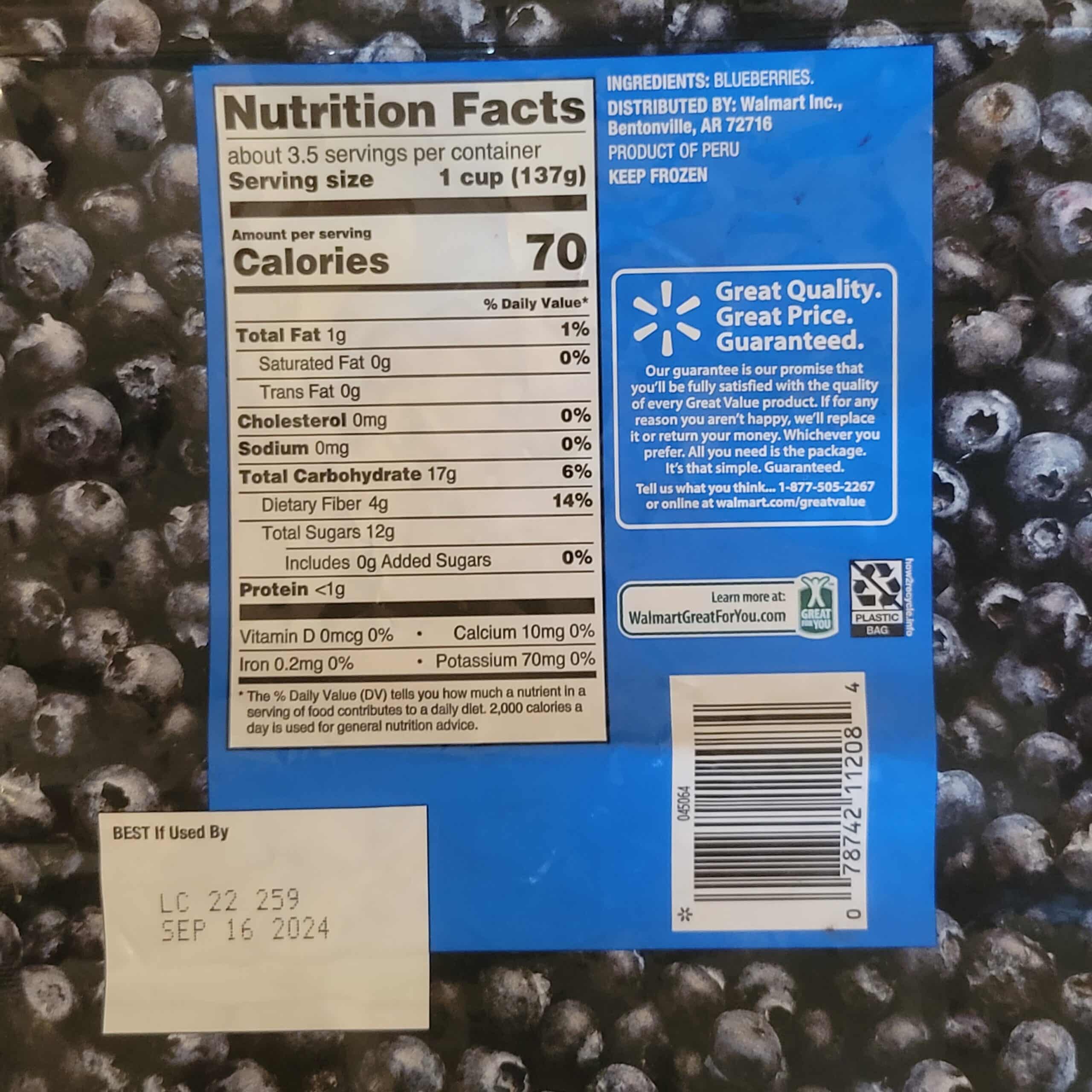
“100% Guarantee For Your Rental Home!” Delightful or Sour?
Tommy: Here’s how I see it. A guy puts a guarantee on the box ’cause he wants you to feel all warm and toasty inside.
Ted: Yeah, makes a man feel good.
Tommy: ‘Course it does. Ya think if you leave that box under your pillow at night, the Guarantee Fairy might come by and leave a quarter.
Ted: What’s your point?
Tommy Boy (1995)
My 9-year old son was eating frozen blueberries a few weeks ago and started to complain about them. “They’re so sour! Gross!”
I advised him, “Well, that’s too bad. You get some good ones, and you get some bad ones. It’s the way life goes…” Then I patted myself on the back for imparting some timeless, Forest Gump parenting advice.
Sometime later, he complained again- and then three or four other times after eating these blueberries. Finally, I grabbed the package off the table and saw it was the “Great Value” Wal-Mart brand. My eyes narrowed on the “Great Quality. Great Price. Guaranteed.” guarantee printed on the back. Verbatim, it read:
If for any reason you aren’t happy, we’ll replace it or return your money. Whichever you prefer. All of you need is the package. It’s that simple. Guaranteed.
Now was the time to teach my son about the advantage of paying attention and reading the fine print! “Son, we’re going to Wal-Mart and you’re going to take care of it.” “Dad, are you sure we can bring this package in and they’ll give us the money back? I’ve already eaten half of them…” “Yes, son. It’s that simple. Guaranteed!”
After my son negotiated that he could keep the $2.99 windfall and put it towards a pack of football cards, he signed on to this gambit. We drove over to Wal-Mart and, from a distance, I watched my son explain to the customer service person that the blueberries were sour and that he wanted a refund. After a minute or so, he walked away from the counter, defeated, and let me know that we could swap it out for another bag of (sour) blueberries; there was no option of getting football card money instead.
Now Dad was sure there was a misunderstanding! It’s guaranteed! It’s simple! And it’s a $2.99 charge to a multi-billion dollar conglomerate! Well, yours truly fared no better when I approached the customer service desk and was promptly (but nicely) shut down. If I didn’t have the receipt or credit card it was bought with, their hands were tied. There was nothing that could be done.
Undeterred, as my young kids trolled the Wal-Mart aisles unattended, I called the #800 number that was located under the guarantee. After a 14-minute phone call of providing serial numbers, date of purchase, and personal information, the customer service representative (who was also very nice) said that we would receive a $5.00 Wal-Mart gift card mailed to us within 2 weeks, but no cash. When we got home, I sent a message through the “Great Value Guarantee” website and they referred me to the in-store customer service desk for any refund requests. I wrote back saying that was where it all started! Then I never heard back. Ugh!
If for any reason you aren’t happy, we’ll replace it or return your money. Whichever you prefer. All of you need is the package. It’s that simple. Guaranteed.
The final scorecard read: (1) in-store visit, (1) 14-minute phone call, (1) web inquiry, & (1) 2-week wait for a $5.00 store credit. So, obviously, it’s not that simple. And it’s far from guaranteed. And we are talking about getting $2.99 back from Wal-Mart which they explicitly stated was a sure thing on the package itself.
Great story! But what’s your point? What does getting a cash refund for a sour bag of Great Value frozen blueberries have to do with property management?
A lot, actually. It’s about the danger of relying on corporate guarantees when picking vendors, especially in real estate. Whether it is for home warranty insurance against bigger ticket items breaking down (HVAC systems, roofing, appliances, etc.), costly property management occurrences (eviction, pet issues, etc.), or just getting money back from poor work (a flooring vendor recently), it is difficult to get companies to honor them. No company wants to pay (not even $2.99!) and there is always a reason why the guarantee doesn’t apply. It’s frustrating, (super) time-consuming, and borderline unethical at times.
But that doesn’t stop them from being ubiquitous:
- Home warranty companies: “If your HVAC system goes down and it can’t be fixed, we’ll buy you a new one! It’s so simple. Guaranteed!”
- Property management companies: “If there is an eviction or pet damage, we’ll cover the costs- It’s so simple! Guaranteed!”
- Wal-Mart: “If for any reason you aren’t happy, we’ll replace it or return your money. Whichever you prefer. All of you need is the package. It’s that simple. Guaranteed.”
Life is too short. The best bet is to pick a company that consistently offers quality blueberries instead of trying to be compensated on the backend when they are sour. Getting the $2.99 back is arduous at best, and unfortunately, usually fruitless. Be wary of upfront guarantees and concentrate more on established track records of excellence!
Happy Landlording!
Learn More
Ohio State Football Recruiting Similar to Great Tenant Selection?
“He has shown you, O mortal, what is good. And what does the LORD require of you? To act justly and to love mercy and to walk humbly with your God.”
(Micah 6:8)
“No Shoes, No Shirt, No Dice.”
Spicoli in Fast Times at Ridgemont High
Ohio State college football has been a dominant program for a long time. In the last 10 years, they have a record of 106 wins and 13 losses while winning 2 National Championships. This makes them one of the top programs in the country as they have set a standard of excellence few teams can match.
To have a perennially highly-successful football team, Ohio State has been able to get great players to come to their school; great players make great programs! But how does Ohio State determine what high school football players will actually become great college football players? What do players need to demonstrate?
Like every college football program, coaches will look at all the on-field performance measurables: how many yards, touchdowns, tackles, etc. each player had in high school. And then the physical measurables: how fast, big, agile, and strong each player is. And then there is mental aspect where players will take tests and answer questions showing off their “football IQ”.
These are all very important metrics and are heavily considered; the top recruits all grade very well on most or all of the criteria. But what gives players who measure out well in the criteria above the edge over one another? I remember reading something about that from former head coach Urban Meyer. He said that one of the most important things he looked at in recruiting was how the high school player played in the biggest games and versus nationally-ranked players in one-on-one match-ups; he was looking for what he considered true greatness. Did their performance ramp up to meet the challenge or was it pedestrian? Did most of the players noteworthy performances come against average teams or did their biggest, statistic-rich games come against the best players in the most high-profile games? Did they look forward to and excel in the most competitive situations and will their team to win? Coach Meyer believed that getting the types of players who had the ability to rachet their games up a notch was paramount to Ohio State winning national championships.
In property management, tenants are the big-time recruits! Landlords are looking for tenants who pay on time, maintain the rental homes well, and stay out of trouble. If landlords can secure great tenants, property management can be really easy! This is why great landlords spend considerable resources on tenant screening. We look at all the measurables of the “Big 4”:
- Employment & Income
- Past Landlord Reports
- Credit Check
- Criminal Background Check
Measurables tell most of the story and tenants who grade out highly in these areas can provide a solid program. But what about in situations when there are many tenants applying for one house? Who is the best one when all the measurables look good? Who is going to take care of the house? If some bad event happens, who is going to remain steady and still pay rent? Bottom line, how can great tenants be found?
These are tough questions. The right tenant roster can make or break a landlord. What to do?
I tend to pay extra attention to 2 things:
- Debt level (and the corresponding available credit): How extended is the tenant? Hard times: If there is a sudden job loss or car issue, can they absorb it?
- Past landlord reports: What did they think? Did they like the tenant or was the tenant difficult to deal with? How did the house look when they moved out? Would they rent to them again?
At the end of the day, Ohio State football and smart landlords are looking for great players. Great recruits win championships and profitably pay off rental houses. Pick wisely!
Happy Landlording!
Learn More
Don’t Be a Desperate Housewife (or Landlord), Just Push the Right Buttons
“Desperate times call for desperate measures.”
Hippocrates
Typing the word “desperate” makes me think of the old TV show, Desperate Housewives. The story centered on four suburban women who were neighbors. They found themselves making risky choices in order to look good, be fulfilled, and live the lives they thought would make them happiest. This made their lives hectic and drama-filled. And it also made it one of the most successful shows on TV for its 8-year run.
However, no one really wants to live the way they did; it may be entertaining to watch, but it’s not peaceful. Desperate is not desirable.
Desperation can elicit hopelessness and cause knee-jerk reactions:
I never think anyone is going to marry me! So I’ll lower my standards and date anyone and try to make it fit.
I don’t have any money and lots of debt. I’ll rob a bank.
We need to win a championship this year or the fan base will be calling for my head. I’ll trade away future draft picks, get a marginally better player now, and hope it works out.
We see it in all walks of life in many different situations. Desperate situations make people feel that they have little choice but to make hasty and risky decisions. And these decisions generate results that usually share one common trait- they are poor.
For landlords, they typically begin to feel desperate when their rental properties are vacant and they need tenants to move-in and start paying rent. Things look bleak as time rolls by and there has been:
- Financial bleeding: mortgage payment, management costs, utilities, lawn mowing
- Vandalism and/or squatting while vacant
- Only substandard applicants applying
It’s tough. There is pressure on landlords to accept the first person that has the deposit and first month’s rent to put down. “Just move in quickly, please!! We need this off the market to get the rent coming in!”
As a Charlotte property manager, we are not immune to this either. We get some version of this at times:
Aren’t you the professional?? Why is my property empty? What does your marketing look like? It doesn’t seem to be working, bud!! I could do better than this myself!
Desperation can take hold… And it takes discipline to stick to the fundamentals and not succumb to the pressure.
When a property has sat on the market for longer than expected, the key is not to panic! Slow down, take a breath, and push the right buttons:
If there are no showings of the property:
- Double-check the marketing, add/replace pictures, make sure the home is coming up in on-line searches. Then see if any showings happen. If not, go to step #2.
- The price is too high. Lower it ASAP. Prospective applicants are not seeing the value on-line versus other homes.
If showings are being generated:
- Ask people who have seen it why they are not filling out an application. It will usually come down to some cosmetic issue. Take care of the issue! Note: Some “cosmetic issues” are personal preference- if it is not a major flaw and only one or two people comment on it, it might not make sense to address it if it is costly. If almost everyone mentions it, it either needs to be fixed or the price needs to be lowered (or both).
I remember we had a large house on the market that “desperately” needed work. We did not want to pay for it (it was going to cost a lot to get to market shape) and we were hoping we could slide by with one more rental cycle before ordering the major (cosmetic) fix-up. We went a few months with several showings, but no approvable renters from those who filled out an application. Most non-applicants who visited the home cited a few issues they wanted addressed. What to do?
The easiest way path is to give in to the desperation, roll the dice, and approve a risky tenant. In contrast, experienced landlords will reject substandard tenants, double-check the marketing, fix any reasonable home repair issues, and lower the price. It’s better to wish you had a tenant than wish you didn’t.
Don’t fall for the feeling of desperation and press the panic button! Stick to the fundamentals and your future self will thank you for dodging the money/time/emotional sinkhole of the eviction process. Don’t let yourself become another desperate resident of Wisteria Lane!
Happy Landlording!
Learn More
Is Signing Zion Williamson a Worthy Tenant Placement Strategy?
“Therefore everyone who hears these words of mine and puts them into practice is like a wise man who built his house on the rock. 25 The rain came down, the streams rose, and the winds blew and beat against that house; yet it did not fall, because it had its foundation on the rock. 26 But everyone who hears these words of mine and does not put them into practice is like a foolish man who built his house on sand. 27 The rain came down, the streams rose, and the winds blew and beat against that house, and it fell with a great crash.”
(Jesus Christ in Matthew 7:24-27)
“…(Zion) Williamson and the team quickly agreed on a five-year rookie max extension worth at least $193 million. The new deal will kick in at the start of the 2023-24 season, and the figure could rise to $231 million if Williamson makes an All-NBA team or wins a major award next season. The No. 1 overall pick in 2019, Williamson’s career has been plagued by injuries and concerns about his conditioning. He missed nearly his entire rookie season after undergoing knee surgery, was shut down early in his second season with a broken finger and did not play at all last season due to a broken foot that required surgery and did not heal as quickly as expected.
When he has been on the floor, he’s been spectacular. In his second season, when he played 61 games, he averaged 27 points, 7.2 rebounds and 3.7 assists per game while shooting 61.1 percent from the field, and was named an All-Star. All of which is why, despite his injury history, the Pelicans were eager to extend him as soon as possible. At the same time, giving $193 million to a player who has been on the court just 85 times is a risky proposition.”
(Jack Maloney in CBSSports.com 7/29/22)
As stated above by Mr. Maloney, when Zion Williamson is healthy, he is a spectacular basketball player loaded with potential. With experience, he could even be much better!
If Zion was a healthy tenant, he’d be the dream of any landlord. He’d be paying above market rent, he’d keep the place spotless, the rent would come in early each month, and there would never be any outside complaints about him. He’d maintain the property flawlessly and even take care of minor repairs on his own (and on his own dime!). His uncle would be a world-class handyman who loved to stop in and help his nephew out with some free repairs and upgrades from time-to-time. He’d kick some courtside tickets to his favorite Charlotte property manager when the Pelicans came in to play the Hornets. And, to boot, Zion would love the house and want to rent it forever.
Cash flow heaven!
But what if, as his application suggested could happen, he got hurt and lost his job? Things could start going downhill quickly for Mr. Williamson (and his landlord):
Rent? Late and not paid in full. Eviction is probably required (NBA tickets now nixed)
Repairs/Maintenance? Not up to it
Outside Complaints? The lawn guy who is not getting paid stops the service. Air filters are too expensive now. The HOA and City are up in arms and threatening fines.
His Beloved Uncle? Now that Zion is hurt again, he doesn’t seem to come around…
But Zion? He still wants to stay in the house forever!
As a property manager in Charlotte, we get rental applications from people similar to Zion. They have a lot of potential and are willing to pay top rent, but their rental screenings show that they are susceptible to bad stretches of luck (which made some of their past tenancies bad landlord experiences…). The question is: are they just isolated events in their lives or a pattern? Is Zion Williamson going to continue to miss seasons with injuries or will he turn the corner? It’s impossible to predict. The New Orleans Pelicans apparently believe he will be healthy as evidenced by them handing him a $193M guaranteed contract.
So is the high risk, high reward strategy a good or bad one? I believe it depends who the landlords are and whether they can financially handle the downside.
Example: The institutional investors who have bought up thousands of houses in Charlotte seemed to have embraced the high-risk strategy. They list their rental homes for above market rent and then accept risky tenants who are willing to pay. Does it pan out? Well, I had read something that said one of the institutional investors had a 25% eviction rate; that’s super high (bad!). It also means that 75% of their tenants were able to pay the above market rent to them monthly (good!). So spread over enough houses, the excess rent may be able to pay for the evicted houses that face no incoming rent, court costs, and needed repairs. The math could work, even in their favor(!), when factoring in that they probably have faster tenant placement times due to less stringent tenant screening.
However, we work mostly with smaller investor-landlords (the “Mom-and-Pops”), where this strategy wouldn’t work well. One bad tenant could destroy their profit for the year, let alone two of them. We need “build on the rock” tenants, not “sand” tenants, because our property management clients need them to hold up in storms. So that has been the strategy that we have used. It requires more stringent tenant screening and sometimes a longer placement time. But we will feel it is the wise strategy for our particular client base.
Zion is a great, generational basketball talent and all basketball fans want him to get healthy so they can enjoy watching him play. But not all landlords can afford to risk $193M to find out if he’ll even be on the court. Pick your tenant placement strategy accordingly!
Happy Landlording!
Learn More
“Oh, you know, COVID…”: Spotlighting Tenant Retention Amid Rising Costs
“I noticed you didn’t post a blog last month? I really missed it!!”
(Actually, no one said this…????)
I think one of the frustrations that I’ve had in the last year is how seemingly how every business underperforming service-wise or raising prices can be explained away easily by COVID or her offspring (shortages, inflation, sharp price increases, not enough employees, etc.). Examples:
My coffee cost $4.00 last week and now it is $5.50. Why?
“Oh you know, COVID… Prices of coffee in South America have spiked due to complications in the harvesting process and container price shipping increases.”
Why wasn’t the gym open this Monday when I showed up there?
(A sign with a partial explanation was posted to the locked front door on Monday and then Tuesday the front desk person offered more details)
“Oh, you know, COVID… Staffing is still really tough as no one wants to work anymore. Once people left the workforce, they just didn’t want to come back. You know, I think it’s mostly due to video games- guys just prefer to play them all day instead of going to work.” (Oh, really???)
Voicemails I run into frequently: “Due to recent events, call volume has increased creating longer than normal hold times.”
(I’d like to get an explanation on why this voice mail message is still there and has not changed in almost three years). But I can speculate… COVID?
I can be frustrated as a consumer, but understand it. I’m used to getting what I want at a reasonable price and in a reasonable time period and feel slighted when I don’t. Pretty much every business has raised prices and many have had hiring issues. It’s a fact that costs and wait times have skyrocketed whether I agree with the causation rationale or not.
Many landlords have experienced “Oh, you know, COVID…” conversations for the costs now associated with fixing up rental homes between tenants. All of the issues above coupled with a hot real estate market has led to sticker shock when these repair quotes come out. The cost of painting an entire house and replacing the flooring (as well as the myriad of handyman issues) has risen, especially when landlords compare prices 5-10 years ago (think double).
Rising rents after fix-up will eventually offset these increased costs, but it is still painful to look a $10K+ repair bill and know that the person writing that check is going to be you. So, how can this be avoided?
It can’t be avoided forever. However, there is the strategy of kicking the can down the road as long as possible. This can be accomplished through an intentional effort in tenant retention. The basic rationale is that if tenants don’t move out, most repair costs (cosmetic, that is) can be avoided until after their tenancy is eventually over.
So how do landlords accomplish tenant retention? There are books written about this, so I’m not going to go into all the creative ways people have thought up of: giving free flat screen TVs to the tenants when they sign a multi-year lease, delivering chocolate chip cookies on their birthdays, having a monthly rent credit incentive where some of the money is forfeited if tenants move-out prior to a set number of years, etc. The advice below is for a landlord who is more a “nuts and bolts” person and doesn’t bake very well.
The great news is that the cards are stacked in the landlord’s favor right now so most of what I propose is being done by others already. The landlord’s job is just to keep the rental rate reasonable on lease extension offers. That’s it. I’m not even saying to not raise the rent at all; just don’t be greedy. That’s the only thing the landlord has to do right now as a decent tenant retention strategy.
Very few people like to move. Landlords should continue to perform normal landlord activities in a timely manner so tenants do not have some explicit reason why it is imperative for them to leave the house. And be pleasant. Then wait. The heavy lifting is already being done by the big institutional landlords who own houses nearby and are raising the rents up 25%-50%. When tenants see the advertised rental rates of homes on the market and then see their reasonable lease extension rate, most will stay put.
If the tenant still leaves, then biting the bullet on fixing up the property may be an unfortunate reality. But the silver lining is that the house can now be advertised at the higher market rate (thank you again, big institutional landlords!) which will reduce the time on the ROI.
Best of luck keeping your good tenants around and avoiding the “Oh, you know, COVID…” expenses on your rental home for as long as possible.
Happy Landlording!
Learn More
Rental Roomies & Higher-End Homes a Win-Win?
“Many hands make light work.”
(Old English Proverb)
I remember back to my college days in sunny Arizona when I had to figure out where I was going to live my sophomore year. Most of my friends were thinking of staying in the student housing in the dormitories for Year 2. I had virtually no experience with rental properties and wasn’t sure what to do.
I talked to my Dad about it (I learned early it was always smart to run my plans by my financial backer first). He didn’t really have any input on where I lived; I was the third child and he was much more pragmatic. “I’m paying XX dollars for your housing- just let me know in what bank account it should go. So, in that brief exchange, I had my financial backing and freedom to choose where to live.
Some of my friends got similar commitments from their parents and we were house hunting! Of course we were all-in on finding a house with a pool (common in hot Phoenix) and hot tub (more rare, but not insurmountable). We found a 4 bedroom house with both, plus lemon and lime trees in the backyard to boot. It came to $1,200.00/month (which was high back then for Phoenix and definitely over market rate).
But… split between 4 guys it was $300.00/month which was a third of my Dad-provided housing budget. I now had extra funds to play with. We, as a group, were overpaying, but I was psyched! I was paying much less than if I was living on my own or with one other roommate.
I’m seeing a similar play in the rental market as prices continue to rise. Some of our higher-end rentals are (smartly) getting taken by groups of young professionals.
First, as a point of reference (according to Rent.com), the average one-bedroom apartment in Charlotte in April 2022 costs $1,513.00/month and the average two-bedroom is $1,730.00/month.
If we chop that into per person, we can calculate roughly $850 – $1,500 per person. When that is multiplied into a 4 or 5 bedroom home or townhome, you can equate that to a $3,400.00 (low end) to a $7,500.00 (upper end) rent spend- and that’s going off of averages. Obviously, some people spend more than that on their housing.
As good of a strategy it is for tenants to decrease their rental costs, it is also a good one for landlords. Purchasing lower-priced housing in Charlotte has been very competitive for years, but most investors typically avoid higher-end housing. However, by buying higher-end housing and marketing to roommate situations, it could allow for good cash flow. Relatively-speaking, there is just not that much higher-end housing available for rent in the Charlotte market. Really nice, feature-rich houses could go fast and for top dollar.
For now, it’s a good deal for all, much like my college housing. Tenants get better housing at a lower price and investors get less buying competition and the ability to charge higher rents. It could be a rare win-win in the current investment housing market.
Happy Landlording!
Learn More
Good Landlords & the Golden State Warriors: A Deep (Vendor) Bench Matters
The Warriors won the NBA title this month in an exciting series versus the Boston Celtics. Steph Curry, the star of the team (and local Charlotte product!), won NBA Finals MVP and fellow starters Andrew Wiggins and Klay Thompson played well. But one of the major reasons they were able to pull off a series victory was the play of their bench. Less heralded Warrior’s players- namely Jordan Poole, Kevin Looney, and Gary Payton, Jr.- gave the team great minutes while the starring players weren’t on the court. “Strength in Numbers” was the team’s slogan during the regular season and it continued in the playoffs leading to an NBA Championship.
This is also applicable for landlords utilizing the vendors they have to do maintenance and repairs on their rental homes. I got a call last week from someone interested in our property management services. When asked what prompted the call, she said that her handyman had gone back to the workforce; this left her without anyone she trusted to do the work on her rental home in a timely, well done, and reasonably-priced manner. I could empathize.
When COVID hit, many people who had little time to make home improvements suddenly became very interested in their homes. Part of it was being home and seeing many of the issues their homes had that they had ignored. Some of it was just making improvements so they could enjoy their home as they were around much more. Either way, it led to vendor demand to increase which led to scarcity of vendor availability and price increases. This hit property managers as well. The advantage swung to vendors as they had more work than they could handle, putting them in a position to refuse jobs and not call prospective customers back. This trend continues now.
The good news for experienced property managers is that most have a deep bench of vendors. While we use many of our “stars” regularly to service our homes (and have for years), it is helpful to have a list of secondary vendors who are proven to do good work. Going to Google as sudden needs arise and hoping that a vendor is going to provide tenants a good experience is not ideal. It is far better to incorporate new vendors on a regular basis on smaller jobs to ascertain if they meet expectations. Cultivating a good vendor list is an asset that makes a property manager’s job much easier and keeps owner clients and tenants happy.
Though property managers have a built-in advantage of managing large number of homes which can make working with them attractive (repeat business), smaller landlords can also build good vendor lists by:
- Being courteous with vendors and trying to make things easy for them
- Paying quickly and in full
- Providing pictures and details upfront of what needs to be done so they can minimize trips and maximize their revenue
- Working with their schedules and only accelerating issues that are truly time-sensitive
- Providing referrals to them from friends and family that need similar services
- Writing 5-Star Google reviews (when warranted)
The Warriors would arguably not have gone far in the playoffs and won a championship if they did not allow their bench players to play meaningful minutes and make them feel like a valued part of the team. Smart landlords should do likewise and use secondary vendors on occasion so they are in the fold and can be utilized when the need arises.
Happy Landlording!
Learn More
As Landlords (Temporarily) Rejoice, Renting Still Has Its Merits
“Every cloud has a silver lining” & “The grass is always greener on the other side”
(Popular Axioms)
I’m not sure I’ve ever read an article that talked about the “joys of renting.” I’m sure it exists somewhere. Maybe it’s because I’m saturated with a bunch of real estate industry communications that always tout “the dream of homeownership” and how everyone should strive for it. I’m bombarded by banter like, “There’s no feeling like stepping over the front door threshold for the first time and knowing that you own the home”*.
* As my uncle likes to point out, it must be the warm feeling that comes from knowing that your bank actually owns most of it.
The way home prices and rents have shot up, the pro-homeownership articles seem to have a lot of merit! After sorting through all the mail and texts from investment groups hungry to buy homes, it is sometimes shocking to see what prices they are offering. It makes me think, “I don’t think I have much money, but these people are telling me I’m sort of rich…”
But as a veteran of leaner landlord times when rent barely covered the mortgage (and often went negative when repairs and vacancy happened) and it was hard to sell a house, life wasn’t always so rosy. I often thought of how renters had it pretty good in many respects:
- No fear of a $10K repair call at any moment
- If something major breaks, call the landlord and let him deal with it
- If you want to live somewhere else at any time, just move. No fuss, no muss.
That all holds true today.
So, though it seems landlords have a better situation now, things change. Renting will always have merit and hot markets always turn sour at some point.
Homeowners and landlords are able to enjoy current market conditions (and they should!), but renters shouldn’t feel totally left out. Things always swing back and forth and renters always have some built-in advantages in any market that owners never get to enjoy.
But, for now, landlords should rejoice!
(Very) Happy Landlording!
Learn More
Rental Tenant Interviews: 3 Additional Questions To Ask
“Winning is not a sometime thing; it’s an all the time thing. You don’t win once in a while; you don’t do things right once in a while; you do them right all of the time. Winning is a habit. Unfortunately, so is losing.”
Vince Lombardi (former Green Bay Packers Head Coach)
With low unemployment numbers, job applicants seem to really have the upper hand in the hiring process now. The stories are interesting, if not shocking, to someone who remembers pleading for employment back in the day. I remember it being nerve-wracking going into interviews and then wondering how things went afterwards:
Did they like me?
I might have blown question #3; I hope that doesn’t sink me
How long should I wait to get a call back before following up?
Where’s a stamp to send a “thank you” letter for the interviewer?
My greatest weakness? Oh, sometimes I just work too long and hard and forget to eat…
But now, the onus seems to be on the companies. They need workers! They ask:
What kind of coffee would you like? We have lots of different kinds and sweeteners! Oh, you want Gatorade instead? No problem! I like your style already!
When did you say you could start?
Do you prefer a car service to work or did you just want to work from home?
Is this person going to show up or did we get “ghosted” again?
Fortunately, for property managers in Charlotte, the advantage is with the landlords (for the time being…). There are a smaller number of Charlotte-area rental homes available for prospective renters, especially those priced on the lower side. It is not uncommon to get many rental applications on the first day a rental home comes on the market. Tenants compete to secure these homes.
But with so many applications, how does one choose a winner?
Sticking with the basics is paramount- credit and criminal background checks, landlord history, employment/income verification. These are the backbone of finding the best candidate. However, there is often a lot of grey area left after finding out this basic information, especially when several potential renters have very similar background results. It can be tough to figure out who to approve.
So what to do?
There’s a common saying in human resources that the job interview begins at first contact; so what has the prospective tenant shown us so far in our dealings? Here are three questions that may be helpful in further assessing closely qualified candidates:
- Were they on-time (or early!) if we met them at the property?
- How long did it take for them to provide any documentation we needed to run their application? Did we need to ask several times?
- (And what I think is the most telling) Have they been pleasant to interact with?
As Coach Lombardi said, “you don’t do things right once in a while; you do them right all the time.” It’s a habit. Regular background checks will reveal much of the habits of applicants. We want tenants with good ones! And courtesy, responsiveness, and (especially) pleasantness are other habits that are invaluable to landlords.
Happy Landlording!
Learn More