


Finding Value & Buying Rental Homes on Your Credit Card
Fresh out of college, I was living in New York City and was slinging cell phones by day (they were relatively new back then) and dreaming big dreams at night. How could I become financially successful like many of the people I was passing on Wall Street everyday? I wasn’t overly into finance, but started reading a lot of material from the real estate gurus. Be a millionaire with no money down! Live off of passive income to live the life you’ve always imagined! It’s so easy anyone can do it!
That sounded right up my alley- easy and something even I could do. If that mother of 6 in El Paso could be netting $25K month in passive rental income, surely I could do half of that? I was all-in. Unfortunately, New York City real estate was prohibitively expensive for me to buy (got $1M to plunk down?), so I wasn’t sure how I would get started.
So I moved to Charlotte and became a full-time Charlotte real estate investor. The $1M homes were replaced with much more affordable options. I posted classified ads (“We Buy Homes!”) and tried to follow the guidelines from the infomercials. I joined an investment club and started getting calls and e-mails for discounted homes to buy.
Many of the homes were really cheap, some to the tune of $50K. The problem was to what to do with them after purchase. Most people didn’t want to live in them as they were in “war zones”. I’ve never been a gun guy, but visiting some of these homes made me think hard about my self-protection stance. I didn’t feel overly safe at many of them and replacing broken windows constantly didn’t seem economically savvy. So I, and others, passed on buying many of these homes (laughable now, right?) and they languished on the market for months and years.
One day, I visited one of these types of homes and was not really interested. The seller said she was negotiable on price, but I liked being alive and really didn’t want to be involved. Plus, she said she needed to close really quickly and needed cash, and I didn’t have a ton of cash on hand. I figured I’d ask what she was looking for before declining.
$8K.
Well $8K was in my wheelhouse. I wrote up the contract and asked the closing attorney if he would take one of my Visa checks that came in the mail earlier that week from my credit card company. No problem!
Did I want this house? Not really. It came with issues. I had to sink another $20K into it just to make it habitable for a rental. And the area wasn’t great. But $8K? Come on! I had to do it.
I learned that every asset had a price.
I got a call recently from a prospective client who asked me if her home had a realistic chance of renting. It was in a desirable area and she lived there currently, but the kitchen wasn’t redone and it had an older layout. Did she need to sink $50K-$100K into it before it could go to market?
The answer, without even looking at it, was “yes” and “no”. The real question was how much she wanted to rent it out for. Would it rent for as much as the remodeled home down the street if it wasn’t renovated? Probably not. But depending on the rental price, someone would gladly take it. There are 66 people on average moving to Charlotte every day who need a place to live!
Real estate, like anything, is a value proposition that has a suitable price. A rental house priced at $3K/month may sit, but at $2K it may fly off the market. Value is what matters. Top conditioned homes will rent out the highest, while homes in poorer condition will rent out for less. The market is relatively efficient.
Happy Landlording!
Learn More
Retired Boomers & Seasoned Tenants: Needing People Who Get Things Done
“The information learned while attending college is meaningless to employers; the college degree itself is the prize. It shows you were smart enough to figure out how to graduate.”
(My late brother, Gregg Furniss)
My wife and I were coming back from a weekend trip recently and stopped in for a “quick” bite to eat at a roadside Wendy’s. Oh, I was psyched to take down my chocolate Frosty.
We were waiting in line inside the restaurant and started to talk to some older gentlemen behind us. I had my UNC sweatshirt on and they were making some small talk about the upcoming basketball game that night. They were nice guys, probably retired, as they seemed to have no issue with the 20-minute wait.
Me, on the other hand… I tried to game the system and quicken things up. I popped out the Wendy’s app on my phone and ordered from there, hoping to just nod at the cashier and pick up our order when we eventually got to the front of the line. But, as it turned out, things didn’t pan out as expected…
Cashier: Welcome to Wendy’s! How can I help you?
Me (smartly): I ordered on the app (and picked up a free large French fry for doing so too) and already paid for it. It should be under “Brett”.
Cashier: Oh… mobile ordering hasn’t worked in weeks. Can I take your order?
Me: But I already paid…
Cashier: Oh? You’ll have to figure out how to cancel your order.
Me: It already ran my credit card. How does one cancel the order when the app says it’s already in my “order history”?
Cashier: Not sure.
Me: OK… I guess we’ll order and pay again (and forfeit the free fries for mobile ordering…)
And when we finally got the food, the order was wrong. From a customer perspective, it was a fail. However, anecdotally-speaking for current retail establishments, this seems to be par for the course due to COVID-related employment shortages.
I thought of those older guys behind me. They seemed to be smart (they’re UNC fans!) and unemployed. And I’d argue underutilized. I wanted to make a passionate plea- we need you guys!
When Boomer-bashing became in vogue recently, it was largely unfounded. These guys (and gals) helped build this country. They’ve got skills we’re sorely lacking right now (especially on the retail front)- they have a track record of getting things done! Every time I’m getting frustrated trying to buy stuff in person, I’m thinking I want to fill out an application and help the establishment do things right.
But as a Gen Xer, I’m in the thick of it. I’ve got a job, two young kids, and don’t have the time to take it on. But our country has millions of unemployed, well-enabled potential workers on the sidelines. We need you, retired Boomers! Help us! Your wisdom and leadership would make a world of difference. You’ve worked for years in different environments and persevered. You could help train up broken places of business and be helping co-workers and society in general. You got things done and we are in a place where we need people to do just that. And it could be fun!
Experience counts. And it counts with rental tenants too.
When looking at rental applications, there are a lot of schools of thought on what to look for to secure the best tenants. We look at credit scores, criminal background, income, employment, and landlord history. But as someone who has done this for a while, landlord history trumps everything. Do they show a pattern of paying on-time and staying around for a while?
For example, if a prospective tenant has rented somewhere for 6 years and has largely paid a comparable rental rate on time, my expectation would be that they would continue to do so in one of our rental homes. Unless there was something completely out of whack in the other screening checks, I’d take them in a heartbeat. Low credit score? If they’ve gotten the rent paid for 6 years straight, they’re probably a good bet.
Generally-speaking, most of our owner clients want tenants who are longer term, do small repairs on their own, maintain the property well, and pay regularly. These seasoned tenants typically have rented for years and know how to be good occupants. They ask for help when needed, but understand the game. They take care of their end and we take care of ours. Everyone wins.
As a society, we need good employees. As a property manager, we need good renters. People with a history of accomplishment are valuable.
Happy Landlording!
Learn More
Rental Homes: You Break It, You Bought It?
“The “Pottery Barn Rule” is an American expression alluding to the policy of “you break it, you bought it” or “you break it, you remake it”, by which a retail store holds a customer responsible for damage done to merchandise on display. It generally ‘encourages customers to be more careful when handling property that’s not theirs.’”
Wikipedia definition of the “Pottery Barn rule”
I think every parent has there own story on this concept. My version comes in “Hobby Lobby” when my young son smashed a glass Christmas vase while “admiring” it. I was within a 50-yard radius (which apparently puts me in the “bad” or “absentee parent” category); I heard the crash and prayed no Furniss was involved. I wasn’t so fortunate.
The next step was to ‘fess up to a cashier or store manager. As I searched the available employees up front, I was left with the strategic decision of who to approach:
- The 17-year old (does he look apathetic or one that would stick me with store policy?)
- The middle-aged woman (does it look like she might sympathize/empathize? Or is she the type that makes an example of a parent who prioritizes reading “Calvin & Hobbes” ornaments over watching his kids on the other side of the store?)
The downside of either was $17.99 + tax and a stern look. The upside was getting off with a warning. I approached the front gingerly and dutifully offered to pay.
“Don’t worry about it! It happens all the time!”, the middle-aged woman cheerfully chirped. “Chip! Go clean up aisle 5.” The 17-year old gave me a look and grabbed a broom. Mercy won out.
One of the hardest things of being a property manager is the security deposit dispensation after a tenant moves out. Homes are rarely left in perfect shape which leaves the owner paying a bill to get the rental home back in market shape. The question that is left is how much of the bill should the tenant shoulder and how much falls under “normal wear and tear”, which is legally permitted.
The problem is that nothing in a house costs $17.99! Things are expensive. Steam cleaning a carpet costs a few hundred dollars; if the carpet needs to be replaced, it’s now in the realm of thousands of dollars. The costs are similar for painting- touch-up can be much less versus a full paint job, but it’s still in the several hundred dollar range.
Very few tenants ‘fess up and offer to replace the carpet or paint the house after they vacate. In fact, most say that the “place was like that when they moved in” and not getting their full security deposit back is nothing short of an injustice. Property managers tend to utilize pictures/videos and tenant-filled out “move-in inspection reports” to document what the home looked like prior to home occupation. These are helpful to ascertain the truth.
Regardless, costs can be high if a home is not taken care of. And if not, there can be a large degree of sticker shock when a tenant receives a bill for repairs that runs in excess of their security deposit. How could this happen?
The components of homes are expensive. And someone needs to fit the bill. The assumption can’t be made that the landlord pays for everything short of a wall being knocked down. “Normal wear and tear” cuts both ways. Abnormal wear and tear is costly and the tenant is legally responsible for it.
It is a win-win when a landlord can return a non-docked security deposit to a tenant- trust me! Then no one needs to shell out funds to repair folks and a house can be turned over for another family to move into; this is the most desirable and profitable outcome for all involved.
But, with rental homes, if you break it, you bought it. It may “happen all the time!”, but someone has to pay the piper and most home issues are not cheap to fix. Smashing a $17.99 Christmas vase is one thing, but see what the “Hobby Lobby” cashier says if your kids clip the branches of their $2K “Super-Deluxe” Christmas tree.
Happy Landlording!
Learn More
Do You See Property Management Like Michael Jordan?
“Sometimes when I consider what tremendous consequences come from little things, I am tempted to think there are no little things.”
(Bruce Barton)
“Catch for us the foxes, the little foxes that ruin the vineyards, our vineyards that are in bloom.”
(Song of Solomon 2:15)
A while ago, I was talking to a family member I don’t get the opportunity to converse with very often. It turned out he owned an out-of-state rental property that he was self-managing and he began to tell me about it.
Family Member: So things are going great! I have a long term tenant who makes her $800.00 rental payment like clockwork every month; she even has it direct deposited into my account on the 1st!
Me: (talking): Reliable long term tenants are awesome. Congrats!
Me (thinking): $800 a month? Could that possibly be close to the going rate in this crazily appreciating housing market?
FM: And I don’t even have to think about the house. If she needs something repaired, she calls. If not, I never hear from her.
Me (talking): Low maintenance tenants are great. Congrats!
Me (thinking): No on-site inspections ever, not even a heads up from a repair vendor you work with regularly that can let you know if they see something awry? Are the air filters being changed? Animals in the house? Smoking indoors?
FM: And it’s a total win-win relationship! She doesn’t use the all the space, so she rents out some of the rooms on Airbnb for extra cash.
Me (talking): I guess that ensures she can make rent each month. Congrats!
Me (thinking): If you are allowing this, are you getting a cut? That seems like a lot of risk as the homeowner for (what sounds like) no compensation. Do you know who is coming in and out of your home? Is there any type of insurance being utilized if a renter is an axe murderer and takes out a few neighbors or starts cooking meth in the house? And is there consideration for all the people rolling through adding additional wear & tear to the home?
When you’ve done something as a vocation for a while, your thinking gets warped and can really make you sound like a wet blanket.
I imagine it’s like telling Michael Jordan you put up a shot in a pick-up game at the park. He sees a different game than a weekend player. He might ask:
Where did you shoot from? How much space did the defender give you? Did you jab step? Was there a lane available to drive to the basket? Where were your teammates? Should you have passed it out instead? What was the score at the time? Who was sliding back on defense to cover your man if your opponent threw a long pass down court off of a rebound? What type of loft did you get on the release of your shot- was there potential for a long rebound? Did you feed the ball to your big man inside first?
Whoa! I thought basketball was supposed to be fun? That sounds like school with an aggressively tense teacher. I mean, do these small details really matter anyway?
I think so. When I’m flying, do I want my pilot checking the wind direction or knowing what to do if geese get in the plane’s path (kudos, Sully!)? Or if my daughter is going to the doctor, do I want a licensed professional who knows what questions to ask and what tests to run to head off any larger health issues? Of course! One missed detail could bring dire results.
Michael Jordan won six NBA Championships by being detailed-oriented (and really good, of course!). In the same way, it’s imperative to have a property manager who is experienced enough to ask the right questions and be uptight on the details (even if it makes for awkward conversations with family members sometimes).
Happy Landlording!
Learn More
Lease Renewals: Lock in the $2.00 NYC Breakfast!
“If I can make it there, I’ll make it anywhere, It’s up to you, New York, New York…”
“New York, New York” by Frank Sinatra
I remember living in New York City (NYC) when I was first out of college. All of the big buildings, happening things going on, the energy, the lights, so many people… it was amazing to behold. It seemed like everything that was going on in the news was happening right around the corner from my apartment. It was really cool.
But it was really expensive. Everything cost so much, especially compared to college life. After my first week of work, I went out with some colleagues and offered to buy the first round of drinks- big mistake!
“That will be $90.00, sir.”
“No, I’m sorry… There must be some misunderstanding. I only ordered 5 of them and we just got here.”
Weird look. “Um, it’s $90.00 sir.”
(Gulp) There goes this week’s money…
And that was 20 years ago. I hate to see what things cost now.
However, there was one great deal in NYC- the breakfast food trucks. You could get a coffee and a big bagel for $1.00 each. I’d line up every morning before getting on the subway to lock it in before heading to work. When an apple cost $4.00 at the bodega across the street, this was the way to go (maybe not health-wise, but you couldn’t beat the bang for your buck).
I remember one morning being in line behind an obvious tourist who looked like he had just gotten into town. He asked the food truck proprietor how much a cup of coffee was and did a double-take:
“$1.00??? Seriously? I’ve never paid $1.00 in my life for coffee!”
That’s when I knew this guy was about to have the worst vacation of his life.
I feel this way about rental rates in Charlotte. I was recently going through our list of tenants with expiring leases and was struck on how much rental rates had gone up, especially those who were coming off of 2-year leases. Rents have been climbing up for almost a decade, but have become more pronounced in the past two years.
As a landlord, this is great. Higher rents equal more profits. The question becomes how much more rent to ask for when existing leases are near their expiration and it’s time to offer the tenant the lease renewal terms. Is the strategy to ask for market rate (probably 10-20% higher) or keep the increase on the lower end (5-10%)?
Generally-speaking (if it is a good tenant), I’m a proponent of keeping the increase offer on the lower end and trying to keep the tenant in the property. Avoiding all the vacancy costs and keeping the cash coming in is usually the most profitable path, as well as the easiest. I don’t like good tenants looking elsewhere as new ones are not guaranteed to work out as well. However, if the tenant still decides to leave, then all bets are off and the house can be re-marketed at the higher market rate.
If I was a tenant in this scenario (once again, generally-speaking) with an offer of a lower than market rental rate on a lease renewal, I’d also look to stay and try to lock into a 2-year lease. Looking at the competition for rental homes now as well as the higher prices, it should be close to a no-brainer. It’s a win-win for both the tenant and landlord to keep near the status quo.
So while the New York City nightlife and dining choices are enticing, it’s probably best to enjoy the vacation and relish the $2.00 breakfast combo. Good deals in this market are hard to find, so it’s probably best to lock them in without complaint!
Happy Landlording!
Learn More
No 5-Star Reviews? You Took an Oath
“You took an oath, if you recall, when you first came to work for me. And I don’t mean to the National Security Advisor of the United States, I mean to his boss… and I don’t mean the President. You gave your word to his boss: you gave your word to the people of the United States.”
(Admiral James Greer (James Earl Jones) in Clear And Present Danger)
“But Jesus would not entrust himself to them, for he knew all men. He did not need man’s testimony about man, for he knew what was in a man.”
(John 2:24-25)
Property management is a funny business. Sometimes you are the GOAT (Greatest Of All Time) and some days you are a goat. Some days you’re told you belong in the penthouse and other days, the outhouse. It’s like I tell my son we’re going to the pool (yeah!) or to work on his reading (Boo! Bad Dad!). Reactions vary based on the popularity of the decisions made.
We had a tenant who was very happy with a repair we made for her on behalf of the owner. She was so happy, that she went on to Google and wrote us a nice 5-star review. “You guys are really great. So responsive, Unequivocally good-looking. Manly, yet gentle. Sensitive, caring & responsive. No one better. Wowzers!” (that’s not a direct quote, but it was something like that, I think…) It was a very nice, unsolicited gesture. “Just doin’ our jobs, ma’am.” (with the accompanying hat tip and suppressed smile).
But fast forward 3 months later… the tenant has another repair request, but it can’t be approved. It’s something the lease says the tenant needs to take care of. When told of the bad news, there was no effusive praise for our wisdom in enforcing the lease properly. There was mostly silence with a touch of resentment. It didn’t taste nearly as good as the 5-Star Google punch she had served us last time. This tasted more like 1-Star lukewarm water served in a dirty ashtray.
And speaking of the 5-Star review, it was gone; she must have taken it down. Remanded to the deep recesses of cyberspace, it never graced our profile again. Its warmth was only with us for a brief season and then- poof- it vanished, nary a goodbye.
“Just doin’ our jobs, ma’am?”
Hey, I get it. You like us when we do stuff you want done. And dislike us when we don’t. People can be fickle.
At the end of the day, we’d love to be “5-Star” reviewed every time and do every repair asked for. And we’d love to approve every tenant that applies. But, alas, we took an oath (aka a signed a property management agreement) saying we would represent the client’s (the homeowner’s) interests. No, this doesn’t mean we don’t take care of the contractual repairs and impartially view applications, but it does mean that we need to keep in mind who we work for and how they want things done. Owners don’t tend to want to pay for unneeded or unwarranted repairs or have tenants with unfavorable past records placed in their rental homes.
At the end of the day, we really do want to please everyone, but we took an oath. “Just doin’ our jobs, ma’am.”
Happy Landlording!
Learn More
Who CARES About Getting a Good Tenant?
“…what we do in life… echoes in eternity.”
(Maximus (Russell Crowe) in Gladiator)
It’s been an unsettling time to be in the rental home game for the past year and a half.
Many people (including tenants) lost their jobs or had their incomes affected negatively. This made many tenants late on rent and on the verge of eviction. To stop this, politicians signed the CARES Act (which included an eviction moratorium) which has made it hard (and in some cases, illegal) to evict non-paying tenants. Without rent, landlords are forced to make payments themselves which has put them in a cash-crunch. It’s been a tough season for all involved.
No one likes evictions. Tenants, landlords, politicians, property managers- it’s failure on some level. But in the world we live in, someone has to pay and be paid for services to continue; we don’t live in utopia. So as eviction court cases pile up at the court house (evictions can be filed, just not judged and acted upon) and rent balances swell, what can be done at this point?
The CARES Act also has provided states with billions of dollars in rental assistance. This means that tenants can apply and get free rent and utility money. We’ve had tenants get up to 6 months in funds that was sent to us directly to cover past due and future rents. All the tenants needed to do was to call 211 in the Charlotte-area to be directed to the best resource based on their situation. It seems relatively simple, though with most massive programs, there were hiccups. But we’ve seen it work.
However, we also have tenants who choose not to avail themselves of these programs for whatever reason. They might not trust the government, are confused by the information asked for, or just don’t want to do the legwork needed to secure the assistance. The situation can seem hopeless and they may feel they might as well ride the process out as the media and politicians give messages that evictions will be blocked indefinitely. They might as well save (or spend) their money now and worry about their housing situation later when they are forced to.
Landlords do not want to be in a position hoping that third parties will “do the right thing” someday, while they are left holding things together on the back end.
Going forward, that has placed a greater premium on tenant screening. The bar keeps moving as we’ve never experienced a pandemic before which had whole industries in the economy largely shut down. This has affected credit scores, bad debt, and recorded evictions from normally reliable people. So what we see on paper (through credit, criminal, income, and landlord screenings) might not be indicative of future performance.
The important thing to remember is that whoever is placed into a rental house now is with you for the foreseeable future. When the eviction moratorium is lifted, there is going to be a huge backlog of cases. Getting an eviction tried and acted upon may take a really long time. Securing the right tenants takes on an added degree of importance because they will be with you for a while.
I’d proceed with placing new tenants very methodically. It might not be a good time to cut corners (“Half the security deposit? Sure, we’ll take that.”) or roll the dice on ambiguous applications for a quick tenant placement. A bad decision can last a long time and be very costly in this environment.
It is imperative to really CARE about getting a good tenant presently. Get all the information, take your time, and make an educated determination. It’s more important now than ever- tenant decisions made today can reverberate for a long time.
Happy Landlording!
Learn More
Getting Rental Turns Right the First Time with Perfect Practice
“Never mistake activity for achievement.”
John Wooden (legendary UCLA basketball coach)
A popular maxim says that if you want to be wealthy, keep things old:
- Old Car
- Old House
- Old Wife
When you get things right the first time, it saves a lot of money! I’d also add “Old Tenant” to the list…
It’s also been said that “practice makes perfect.” Athletic gurus (originally attributed to Green Bay Packers coach, Vince Lombardi) have amended that to “perfect practice makes perfect.” The reasoning is that if poor technique is being practiced, more practice could potentially make one worse.
The same can be said of turning homes for rent (I’d say selling them too, but it seems like if your house was on fire in Charlotte, it would still receive multiple offers).
It makes sense that the longer a rental home is on the market, the better the chance is that it will rent. More potential exposure equals more showings which would equal more applications and a quicker turn between tenants. More time on the market (practice) automatically equates to better results (perfect). But I don’t think that the market always bears this out.
So having a home on the market for rent for a longer time can be sub-optimal? Why?
Most of the time, to increase the days on market, the days are taken from when the rental home is tenant-occupied or while it is vacant and repairs are being completed. This is usually when the house is not in optimal condition. So rental ads are urging people to see a home that isn’t in great shape.
This matters for several reasons:
- Great tenants care about the condition of the house. They are very interested in their living environment and value well-kept domiciles. These types of tenants typically return the home in as good or better shape than when they moved in. We really like these meticulous tenants! They usually pay before the 1st of the month too.
- The manner in which the internet home search game works warrants putting out the best product first. Prospective tenants typically set up search parameters and are alerted when rental homes come to market that fit their profile. So when a home is initially put on the market, this should precipitate the biggest surge of showings. If the home is hard to get into (tenant-occupied) and/or looks disgusting (being cleaned and repaired), they will visit and pass on the unit. Or the wrong type of tenants who aren’t bothered by the poor condition will put an application in.
- Homes on the market for a long time tend to get stale. People wonder what is wrong with the house when it keeps coming up in searches for months and hasn’t been snapped up.
A caveat to this: I don’t have a big issue going to market while a home is tenant-occupied (this does not factor in COVID considerations). If the tenant that is there is cooperative with showings, it is essentially free time to market the house. It’s a great feeling to approve a tenant during this time and time their move-in a week after the current tenant vacates (allowing time to get the home in shape for a new occupant). But #1 above can still apply if the home is in poor shape.
In short, for optimal results, wait until the house is fixed up and at its best, then go to market. Get the rental house right the first time and practice perfectly!
Happy Landlording!
Learn More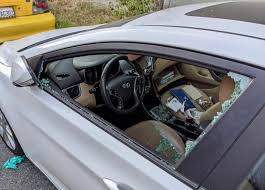
Rental Outcomes: Don’t Bust The Guy Breaking Into Your Car?
It was a sunny Sunday afternoon and I was in my car with my kids to get some exercise in. I wanted to shoot some hoops, so I convinced my kids they did too. It was on.
We parked behind a local school and walked over to where the basketball court was on the other side of it; there was also a small playground 50 yards behind the court. My son and I wanted to play basketball. My daughter also initially wanted to play until she didn’t… then she wandered over to the playground.
It became a volley of walking from the basketball court to the playground and then back again. “Dad! Come see this!” “Dad! Over here!”
On my sixth trip back to the playground, I realized that if I walked far enough into the playground, I could get the sight view past the school to see my car in the distance (which was completely obscured from the basketball court). And I saw a strange man walking suspiciously around my car. I say “suspiciously” because there were no other cars there. What was he doing? He was looking into my windows and did not know he was being watched. How suspenseful! And what to do?
I went through the options. I could yell and let him know I saw him. That would probably prevent any theft or damage to my car. Yawn & boring.
Or I could go (undetected) back to the basketball courts, stash my kids in the bushes, and then sneak around to potentially catch the stranger breaking into my car. Once he broke glass, I could ambush and subdue him; in a perfect world, I could handcuff him with the zip ties in the back of my car. Then I could call 911 and the Charlotte Observer letting them know that a “local hero” had one criminal on ice waiting for them- no charge.
That would be awesome unless… the stranger was bigger than me, good at fighting, and also included kidnapping as part of his criminal repertoire. Then he might drive away in my car with my kids, and leave me bleeding on the pavement. That would be a major fail and one that would be difficult to explain to my wife.
Seriously, what outcome did I want? Though the hero thing sounded pretty good, I needed to get real for a minute. Despite the appeal of potentially getting a key to the city from Mayor Lyles, what was going to be the cost? Realistically, if all went close to best-case scenario (which it rarely does), I’d have a busted car window (that I’d have to pay for and deal with), be waiting a while for the cops to show up (with my knee in a guy’s back who is probably cussing me out), and be babysitting two young children at the same time. That did not seem like a great outcome, even with the best-case scenario.
To me, property management is about creating good outcomes for our clients; the best outcomes come from tenants who stick around a while and consistently:
- Pay the rent
- Maintain the property
- Get along with their neighbors
We recently got a call from the HOA of one of our condo units where they accused our tenants of unkempt living, namely having a unit so disgusting that bugs where infiltrating the homes of neighboring tenants. This was clearly a violation of #2 and #3 above. This was not good, if it was true. They wanted us to evict the tenants immediately (and if we didn’t, they were sending a Sheriff that night to do so).
Despite the sheer illegality and impracticality of such a threat (landlords wish it was this easy to evict bad tenants- “oh, just call the local Sheriff and have him go over the same day to remove them…”), what outcome did we really want? Did we want to remove paying tenants who never had any prior issues? Of course not. We wanted the tenants to correct any cleanliness issues, if applicable, and then continue to stay and pay rent.
So we contacted the tenants and explained what the HOA alleged. Then we let them know we’d be there for an inspection the next afternoon to ensure the HOA there was no issue. The tenants understood and said there was no problem with that.
The next day, our inspection showed a very clean unit. We thanked the tenants and reported the findings to the HOA. There haven’t been any issues since.
The desired outcome was to keep the tenants, not to try to play “gotcha” to catch them violating the lease. That would put ourselves in a position where we would need to make a decision that no one wanted to make- the costly removal of paying tenants.
Viewing issues from a desired outcome perspective, as opposed to the initial bravado impulse, can help make decision-making more clear. It may be “boring”, but “boring” property management is typically the most effective and keeps the checks coming.
Postscript: So I yelled something at the guy at my car and he left. My son hit some shots, my daughter hit the swings, and then we left (unscathed) in a non-damaged car. Yawn…
Happy Landlording!
Learn More
Property Management: Changes for the Better in 2021?
“Everything in moderation, including moderation.”
Oscar Wilde
“…The man who fears God will avoid all extremes.”
Ecclesiastes 7:18
Let me start off by saying I’m not a big clothes shopper.
I was minding my own business the other day at home and my phone buzzed. I looked down at an alert from Amazon Photos with the “From 10 Years Ago” tag; it was a photo of my beautiful wife and I on a date at a Panthers game (awww…).
Two things struck me:
- Look at that guy with his gorgeous, flowing mane of hair (what happened???)!
- The UNC sweatshirt and wooly I was wearing looked eerily familiar… When I glanced in the mirror, I realized I was currently wearing the same exact outfit. I tend to view these things from an optimist perspective (I still fit in my clothes- nice going! Carolina blue really has always really accentuated my eyes…) as opposed to reality (Buy some new clothes, cheapskate!).
OK, sometimes things should be changed; buying some new attire from time to time never hurt anyone.
And sometimes not changing things can hurt people. In 2020, COVID made changing certain in-person business practices necessary for safety reasons; this really accelerated the use of certain technologies in property management, especially self-showings, video virtual tours, and virtual lease signings. These methods have been used and adopted by many in the industry to varying degrees:
- Self-Showings: This is where a prospective tenant is able to access keys through a lockbox to show themselves a property without a company representative being present.
At first take, it seems risky to have strangers in a vacant home when they could just take desired pieces of the property with them when they leave. But this trend has been building and is now commonplace. I think a real estate agent provides limited value being on rental showings. Renters don’t need to be sold into making a decision. At the end of the day, they are taking time to look at rentals because they either want to or have to move; I don’t see a lot of rental home tire-kickers. They want to like the property and get it done with, as opposed to new home buyers who sometimes look for perfect.
However, there obviously needs to be some controls in place (avoiding the “open-barn” theory). It’s important to know who is going into the house and have some concrete, confirmed contact information that can be given to the police if something goes awry. Done properly and moderately, self-showings are efficient and allow renters to view homes on their own schedule. It can work really well.
- Video Virtual Tours for Rentals: I’m still not on the bandwagon on this one. I really want people to visit the rental in-person so they can make sure it is right for them. If someone wants to buy a home from across the country sight unseen, that is fine with me (we live in America, right?); they can spend their money anyway they choose to. But if they wind up disliking the home after purchase, they have no one to complain to. With rentals, they can complain to their landlord for a year or more. No thanks!
I want to provide enough information for people to decide if they want to see the property (pictures, accurate property information, price, etc.). But I’m still not convinced that videos can replicate being there. I also want to be cautious abut adding an expense to our owners to get a tenant we may wind up in a forced bad relationship with (“I don’t like the neighborhood”, “The building is too loud”, or “You purposely videoed away from the wall in the dining room to hide the scuff marks.”).
- Virtual Lease Signings (E-signing Documents): I like this trend, to a point. We’ve used it for a few years for lease extensions with existing tenants and paperwork for our owner clients who needed to add properties. Since COVID, we have even started to e-sign the lease documents prior to meeting the tenants at the property to give them the keys as a precaution.
However, I think this trend has gone too far. It seems like it is a ready excuse not to talk or meet. I like to meet with the tenants and review the lease in-person. There is value to attaching a person with a (masked) face. If we’re going to the property to get our sign and lockbox anyway, why not (safely) say “hello”?
Anyway, in property management and in life, change isn’t always good or always bad- and it often does not need to be wholesale! Treading moderately with new technologies can be the best path forward.
So I think that means I can still wear the sweatshirt and wooly as long as I mix in some new pieces of clothes occasionally, right?
Happy Landlording in 2021!
Learn More