

Satellite Dish Installation on Rental Homes: An Innocent Request?
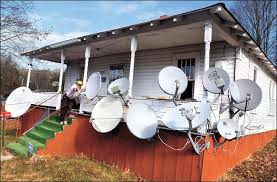
There is a potential danger lurking in your rental home. It may seem innocuous, but it can bring lots of shady characters and dangerous ideas into your tenants’ lives. It never sleeps, relentlessly pushing its own agenda and standards on to its unsuspecting victims.
It’s satellite TV. And the same moral danger exists to all of us.
But, alas, we live in a democracy and can’t really control what people choose to watch.
However, I do want to talk about the hardware- satellite dishes. We get relatively innocent requests from tenants:
Tenant: Hey Brett, we mailed the rent check today.
Me: OK. Cool. Thanks!
Tenant: And there was something else. I’m really getting into FanDuel fantasy football and want to get the NFL package from my satellite provider, so I need you to sign a form that gives me permission to put a dish on the roof.
Me: OK. But I’m pretty sure there is already a dish up there.
Tenant: Yeah, but it’s not the right one. We need one from this other carrier.
Me: OK. But are they taking down the other dish and making sure that the one they are putting up is coming off too after you vacate?
Tenant: I don’t think so…
Me: OK. I’m pretty sure dishes aren’t like flowers; they don’t look that great and involve drilling into the roof and stuff. I’m not sure we really want to be collecting dishes up there?
Tenant: You’re saying “OK” a lot, but have not yet said “OK” to the dish…
Every landlord wants tenants to (legally) enjoy their rental homes. But what about these dish installation requests?
As Charlotte property managers, we typically recommend saying “OK”. But we also add the following caveats that need to be agreed to in writing:
- The tenants are responsible for any damage the dish causes
- The tenants are responsible for having the dish and all the wiring taken down when they vacate
We’ve taken over management of rental homes that have had 4(!) dishes installed on them. It’s not pretty.
So, we’re not trying to tell anyone what they can watch, but we are making sure the venue they are watching their NFL package in is protected.
And good luck in FanDuel! But please don’t bet the rent money on your line up, OK?
Brett Furniss is the head property manager of BDF Realty (Charlotte Residential Property Management), the trusted real estate advisor for Charlotte landlords & Home of $100 Flat Fee Property Management. BDF Realty utilizes their innovative Pod System for exceptional customer service in residential property management, home repairs, and home sales for single-family homes, Uptown condos, and town homes in the Charlotte-Metro Area. Contact Us Today!
Learn More“Unverifiable” Rental Tenants Can Be Like Rudolph and Save Your Christmas

“All of the other reindeers used to laugh and call him names. They never let poor Rudolph play in any reindeer games.
… then all the reindeers loved him, and they shouted out with glee (whoo-pee!). Rudolph the Red-Nosed Reindeer, you’ll go down in history!”
Rudolph the Red-Nosed Reindeer by Billy Gilman
Rudolph had a tough gig before becoming a legendary Christmas icon and saving Christmas one year. Piecing together various biographical sources on Rudolph, it is clear he had a privileged, yet difficult, childhood. Through his envied bloodline (the son of famed Donner and the beautiful doe, Mrs. Donner), he had both the connections and proximity to Santa to have a great life and career. But the dreaded red nose seemingly doomed him to a life of ridicule and parental shame leading to his estrangement from the North Pole elite. He found solace in the company of societal undesirables (among them a dentist!) before the serendipitous approach of uncommon foggy weather one Christmas Eve. Santa took a chance on him and it paid off in spades. The rest, as they say, is history.
When Rudolph was on the road with the undesirables, no one really knew his skills and upbringing (the bloodline, the advanced reindeer training, his untapped flight ability, etc.); they just knew he was sad, unwanted, and unloved. He couldn’t pull out his press clippings from his pockets (no pants) or pull it up on the internet (no Wi-Fi on the Island of Misfit Toys). And he didn’t really want to talk about his past, which recently included not even saying goodbye to his girlfriend, Clarice, the only one who really liked him for who he was (red nose and all). He only had his focus on the future as he was trying to find himself amidst new circumstances.
Rudolph was a great reindeer; he just couldn’t prove it.
As Charlotte property managers, we get applicants who could be great tenants, but they can’t prove it. And we want to be sure they would be before we approve them to live in one of our client’s rental houses, but the applications sometimes don’t reveal much.
For example, on our four main tenant screening requirements, we may receive a prospective tenant application with the following information:
- Credit report: very little to no credit history
Tenant explanation: “I don’t like debt. I pay everything with cash.”
- Landlord history: scattered to none
Tenant explanation: “I lived with family or moved in with a significant other. I was not on a lease or a mortgage.”
- Criminal report: nothing comes up
Tenant explanation: “I’m an outstanding citizen!” (Kudos!)
- Income: no paystubs available
Tenant explanation: “I’m a small business owner or do work under the table.”
So what to do? Much like Rudolph, there’s very little information to go on. The tenant is basically “unverifiable”.
This is where it is easy as a property manager to punt and just reject the applicant. There are a lot of fish in the sea and a verifiable tenant will probably be in contact soon. Besides, there is a lot to lose. If the unverifiable tenant pays rent and everything goes fine, then everyone is happy. But if things go south, clients will understandably ask for details about the tenant screening. “What do you mean you accepted a tenant with no verifiable information? Remind me why I hired you???? Did you flip a coin on whether to approve them?”
So what to do?
- Verify everything you can. Get bank statements and W-2s. Money is usually traceable in some form.
- Collect 2 months security deposit and as much upfront rent as possible in certified funds.
- Ask a lot of questions and do Google searches. Unconventional tenants can require unconventional screening methods. What does their social media accounts say about them?
We’ve found some great, long-term tenants that other landlords have rejected due to them being unverifiable. We’ve also walked away from some that we just couldn’t get a good read on.
Santa gave Rudolph a chance, and Christmas was saved. It is sometimes wise to give unverifiables a second look so rent is coming in during Christmas on your rental home.
Happy landlording!
Brett Furniss is the head property manager of BDF Realty (Charlotte Residential Property Management), the trusted real estate advisor for Charlotte landlords & Home of $100 Flat Fee Property Management. BDF Realty utilizes their innovative Pod System for exceptional customer service in residential property management, home repairs, and home sales for single-family homes, Uptown condos, and town homes in the Charlotte-Metro Area. Contact Us Today!
Learn MoreDo You Want to Rent Your Charlotte Rental Home to Anthony?

Who needs a house out in Hackensack
Is that all you get with your money
It seems such a waste of time
If that’s what it’s all about
Mama if that’s movin’ up
Then I’m movin’ out
I’m movin’ out
“Movin’ Out (Anthony’s Song)” by Billy Joel
People move out and relocate for many reasons- a new job, real love (isn’t that sweet!), real love that really isn’t (not so sweet), the need for new scenery, the need to get out of town (Jack Bauer fleeing the US for the UK in Season 9 of 24), Anthony getting out of Mama’s house, etc…
And most of them, like Anthony, need to find a place to live. So property managers get rental applications from out-of-town folk and need to screen them. It seems like it would just be business as usual. But there are more factors to consider.
We’ll start with the basics:
- Credit check: Anthony saves his pennies, so I’m optimistic.
- Criminal check: He seems frustrated, so we’ll have to see on this on.
The income check seems straightforward; people make what they make. But figuring out how much free cash flow is available can be muddled if the prospective tenants have financial baggage where they are coming from. For example, are they homeowners? That’s another house payment they are responsible for, and one that could rival where available funds would go if things got tight (pay for the house they own or pay rent for the one they don’t?). If they make enough to afford two house payments, that’s great. But most people don’t and it adds a layer of risk. Renting out or selling their out-of-town homes is an uncertain thing and can provide short and long term cash requirements. However, Anthony lives with Mama, so he’s good there with no extra house payment.
The employment screening also adds a potential issue. Unless the prospective tenant is in largely the same work position with the same boss at the same company, there is uncertainty on how things will pan out. When a prospective tenant has been in a job for a year or two, it shows they can get along, handle the job, and fit into the corporate culture. New jobs in new cities are a step into the unknown. And that creates a greater amount of risk. Is Anthony transferring to Charlotte with a position with the same grocer or does he hope to latch on with the local Harris Teeter? This adds some uncertainty to his application.
A quick caveat: “Risky” doesn’t necessarily mean bad. When I think of our best all-time tenants (sigh… love you guys!), many of them were relocators with the “issues” described above.
So what to do about Anthony? His credit score will be a big indicator. If he is in the 700-800 range, this tells me he knows how to handle his finances well and can make things work through potential adversity. If it’s in the 500’s, I’m more nervous.
And cash is king. How much in liquid assets does Anthony have? He can send bank/brokerage statements that can prove he has funds to fall back on or tide him over until he’s up and running in Charlotte.
Anthony may want to get out of the Tri-State area, shun Hackensack, and come to Charlotte, but smart landlords will want to check Anthony’s application closely. He may still need to stay in Mama’s house for a little longer to save more money, line up a job in Charlotte, and pay his bills on time to improve his credit score.
Brett Furniss is the head property manager of BDF Realty (Charlotte Residential Property Management), the trusted real estate advisor for Charlotte landlords & Home of $100 Flat Fee Property Management. BDF Realty utilizes their innovative Pod System for exceptional customer service in residential property management, home repairs, and home sales for single-family homes, Uptown condos, and town homes in the Charlotte-Metro Area. Contact Us Today!
Learn MoreYou Break It, You Bought It! Avoiding Rental Home Repair Costs
The dreaded scenario…
You enter the “4th Century Priceless Vases” store with your 3-year old child sleeping in his stroller. “While he’s sleeping I might as well find a birthday present for Uncle Milt,” you quietly say to yourself as you peruse the priceless artifacts (surprisingly all with prices on them…). As you turn to the shop owner to ask if there is a chance that the price of the orange vase had mistakenly had too many zeroes added to it (a simple clerical issue could happen to anyone!), you hear a crash behind you.
Looking at the shards of glass on the floor and your giggling, (temporarily) smiling son, you realize this could be an expensive trip. The shop owner, with arms crossed on his chest, points to the antique sign on the wall:
“You Break It, You Bought It!”
Ouch!
A better scenario for everyone would be that “4th Century Priceless Vases” decided years ago to elevate every shelf in the store to a minimum of 4 feet off the ground and added a feather-coated floor. The most expensive vases were put behind locked glass and could only be accessed by store personnel. This way they were able to decrease breakage and save money.
On a similar vein as a Charlotte property manager and fellow real estate investor, it pains me (sad, but true) when I get repair calls from tenants on things that could have been avoided. By spending money on features (“being nice”), it winds up costing in service calls and replacements for years.
My 3 main culprits on optional home amenities that always seem to break:
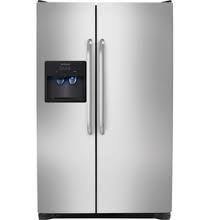
- Icemakers on refrigerators (ugh!!)
- Washers & dryers
- Gas fireplaces
Most leases say that if something is working when a tenant moves in, it is the landlord’s responsibility to pay to keep it working (aka “promptly repair all appliances and facilities” under Landlord Responsibilities in the NC standard Realtor lease). This costs money.
But what about if you took a page out of the “4th Century Priceless Vase” store’s playbook and made breaking these things close to impossible? Sounds good! But how?
Don’t own them! Nowhere in the lease does it say you have to have these things in your rental house. So don’t!
I see no rent difference in Charlotte single family residences in whether you have these niceties or not. So, I would highly recommend dealing with my main 3 culprits in the following manner:
- Icemaker on refrigerator: when you replace your refrigerator, get one without one!
- Washer & Dryer: sell them on Craig’s List the next time your house is vacant
- Gas fireplace: turn it off and let the tenant know it is not to be used. If they insist, let them know they are responsible for its upkeep.
Some parts of maximizing rental home ROI is addition by subtraction. It’s tough to break expensive vases when you can’t get to them, and you don’t need to perform maintenance on items that aren’t there. When there is less to break, there is less to be bought!
Brett Furniss is the head property manager of BDF Realty (Charlotte Residential Property Management), the trusted real estate advisor for Charlotte landlords & Home of $100 Flat Fee Property Management. BDF Realty utilizes their innovative Pod System for exceptional customer service in residential property management, home repairs, and home sales for single-family homes, Uptown condos, and town homes in the Charlotte-Metro Area. Contact Us Today!
Learn MoreProperty Management Wisdom: Pass That Peace Pipe With Your Tenant

If you’re feeling mad as a wet hen,
Mad as you can possibly get, then
Pass that peace pipe, bury that tomahawk
Like those Chichamecks, Cherokees,
Chapultepec’s do.
That cold shoulder never solved a single complaint.
When you’re older, you’ll wipe off all of that war paint.
(Hugh Martin – Pass That Peace Pipe Lyrics | MetroLyrics)
https://www.youtube.com/watch?v=wCNa-AT9hOQ&feature=player_embedded
Blessed are those who find wisdom, those who gain understanding,
for she is more profitable than silver and yields better returns than gold.
She is more precious than rubies; nothing you desire can compare with her.
Long life is in her right hand; in her left hand are riches and honor.
Her ways are pleasant ways, and all her paths are peace.
Proverbs 3:13-17 NIV
When I was a younger property manager starting out in Charlotte, I was all about the letter of the law (or in this case, the lease). “Follow it, or else!” “According to section 7.6, you are in breach of contract! Better get a lawyer!” “No payment yet? I’m sick of excuses!”
Property management can turn you into an ugly person. It’s really set up in a way that promotes divisiveness. Property managers are in one corner sparring for the owner’s (their client’s) interests. The tenant is fighting to protect their interests. Who pays to replace a burned out light bulb? You do! No! The thing was already burned out when I moved in! You should pay!
What I’ve found over the years is that being a stickler and jerk isn’t effective. It’s bad policy, both professionally and personally.
Through the years (much like King Solomon’s advice above), I’ve found the wise path is to take actions that promote pleasantness and peace, whenever possible. It’s more profitable and much less stressful!
To keep the peace, keep the following in mind:
- When e-mails start getting negative, stem the tide and pick up the phone. The game of “who is smarter/snarkier” in e-mails with your tenant is a game of LOSERS played by LOSERS. If you must, save your “clever writing” for a novel (or your property management blog).
- “Seek first to understand, then to be understood.” (Stephen Covey). We argue about problems. Problems need solutions. Listening to the tenant’s needs and thoughts provides more information to formulate peaceable solutions with. Enough said.
- Real professionals come up with compromises that can work for both parties. This is where property management becomes art, as opposed to robotic, Draconian ruthlessness. No one said property management has to be a zero sum game where one party loses and the other wins. He who lives by the sword, dies by the sword.
So, bury the hatchet and try to work issues out nicely. Pass the peace pipe with your tenant and enjoy the rewards!
Brett Furniss is the head property manager of BDF Realty (Charlotte Residential Property Management), the trusted real estate advisor for Charlotte landlords & Home of $100 Flat Fee Property Management. BDF Realty utilizes their innovative Pod System for exceptional customer service in residential property management, home repairs, and home sales for single-family homes, condos, and town homes in the Charlotte-Metro Area. Contact Us Today!
Learn More5 Important Steps Not To Forget After Locking In Your Rental Tenant (With Extra Credit)

I finally did it! I found a tenant! Now good times are here! I can just sit back and spend the rent money. Oh yeah!
(Landlord reaction after placing a tenant into her rental home)
It is a good feeling getting your rental home filled! The house preparation, the marketing, the showings, the rental screening, the deposit collection… it’s exhausting, but usually means that you are in the clear from doing it again for at least a year. That’s something to celebrate!
Great tenant placement is about 75% of the heavy lifting good property managers do. Getting past this hurdle is a great accomplishment! If high standards were kept throughout the screening process, a fruitful, peaceful tenancy is extremely likely.
But after the bubbly has been consumed, the noise makers silenced, and the euphoric feelings have subsided, a question sometimes starts to gnaw at your innards:
What have I forgotten to do?
This is a perfectly normal reaction. And, fortunately, it has a very easy answer. Here are 5 important steps not to forget after you’ve locked in your rental tenant (with ways to earn extra credit):
- Make sure the new tenants know where, to whom, and when to send the rent checks. Priority #1!!
Extra Credit: Send a reminder 7-10 days prior to the due date every month (I like e-mail).
- Call your insurance company and let them know you need to change your policy from a home owner to a landlord. I haven’t seen any price changes personally from doing this. Extra Credit: Make sure your tenant has a renter’s insurance policy.
- Make sure all utilities are scheduled for shut off when the tenant moves in.
Extra Credit: Allow 3-5 days after the tenant’s move-in date to schedule the shut-off. It’s tough to live without utilities and moving time is busy. It’s perfectly decent to be thoughtful!
- Cut off the lawn service after the tenant moves in.
Extra Credit: Have the lawn mowed the day before tenant move-in. It’s a nice gesture and sets a precedent on how the lawn should be kept.
- Exhale and put your feet up! You’ve done it! Never miss an opportunity to celebrate!
Extra Credit: Head to your nearest Caribbean island ASAP.
Brett Furniss is the head property manager of BDF Realty (Charlotte Residential Property Management), the trusted real estate advisor for Charlotte landlords & Home of $100 Flat Fee Property Management. BDF Realty utilizes their innovative Pod System for exceptional customer service in residential property management, home repairs, and home sales for single-family homes, condos, and town homes in the Charlotte-Metro Area. Contact Us Today!
Learn MoreWealthy Living Paycheck-To-Paycheck? More Pressure on Tenant Screening

When you hear the term “paycheck to paycheck” you probably think of low-income households struggling to make ends meet. That’s even the title of a new HBO documentary highlighting the plight of America’s working poor. But a new paper released at the Brookings Institution’s BPEA conference Friday finds that a sizeable number of wealthy households are living paycheck to paycheck, too.
“The Wealthy Hand-to-Mouth,” by economists at Princeton and New York University, finds that roughly one-third of American households — 38 million of them — are living a paycheck-to-paycheck existence. These are families who hold little to no liquid wealth from cash, savings or checking accounts. But a staggering two-thirds of these households are not actually poor; while they resemble poor families in their lack of liquid wealth, they own substantial holdings ($50,000, on average) in illiquid assets. Because this money is locked up in things like their houses, cars and retirement accounts, they can’t easily dip into it when times get tough.
Christopher Ingram (Washington Post 3/21/14)
When running tenant rental applications, property managers and landlords are largely looking for one thing: tenants who will pay on-time and in-full every month (while not committing felonies in between “House Damage” parties). We are looking at credit scores, criminal background checks, income, and landlord history. But is this sufficient?
Based on the article above, prospective tenants that we once thought looked great on paper may be riskier than we thought. For example, a house renting for $2K/month may draw the following applicant:
Married couple
Husband makes $96K/year
Wife stays home with 2 children
No criminal record besides 2 speeding tickets in the last 5 years
760 & 720 credit scores
Owned a home in their old town which they sold to move here for a job
They look like great candidates! But let’s dig deeper with a back-of-the-napkin calculation when we delve into their credit report and specifically, their monthly cash inflows and outflows:
$8,000.00 Salary
less taxes (approx 40%): ($3,200)
2 car payments: ($1,000)
Rent: ($2,000)
Utilities ($300)
Student loans ($200)
Private school (children) ($600)
Credit card balances ($100.00 minimum payment)
Car insurance ($250)
Food??
Activities??
Gas??
With $7,650.00+ in estimated monthly expenses, making $8K/month turns out to be tight. If something happens unexpectedly (sickness?) or job loss (just moved here for a job), this could get bad in a hurry. We know cash flow will be insufficient to cover the rent, so the question becomes how many assets do they have? And how liquid are those assets?
And then the line of questioning turns into “Do we know? Did we even ask?”
At the end of the day, the rental application can’t really devolve into a mortgage application-like colonoscopy. It’s too painful for everyone involved and takes too much time.
The good news is that a run-of-the-mill credit report is pretty thorough. The credit report screening starts with looking where cash flow is going monthly and then factoring in the other common monthly expenses (car insurance, gas, utilities, cell phones, etc.). If large credit card balances are present, it’s probably indicative that their expenses are more than their incomes. Using a back-of-the-napkin look at their income and monthly expenses (coupled with alarm bells for any large credit card balances) will give a good idea of how risky the applicants are. If there is sufficient cash flow left over each month, approve them and move on. If it looks to be too close for comfort, ask more questions. Ask for more documentation of assets. And then reject the application or ask for a bigger security deposit.
Applications are about present qualifications, but also about future vulnerabilities. Few things always go perfectly for everyone; this is real life we are talking about! And if things don’t add up, it would behoove you to get to the bottom of it as opposed to just taking the path of least resistance. High income and credit scores may not be grounds for fast track application approval anymore. Times change and we need to change with them.
Happy tenant screening!
Brett Furniss is the President & Owner of BDF Realty (Charlotte Residential Property Management), the trusted real estate advisor for Charlotte landlords & Home of $100 Flat Fee Property Management. BDF Realty utilizes their innovative Pod System for exceptional customer service in residential property management, home repairs, and home sales for single-family homes, condos, and town homes in the Charlotte-Metro Area. Contact Us Today!
Learn MoreMarch Madness: How to Pick a Great Bracket & Great Rental Tenants

Everybody loves March Madness. Even property managers! Chances are the only repair calls will go to the cable television companies if their television screens start to flicker.
But now the hard part starts; trying to predict who will win each game of the NCAA tournament. Picking a perfect bracket is tough; no one did it last year after millions of entries. The odds are seriously stacked against getting them all right. And, inexplicably, it’s even tougher if you’re a serious college basketball fan! The men’s college basketball fanatics, who watch all the games year round and know that Duke should absolutely kill Mercer, wind up picking the wrong team to win. Meanwhile, the clueless non-fans who turn on Mercer Street to go to work everyday and choose Mercer to win, wind up getting the pick right. Go figure!
To make good picks, fans rely on statistics and past performance versus other opponents. And then they look at other, intangible signs. Are their players healthy? Are they experienced or are the teams filled with unproven freshmen who might wilt in the big game? How did they do against big teams during the year? How about fast teams that like to run? How well are they playing now?
Much like fans, property managers are tasked to pick the best tenants when they get many applications for the same rental property. Some, like Kentucky this year, seem to fall in the “no-brainer” category. Great credit scores, great landlord history, make plenty of money to afford the rent, and stay away from trouble with the law. They don’t seem to have any weaknesses and look to be a shoo-in for application approval.
But what about if Kentucky’s starting center gets hurt and can’t play? Or in the rental game, you read about a company starting layoffs in the department where your “no-brainer” tenant has worked for the last 10 years. Is that a cause for concern? Yes, but how much so?
That’s a judgment call. Kentucky has enough other talent to steamroll most teams on most nights even without their center. And the prospective tenant could be just fine as she has plenty of cash reserves and a robust Rolodex where she could get hired anywhere in town with a quick phone call. Or she might be in real trouble as she was living paycheck-to-paycheck and hasn’t updated her resume since college.
The other prospective tenants aren’t as polished (lower credit scores and income), but have dual incomes in disparate industries. Would they be better bets? How does a property manager know who to give the approval to?
There is no right answer. Much like picking a bracket, some of it comes down to raw data and past landlord performance. But some of it comes down to the experience of selecting tenants for many years. I wish I had it down to a perfect science and could put it in a training manual (that I could sell for millions of dollars…). But no matter how good a property manager is, no one can get them right all the time. As my 3rd grade teacher said emphatically, “that’s why pencils have erasers!”
So, what to do? The right answer is closer to reviewing the raw data thoroughly and then looking for other signs. Do they have a pattern of paying people on time? Did their past landlords have good things to say? Do they make enough money to afford the property with some excess funds still available if their car breaks down or they face unemployment? Have they recently attempted to hurt anyone seriously (I’m half-kidding on this one)?
As for other signs… how did they sound on the phone? Did they get the application materials back to us in a timely manner? Are they pleasant to talk to? Were they forthcoming and truthful with everything asked in their application? Did they return our calls in a timely fashion? Were they evasive in any way? There’s a certain feel involved.
The other signs are tough to quantify. But that is when picking good tenants turns from a science into an art form. And that’s when the experienced know in their gut that Lehigh has a chance to take down Duke, even though they are a huge underdog. And that North Carolina, despite an up-and-down season, seems to be peaking and can take it all this year.
Picking tenants and the NCAA brackets isn’t as easy as picking all the favorites. Experience counts.
Good luck with both and enjoy the tournament!
Brett Furniss is the President & Owner of BDF Realty (Charlotte Residential Property Management), the trusted real estate advisor for Charlotte landlords & Home of $100 Flat Fee Property Management. BDF Realty utilizes their innovative Pod System for exceptional customer service in residential property management, home repairs, and home sales for single-family homes, condos, and town homes in the Charlotte-Metro Area. Contact Us Today!
Learn MoreTenants Love Rental Showings?

Continuing with the theme from our last blog, below is another letter (this time from a tenant) entitled, “I’m Lonely, Please Send More Visitors.”
Dear BDF Realty,
I was disappointed to give my 30-day notice to vacate the other day. You guys are the greatest property managers (BDF side note: Wow! Thanks!) and it will be depressing to leave the rental home. I mean really depressing.
But much to my joy and amazement, I started getting calls from your showing service saying that people wanted to come to MY house to see it! Here I am, bored at home with no reason to get out of the house, and I start getting call after call with people who want to set appointments to come over!
I mean here was my typical schedule before I gave my notice to vacate:
8 AM – 8 PM: bored at home-nothing to do
8 PM – 10 PM: “Arrow” comes on TV, followed by “The Flash” (Wednesday’s only)
BUT…after giving my notice:
7:40 AM: need to clean home before a Realtor showing
8 AM: leave home while Realtor shows property
8:15 AM: return home
8:45 AM: leave home for showing
9:00 AM: return
11:30 AM: leave home
11:45 AM: return
And that’s just the first morning! I can’t wait to see how many people wind up stopping in when all is said and done. I feel like the President!
Thanks again!
Lonely
Okay, I’ve yet to get a letter like this and never expect to. Tenants dislike rental showings for good reason. Who wants strangers trudging through their homes? Then having the expectation to keep the home clean while packing up boxes to move? And then being asked to leave the home during the showings (that they are paying to live in, nonetheless!)? I wouldn’t!
So why would tenants be asked to do this?
For several reasons:
- Usually it is a condition of occupancy that they sign on for in a proper lease
- It allows other renters to find a home for their families too. The tenants were probably looking at some inhabited rentals during their rental home search. This could be viewed as renter common courtesy.
- Being a team player for the owner with a slight mix of sympathy/empathy. Vacancy costs money. The less time the rental home sits vacant, the less financial and emotional strain on the owner. Maybe they are renting out their house in another state and can empathize?
Of course, to make it work for everyone, there are common courtesies that should be exercised. A 24-hour notice should be honored. If there are guests visiting or a child is sick, there should be leniency in allowing the tenant to cancel showings. And I believe in giving the tenant final approval on scheduling showings; “It’s not a good day” is a valid excuse on occasion, though this shouldn’t be abused. And no one should EVER just show up on the doorstep expecting to get in.
We’re all people and no one really likes allowing strangers into their home. However, if done respectfully, all parties (tenants, owners, and property managers) should be able to live with them.
Most tenants won’t “feel like the President” when dealing with multiple showings at their house, but even President Obama has to deal with things he’d rather not sometimes. It’s a necessary evil in the rental game.
Brett Furniss is the President & Owner of BDF Realty (Charlotte Residential Property Management), the trusted real estate advisor for Charlotte landlords & Home of $100 Flat Fee Property Management. BDF Realty utilizes their innovative Pod System for exceptional customer service in residential property management, home repairs, and home sales for single-family homes, condos, and town homes in the Charlotte-Metro Area. Contact Us Today!
Learn MoreShould I Sell My Rental Home?

From the mail bag… (aka a question I may have made up to write about)
Q: I have a few occupied rental homes and wonder if I should sell one of them now that the market seems to be improving. What are your thoughts?
- Oh, this is a surprising question from left field! And a great one! Kudos to you, mighty thinker!
It is a tough decision on whether to unload a rental property. If you decide it may be time to do so, the first thing is to establish whether you can by asking 4 questions:
- What is the realistic value of my property? Have your trusted real estate advisor run sales comparables and put your home’s value at the low end of the range for estimating purposes.
- How much will it cost to get my property in sales shape? In my opinion, there is a difference between getting a home in rental shape and sales shape. With a rental, you may get away with steam cleaning the carpet and touching-up the paint; with sales, there is a lower threshold for cosmetic issues which may mean replacing the carpet and repainting the house.
- Do I have the money to cover the mortgage and utilities while the rental home potentially sits vacant for months? Generally-speaking, showing a home effectively with tenants in it is tough.
- Do you have the money to pay the selling costs (Realtor fees, closing costs, less than full market offer, etc.)?
So, the math looks like:
Answer #1 – Answers #2, 3, and 4 = $$ (hopefully a BIG, positive number)
Then the question is: Is $$ above worth selling the property for?
If so, do it. If not, continue to hold the rental until the market and your mortgage balance improves further.
However, there is a scenario that skews the math and lets you skip cost items #2 (home cosmetic fix-up) and #3 (home vacancy costs), and eliminate or reduce #4 (selling costs in terms of Realtor fees)…
- OK, I’ll bite. What is the scenario?
- When the tenants in your rental home want to buy it for themselves.
This is the #1 question to ask if you think you may want to sell your rental homes. ALWAYS ask the tenants first. If they do want to buy it, get them in touch with a mortgage broker and see if they qualify.
If they qualify, this is a win-win exit strategy. The tenants get to start building equity in a home that they already love. And you, the owner, get to avoid much of the costs and uncertainty of selling your rental home.
And what if the tenants proactively ask you if you are willing to sell your rental home to them when you’re not quite sure you are ready? You want to think REALLY long and hard about it. These opportunities don’t come up that often and you need to make sure that it is something you really don’t want to do.
Cash is king and the purpose of investments is to make money. Two well-worn adages come to mind:
A bird in the hand is worth two in the bush.
AND
Buy low, sell high!
Happy investing!
Brett Furniss is the President & Owner of BDF Realty (Charlotte Residential Property Management), the trusted real estate advisor for Charlotte landlords & Home of $100 Flat Fee Property Management. BDF Realty utilizes their innovative Pod System for exceptional customer service in residential property management, home repairs, and home sales for single-family homes, condos, and town homes in the Charlotte-Metro Area. Contact Us Today!
Learn More