


Be a “Shark Tank” Landlord: Invest in Spotless Tenants!
“Cleanliness is next to godliness.”
(attributed to several authors)
“We feed the eagles and starve the turkeys.”
(Heard in several sales job interviews circa 2000)
I have to admit that I’m a fan of the television show, Shark Tank. For the uninitiated, it’s a show where entrepreneurs pitch their companies to several accomplished business people (the “Sharks”) in order to entice them to invest in their fledgling enterprises. After the entrepreneur’s presentation pitch, the Sharks begin to pepper the business owner with questions.
One of the main lines of questioning that comes up in the “Shark Tank” revolves around how the owners calculated the sales prices for their companies. Questions like: How are you computing a $5M valuation with only $150K in sales this year? Why are you forecasting such aggressive sales growth? What are you doing to lower your unit cost? How is this going to produce enough free cashflow so I can get my initial cash investment back in a reasonable amount of time? Why is this a business I should have a multi-year involvement with? What is the industry growth forecasted to be?
Even after all these questions, it is tough for anyone (even experienced Sharks!) to know how well the companies will do in the future and whether the money they choose to invest will produce dividends. However, the entrepreneurs are sure. They come in loaded with enthusiasm and sell their companies as the next big thing- they will be successful! But as much as they sell themselves and their companies, the proof will be in the pudding at a much later date- do they deliver as promised or not?
It’s risky investing in start-up businesses. They are largely unproven and are really just selling future promise. Statistically, most will fail. But the allure is, that if successful, the returns can be more lucrative than investing in established businesses. The fun part for these investors is when a start-up does well, matures, and becomes an established, valuable company. This allows them to ride its profits for its lifespan.
This reminds me of rental tenant selection in a way. Property managers look at prospective rental applications, process the information, and ask follow-up questions in order to pick a winner. The applicants are all very optimistic and claim they will be great tenants. Property manager “Sharks” will decide who they want to “invest in” (aka approve the application and sign a lease), but the ultimate success in the tenant selection will be discovered down the road.
Successful tenants pay their rent on time, get along with their neighbors (no drama), and maintain the property. But what tenant characteristic should landlord Sharks look for that might generate the best future returns? After many years of residential property management, I’m convinced it is finding and keeping the meticulous ones who keep their rental homes spotless.
A certain tenant of our comes to mind. When we perform our bi-annual home inspections, the house is immaculate. You could make the argument that it barely looks like it has been lived in, and this is after several years of occupancy. The HVAC air filter is always fresh and the appliances look to be meticulously maintained. To re-rent this house, I imagine our fixup would be minimal to none. What is the dollar value of that?
For example, if we calculate the life of carpet at 7 years, what is the value if a tenant cares for the home so well it stretches it to 10+ years? Or if we don’t need to paint it on the next vacancy turn? Or if the HVAC unit lasts an additional 5 years due to its care? It’s estimated the average house needs to spend 3-5% of its value in maintenance costs each year. What is the value if that figure is reduced to 1% due to meticulous care? I don’t know, but it’s a lot. It’s substantial enough for us to really want these people to stay!
Like the Sharks, real estate investors want to maximize the return on their rental homes as well. When meticulous tenants who love to keep their homes spotless come on board, smart landlords will look to lock them up and ride the profits (realized and unrealized) for many merry leases to come.
Have a Merry Christmas & Happy Landlording!
Learn MoreDoes the “Rental Bible” Say That Evictions are the Unforgiveable Sin?
“…but whoever blasphemes against the Holy Spirit will never be forgiven; they are guilty of an eternal sin.”
Mark 3:29
“Do not be one who shakes hands in pledge or puts up security for debts; if you lack the means to pay, your very bed will be snatched from under you.”
Proverbs 22:26-27
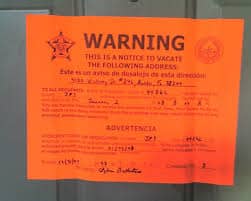
Evictions are bad to have on the credit report in the rental home game; I won’t try to gloss over that fact! There is a reason that they are asked about on every rental application worth its salt. Landlords do not like to see a prior eviction come up on a prospective tenant’s dossier because it means that things got about as bad as they could get with the tenant’s former landlord. It typically means that the tenant did not pay, did something really against the rules, and/or would not move out of the house. No landlord wants to have a repeat performance; it’s a major red flag! We like peaceful, nice relationships…
Now, there are two sides to every story. The narratives that previously evicted tenants will tell are typically less confrontational:
My mom got really sick so I moved out of my place and into hers to help her. My roommate at the time stopped paying rent and my name was still on the lease so it happened.
I’ve never lived at that residence in my life! I have no idea what you’re talking about!
COVID happened. Enough said.
I co-signed a lease for my friend so he could get into the property. I guess he didn’t pay. I’ll need to ask him about that.
(Free advice: Please don’t co-sign for someone else. There is a reason they couldn’t get approved on their own. The Bible even cautions against it (see above)!)
It’s always some combination of best intentions paved with unforeseen adversity. And I don’t doubt that at all. But life is life and stuff happens and will happen again. Landlords just don’t want it to happen on their watch.
When a tenant doesn’t pay or follow the rules of the lease, experienced landlords will try to communicate and work with the tenant to get things in compliance. There is often give-and-take and patience required to right the ship. But sometimes the tenant either cannot or will not do what they signed up to do. When backed into this corner, there is one nuclear bomb that a property manager has- filing for eviction. And this bomb is not free. It takes a lot of human resources to see it through, it costs the owner money while rent is not coming in (cash flow double-whammy), and (when vacated) the rental house is usually left in deplorable condition. It’s the downside of real estate investment.
So when a prospective tenant claims that a landlord filed for eviction “by mistake” or “on the 2nd day of the month after I left for vacation when the check was still in the mail”, I’m skeptical. Filing for eviction is a last resort and one most landlords would not take lightly. The costs are just too high.
A “successful” eviction typically means that every rock was turned over, every resource for payment exhausted, and nothing could be settled outside of the courtroom. That’s not a good reference for a renter coming in.
So, is eviction the unforgiveable sin? Is it an automatic rental application denial?
It really can’t be. No matter how draconian the landlord, saying that a human being isn’t worthy of having a place to live is a tough line. Bad things do happen to good people. And many people use these awful experiences to change for the better. We all learn from struggles and hard times and need another chance.
However, we do say that not disclosing an eviction filing on the rental application when asked is an unforgiveable sin. If we don’t start from a position of honesty, I don’t think differences can be bridged to make a tenancy palatable.
To determine whether a previously evicted tenant has a path for approval, we try to focus more on the numbers and less on the story. The stories are usually compelling, but what do the facts look like? We try to investigate:
What does their current debt level look like?
What is the length of the current employment and its real income?
How long ago was the past eviction?
What do prior (non-evicting) landlords say?
Why are things different now?
How much cash do they have on hand to put down to mitigate risk?
So, no, the “Rental Bible” does not say that eviction is the unforgiveable sin. But it is a very real red flag! Prudent landlords will need to put in the research to determine if it is likely to reoccur in their rental homes.
Happy Landlording!
Learn More
Don’t Be a Desperate Housewife (or Landlord), Just Push the Right Buttons
“Desperate times call for desperate measures.”
Hippocrates
Typing the word “desperate” makes me think of the old TV show, Desperate Housewives. The story centered on four suburban women who were neighbors. They found themselves making risky choices in order to look good, be fulfilled, and live the lives they thought would make them happiest. This made their lives hectic and drama-filled. And it also made it one of the most successful shows on TV for its 8-year run.
However, no one really wants to live the way they did; it may be entertaining to watch, but it’s not peaceful. Desperate is not desirable.
Desperation can elicit hopelessness and cause knee-jerk reactions:
I never think anyone is going to marry me! So I’ll lower my standards and date anyone and try to make it fit.
I don’t have any money and lots of debt. I’ll rob a bank.
We need to win a championship this year or the fan base will be calling for my head. I’ll trade away future draft picks, get a marginally better player now, and hope it works out.
We see it in all walks of life in many different situations. Desperate situations make people feel that they have little choice but to make hasty and risky decisions. And these decisions generate results that usually share one common trait- they are poor.
For landlords, they typically begin to feel desperate when their rental properties are vacant and they need tenants to move-in and start paying rent. Things look bleak as time rolls by and there has been:
- Financial bleeding: mortgage payment, management costs, utilities, lawn mowing
- Vandalism and/or squatting while vacant
- Only substandard applicants applying
It’s tough. There is pressure on landlords to accept the first person that has the deposit and first month’s rent to put down. “Just move in quickly, please!! We need this off the market to get the rent coming in!”
As a Charlotte property manager, we are not immune to this either. We get some version of this at times:
Aren’t you the professional?? Why is my property empty? What does your marketing look like? It doesn’t seem to be working, bud!! I could do better than this myself!
Desperation can take hold… And it takes discipline to stick to the fundamentals and not succumb to the pressure.
When a property has sat on the market for longer than expected, the key is not to panic! Slow down, take a breath, and push the right buttons:
If there are no showings of the property:
- Double-check the marketing, add/replace pictures, make sure the home is coming up in on-line searches. Then see if any showings happen. If not, go to step #2.
- The price is too high. Lower it ASAP. Prospective applicants are not seeing the value on-line versus other homes.
If showings are being generated:
- Ask people who have seen it why they are not filling out an application. It will usually come down to some cosmetic issue. Take care of the issue! Note: Some “cosmetic issues” are personal preference- if it is not a major flaw and only one or two people comment on it, it might not make sense to address it if it is costly. If almost everyone mentions it, it either needs to be fixed or the price needs to be lowered (or both).
I remember we had a large house on the market that “desperately” needed work. We did not want to pay for it (it was going to cost a lot to get to market shape) and we were hoping we could slide by with one more rental cycle before ordering the major (cosmetic) fix-up. We went a few months with several showings, but no approvable renters from those who filled out an application. Most non-applicants who visited the home cited a few issues they wanted addressed. What to do?
The easiest way path is to give in to the desperation, roll the dice, and approve a risky tenant. In contrast, experienced landlords will reject substandard tenants, double-check the marketing, fix any reasonable home repair issues, and lower the price. It’s better to wish you had a tenant than wish you didn’t.
Don’t fall for the feeling of desperation and press the panic button! Stick to the fundamentals and your future self will thank you for dodging the money/time/emotional sinkhole of the eviction process. Don’t let yourself become another desperate resident of Wisteria Lane!
Happy Landlording!
Learn More
Is Signing Zion Williamson a Worthy Tenant Placement Strategy?
“Therefore everyone who hears these words of mine and puts them into practice is like a wise man who built his house on the rock. 25 The rain came down, the streams rose, and the winds blew and beat against that house; yet it did not fall, because it had its foundation on the rock. 26 But everyone who hears these words of mine and does not put them into practice is like a foolish man who built his house on sand. 27 The rain came down, the streams rose, and the winds blew and beat against that house, and it fell with a great crash.”
(Jesus Christ in Matthew 7:24-27)
“…(Zion) Williamson and the team quickly agreed on a five-year rookie max extension worth at least $193 million. The new deal will kick in at the start of the 2023-24 season, and the figure could rise to $231 million if Williamson makes an All-NBA team or wins a major award next season. The No. 1 overall pick in 2019, Williamson’s career has been plagued by injuries and concerns about his conditioning. He missed nearly his entire rookie season after undergoing knee surgery, was shut down early in his second season with a broken finger and did not play at all last season due to a broken foot that required surgery and did not heal as quickly as expected.
When he has been on the floor, he’s been spectacular. In his second season, when he played 61 games, he averaged 27 points, 7.2 rebounds and 3.7 assists per game while shooting 61.1 percent from the field, and was named an All-Star. All of which is why, despite his injury history, the Pelicans were eager to extend him as soon as possible. At the same time, giving $193 million to a player who has been on the court just 85 times is a risky proposition.”
(Jack Maloney in CBSSports.com 7/29/22)
As stated above by Mr. Maloney, when Zion Williamson is healthy, he is a spectacular basketball player loaded with potential. With experience, he could even be much better!
If Zion was a healthy tenant, he’d be the dream of any landlord. He’d be paying above market rent, he’d keep the place spotless, the rent would come in early each month, and there would never be any outside complaints about him. He’d maintain the property flawlessly and even take care of minor repairs on his own (and on his own dime!). His uncle would be a world-class handyman who loved to stop in and help his nephew out with some free repairs and upgrades from time-to-time. He’d kick some courtside tickets to his favorite Charlotte property manager when the Pelicans came in to play the Hornets. And, to boot, Zion would love the house and want to rent it forever.
Cash flow heaven!
But what if, as his application suggested could happen, he got hurt and lost his job? Things could start going downhill quickly for Mr. Williamson (and his landlord):
Rent? Late and not paid in full. Eviction is probably required (NBA tickets now nixed)
Repairs/Maintenance? Not up to it
Outside Complaints? The lawn guy who is not getting paid stops the service. Air filters are too expensive now. The HOA and City are up in arms and threatening fines.
His Beloved Uncle? Now that Zion is hurt again, he doesn’t seem to come around…
But Zion? He still wants to stay in the house forever!
As a property manager in Charlotte, we get rental applications from people similar to Zion. They have a lot of potential and are willing to pay top rent, but their rental screenings show that they are susceptible to bad stretches of luck (which made some of their past tenancies bad landlord experiences…). The question is: are they just isolated events in their lives or a pattern? Is Zion Williamson going to continue to miss seasons with injuries or will he turn the corner? It’s impossible to predict. The New Orleans Pelicans apparently believe he will be healthy as evidenced by them handing him a $193M guaranteed contract.
So is the high risk, high reward strategy a good or bad one? I believe it depends who the landlords are and whether they can financially handle the downside.
Example: The institutional investors who have bought up thousands of houses in Charlotte seemed to have embraced the high-risk strategy. They list their rental homes for above market rent and then accept risky tenants who are willing to pay. Does it pan out? Well, I had read something that said one of the institutional investors had a 25% eviction rate; that’s super high (bad!). It also means that 75% of their tenants were able to pay the above market rent to them monthly (good!). So spread over enough houses, the excess rent may be able to pay for the evicted houses that face no incoming rent, court costs, and needed repairs. The math could work, even in their favor(!), when factoring in that they probably have faster tenant placement times due to less stringent tenant screening.
However, we work mostly with smaller investor-landlords (the “Mom-and-Pops”), where this strategy wouldn’t work well. One bad tenant could destroy their profit for the year, let alone two of them. We need “build on the rock” tenants, not “sand” tenants, because our property management clients need them to hold up in storms. So that has been the strategy that we have used. It requires more stringent tenant screening and sometimes a longer placement time. But we will feel it is the wise strategy for our particular client base.
Zion is a great, generational basketball talent and all basketball fans want him to get healthy so they can enjoy watching him play. But not all landlords can afford to risk $193M to find out if he’ll even be on the court. Pick your tenant placement strategy accordingly!
Happy Landlording!
Learn More
Steve Martin, Roxanne & Tenant Identity Issues
In the timeless appeal of romantic comedies, one of the tried-and-true story lines is the ugly guy who tries to get the really beautiful girl who is out of his league. I was thinking of the movie, Roxanne (with Steve Martin and Daryl Hannah), and realized bringing up that reference was probably on par with bringing up Ben-Hur with Charleston Heston at this point- it’s like how long ago was that??? But humor me…
In Roxanne, Darryl Hannah is the beautiful bombshell and Steve Martin is the smitten, huge-nosed fire chief who does not feel worthy to pursue her. A much better-looking, witless firefighter expresses interest in Hannah and Martin decides to help him; he gives him romantic ideas and poetic things to say to woo her. Hannah loves it and the romance is on. Of course, the subterfuge can only work for so long until it is discovered and then… (you’ll have to get the VHS to find out the dramatic ending!). But, suffice to say, the ruse did not help either of them with their relationship with her in the aftermath.
Outside of Hollywood endings, lying about one’s identity is not typically a long term, winning strategy. And as a property manager in Charlotte, we are seeing a lot of prospective rental tenants misrepresent themselves on their applications (right now, I’m applauding myself for my diplomacy in that last statement). Okay, to be more direct, some applicants are outright lying. And this may be the worst that I’ve seen in my twenty years of screening tenants. It’s high quality “fakery”- doctored paystubs, friends as landlord references, other people’s information being offered (with better credit & criminal reports), etc.
Why? I believe it is a combination of much higher rental rates and inflation. Housing and regular living expenses cost much more and this has eroded the financials of many prospective renters; debt levels have increased, credit quality has declined, and landlord reports have less nice things to say. So, it makes it harder to have prospective tenants pass muster on screening criteria.
The thing is, at its core, good tenant application screening is designed to protect everyone (especially tenants!). I don’t know how many times I’ve given some version of this stump speech:
Listen, we want to approve you as a tenant. We easily get paid the majority of our fees to place tenants, not turn them away. But prospective tenants with similar incomes have a tough time making it work at this rental price coupled with their other monthly obligations. Then when rental payments inevitably aren’t made, it creates a bad situation for everyone: the owner doesn’t get the money, which forces us to use available avenues to secure the money, and then it creates a lot of all-around stress. No one wants that- trust me, we do not want to chase you. So, let’s avoid it and find a less expensive rental house for you.
Of course, most people don’t like to be told “no”, no matter how nicely or well-meaning the message might be. So, they try to avoid the “no” by submitting falsified information making their application appear stronger.
How do we figure out what tenant information we receive is true and what is manufactured? As President Reagan famously said, “trust, but verify.” And verify. And verify. And verify.
As landlords, we need to ask a lot of questions, especially now. Call landlords and wait to get them on the phone. Is the information the same as what is stated on the application? Call the employers and do the same. Is there a potential fraud alert on the credit application? Do the paystub calculations for taxes and deductions pass an eye test? Request bank statements to confirm the money flow.
It takes more time. And applicants do not always like the increased scrutiny- and they’ll tell you this! But there is a lot at stake. Since the CARES Act, evictions take more time and a wrong applicant can be very costly. Take the upfront time to avoid the backend headaches.
Steve Martin and his young accomplice had Daryl Hannah fooled… up to a certain point. Smart and thorough landlords need to make sure that certain point is prior to handing the keys over!
Happy Landlording!
Learn More
“Oh, you know, COVID…”: Spotlighting Tenant Retention Amid Rising Costs
“I noticed you didn’t post a blog last month? I really missed it!!”
(Actually, no one said this…????)
I think one of the frustrations that I’ve had in the last year is how seemingly how every business underperforming service-wise or raising prices can be explained away easily by COVID or her offspring (shortages, inflation, sharp price increases, not enough employees, etc.). Examples:
My coffee cost $4.00 last week and now it is $5.50. Why?
“Oh you know, COVID… Prices of coffee in South America have spiked due to complications in the harvesting process and container price shipping increases.”
Why wasn’t the gym open this Monday when I showed up there?
(A sign with a partial explanation was posted to the locked front door on Monday and then Tuesday the front desk person offered more details)
“Oh, you know, COVID… Staffing is still really tough as no one wants to work anymore. Once people left the workforce, they just didn’t want to come back. You know, I think it’s mostly due to video games- guys just prefer to play them all day instead of going to work.” (Oh, really???)
Voicemails I run into frequently: “Due to recent events, call volume has increased creating longer than normal hold times.”
(I’d like to get an explanation on why this voice mail message is still there and has not changed in almost three years). But I can speculate… COVID?
I can be frustrated as a consumer, but understand it. I’m used to getting what I want at a reasonable price and in a reasonable time period and feel slighted when I don’t. Pretty much every business has raised prices and many have had hiring issues. It’s a fact that costs and wait times have skyrocketed whether I agree with the causation rationale or not.
Many landlords have experienced “Oh, you know, COVID…” conversations for the costs now associated with fixing up rental homes between tenants. All of the issues above coupled with a hot real estate market has led to sticker shock when these repair quotes come out. The cost of painting an entire house and replacing the flooring (as well as the myriad of handyman issues) has risen, especially when landlords compare prices 5-10 years ago (think double).
Rising rents after fix-up will eventually offset these increased costs, but it is still painful to look a $10K+ repair bill and know that the person writing that check is going to be you. So, how can this be avoided?
It can’t be avoided forever. However, there is the strategy of kicking the can down the road as long as possible. This can be accomplished through an intentional effort in tenant retention. The basic rationale is that if tenants don’t move out, most repair costs (cosmetic, that is) can be avoided until after their tenancy is eventually over.
So how do landlords accomplish tenant retention? There are books written about this, so I’m not going to go into all the creative ways people have thought up of: giving free flat screen TVs to the tenants when they sign a multi-year lease, delivering chocolate chip cookies on their birthdays, having a monthly rent credit incentive where some of the money is forfeited if tenants move-out prior to a set number of years, etc. The advice below is for a landlord who is more a “nuts and bolts” person and doesn’t bake very well.
The great news is that the cards are stacked in the landlord’s favor right now so most of what I propose is being done by others already. The landlord’s job is just to keep the rental rate reasonable on lease extension offers. That’s it. I’m not even saying to not raise the rent at all; just don’t be greedy. That’s the only thing the landlord has to do right now as a decent tenant retention strategy.
Very few people like to move. Landlords should continue to perform normal landlord activities in a timely manner so tenants do not have some explicit reason why it is imperative for them to leave the house. And be pleasant. Then wait. The heavy lifting is already being done by the big institutional landlords who own houses nearby and are raising the rents up 25%-50%. When tenants see the advertised rental rates of homes on the market and then see their reasonable lease extension rate, most will stay put.
If the tenant still leaves, then biting the bullet on fixing up the property may be an unfortunate reality. But the silver lining is that the house can now be advertised at the higher market rate (thank you again, big institutional landlords!) which will reduce the time on the ROI.
Best of luck keeping your good tenants around and avoiding the “Oh, you know, COVID…” expenses on your rental home for as long as possible.
Happy Landlording!
Learn More
Good Landlords & the Golden State Warriors: A Deep (Vendor) Bench Matters
The Warriors won the NBA title this month in an exciting series versus the Boston Celtics. Steph Curry, the star of the team (and local Charlotte product!), won NBA Finals MVP and fellow starters Andrew Wiggins and Klay Thompson played well. But one of the major reasons they were able to pull off a series victory was the play of their bench. Less heralded Warrior’s players- namely Jordan Poole, Kevin Looney, and Gary Payton, Jr.- gave the team great minutes while the starring players weren’t on the court. “Strength in Numbers” was the team’s slogan during the regular season and it continued in the playoffs leading to an NBA Championship.
This is also applicable for landlords utilizing the vendors they have to do maintenance and repairs on their rental homes. I got a call last week from someone interested in our property management services. When asked what prompted the call, she said that her handyman had gone back to the workforce; this left her without anyone she trusted to do the work on her rental home in a timely, well done, and reasonably-priced manner. I could empathize.
When COVID hit, many people who had little time to make home improvements suddenly became very interested in their homes. Part of it was being home and seeing many of the issues their homes had that they had ignored. Some of it was just making improvements so they could enjoy their home as they were around much more. Either way, it led to vendor demand to increase which led to scarcity of vendor availability and price increases. This hit property managers as well. The advantage swung to vendors as they had more work than they could handle, putting them in a position to refuse jobs and not call prospective customers back. This trend continues now.
The good news for experienced property managers is that most have a deep bench of vendors. While we use many of our “stars” regularly to service our homes (and have for years), it is helpful to have a list of secondary vendors who are proven to do good work. Going to Google as sudden needs arise and hoping that a vendor is going to provide tenants a good experience is not ideal. It is far better to incorporate new vendors on a regular basis on smaller jobs to ascertain if they meet expectations. Cultivating a good vendor list is an asset that makes a property manager’s job much easier and keeps owner clients and tenants happy.
Though property managers have a built-in advantage of managing large number of homes which can make working with them attractive (repeat business), smaller landlords can also build good vendor lists by:
- Being courteous with vendors and trying to make things easy for them
- Paying quickly and in full
- Providing pictures and details upfront of what needs to be done so they can minimize trips and maximize their revenue
- Working with their schedules and only accelerating issues that are truly time-sensitive
- Providing referrals to them from friends and family that need similar services
- Writing 5-Star Google reviews (when warranted)
The Warriors would arguably not have gone far in the playoffs and won a championship if they did not allow their bench players to play meaningful minutes and make them feel like a valued part of the team. Smart landlords should do likewise and use secondary vendors on occasion so they are in the fold and can be utilized when the need arises.
Happy Landlording!
Learn More
Retired Boomers & Seasoned Tenants: Needing People Who Get Things Done
“The information learned while attending college is meaningless to employers; the college degree itself is the prize. It shows you were smart enough to figure out how to graduate.”
(My late brother, Gregg Furniss)
My wife and I were coming back from a weekend trip recently and stopped in for a “quick” bite to eat at a roadside Wendy’s. Oh, I was psyched to take down my chocolate Frosty.
We were waiting in line inside the restaurant and started to talk to some older gentlemen behind us. I had my UNC sweatshirt on and they were making some small talk about the upcoming basketball game that night. They were nice guys, probably retired, as they seemed to have no issue with the 20-minute wait.
Me, on the other hand… I tried to game the system and quicken things up. I popped out the Wendy’s app on my phone and ordered from there, hoping to just nod at the cashier and pick up our order when we eventually got to the front of the line. But, as it turned out, things didn’t pan out as expected…
Cashier: Welcome to Wendy’s! How can I help you?
Me (smartly): I ordered on the app (and picked up a free large French fry for doing so too) and already paid for it. It should be under “Brett”.
Cashier: Oh… mobile ordering hasn’t worked in weeks. Can I take your order?
Me: But I already paid…
Cashier: Oh? You’ll have to figure out how to cancel your order.
Me: It already ran my credit card. How does one cancel the order when the app says it’s already in my “order history”?
Cashier: Not sure.
Me: OK… I guess we’ll order and pay again (and forfeit the free fries for mobile ordering…)
And when we finally got the food, the order was wrong. From a customer perspective, it was a fail. However, anecdotally-speaking for current retail establishments, this seems to be par for the course due to COVID-related employment shortages.
I thought of those older guys behind me. They seemed to be smart (they’re UNC fans!) and unemployed. And I’d argue underutilized. I wanted to make a passionate plea- we need you guys!
When Boomer-bashing became in vogue recently, it was largely unfounded. These guys (and gals) helped build this country. They’ve got skills we’re sorely lacking right now (especially on the retail front)- they have a track record of getting things done! Every time I’m getting frustrated trying to buy stuff in person, I’m thinking I want to fill out an application and help the establishment do things right.
But as a Gen Xer, I’m in the thick of it. I’ve got a job, two young kids, and don’t have the time to take it on. But our country has millions of unemployed, well-enabled potential workers on the sidelines. We need you, retired Boomers! Help us! Your wisdom and leadership would make a world of difference. You’ve worked for years in different environments and persevered. You could help train up broken places of business and be helping co-workers and society in general. You got things done and we are in a place where we need people to do just that. And it could be fun!
Experience counts. And it counts with rental tenants too.
When looking at rental applications, there are a lot of schools of thought on what to look for to secure the best tenants. We look at credit scores, criminal background, income, employment, and landlord history. But as someone who has done this for a while, landlord history trumps everything. Do they show a pattern of paying on-time and staying around for a while?
For example, if a prospective tenant has rented somewhere for 6 years and has largely paid a comparable rental rate on time, my expectation would be that they would continue to do so in one of our rental homes. Unless there was something completely out of whack in the other screening checks, I’d take them in a heartbeat. Low credit score? If they’ve gotten the rent paid for 6 years straight, they’re probably a good bet.
Generally-speaking, most of our owner clients want tenants who are longer term, do small repairs on their own, maintain the property well, and pay regularly. These seasoned tenants typically have rented for years and know how to be good occupants. They ask for help when needed, but understand the game. They take care of their end and we take care of ours. Everyone wins.
As a society, we need good employees. As a property manager, we need good renters. People with a history of accomplishment are valuable.
Happy Landlording!
Learn More
Rental Homes: You Break It, You Bought It?
“The “Pottery Barn Rule” is an American expression alluding to the policy of “you break it, you bought it” or “you break it, you remake it”, by which a retail store holds a customer responsible for damage done to merchandise on display. It generally ‘encourages customers to be more careful when handling property that’s not theirs.’”
Wikipedia definition of the “Pottery Barn rule”
I think every parent has there own story on this concept. My version comes in “Hobby Lobby” when my young son smashed a glass Christmas vase while “admiring” it. I was within a 50-yard radius (which apparently puts me in the “bad” or “absentee parent” category); I heard the crash and prayed no Furniss was involved. I wasn’t so fortunate.
The next step was to ‘fess up to a cashier or store manager. As I searched the available employees up front, I was left with the strategic decision of who to approach:
- The 17-year old (does he look apathetic or one that would stick me with store policy?)
- The middle-aged woman (does it look like she might sympathize/empathize? Or is she the type that makes an example of a parent who prioritizes reading “Calvin & Hobbes” ornaments over watching his kids on the other side of the store?)
The downside of either was $17.99 + tax and a stern look. The upside was getting off with a warning. I approached the front gingerly and dutifully offered to pay.
“Don’t worry about it! It happens all the time!”, the middle-aged woman cheerfully chirped. “Chip! Go clean up aisle 5.” The 17-year old gave me a look and grabbed a broom. Mercy won out.
One of the hardest things of being a property manager is the security deposit dispensation after a tenant moves out. Homes are rarely left in perfect shape which leaves the owner paying a bill to get the rental home back in market shape. The question that is left is how much of the bill should the tenant shoulder and how much falls under “normal wear and tear”, which is legally permitted.
The problem is that nothing in a house costs $17.99! Things are expensive. Steam cleaning a carpet costs a few hundred dollars; if the carpet needs to be replaced, it’s now in the realm of thousands of dollars. The costs are similar for painting- touch-up can be much less versus a full paint job, but it’s still in the several hundred dollar range.
Very few tenants ‘fess up and offer to replace the carpet or paint the house after they vacate. In fact, most say that the “place was like that when they moved in” and not getting their full security deposit back is nothing short of an injustice. Property managers tend to utilize pictures/videos and tenant-filled out “move-in inspection reports” to document what the home looked like prior to home occupation. These are helpful to ascertain the truth.
Regardless, costs can be high if a home is not taken care of. And if not, there can be a large degree of sticker shock when a tenant receives a bill for repairs that runs in excess of their security deposit. How could this happen?
The components of homes are expensive. And someone needs to fit the bill. The assumption can’t be made that the landlord pays for everything short of a wall being knocked down. “Normal wear and tear” cuts both ways. Abnormal wear and tear is costly and the tenant is legally responsible for it.
It is a win-win when a landlord can return a non-docked security deposit to a tenant- trust me! Then no one needs to shell out funds to repair folks and a house can be turned over for another family to move into; this is the most desirable and profitable outcome for all involved.
But, with rental homes, if you break it, you bought it. It may “happen all the time!”, but someone has to pay the piper and most home issues are not cheap to fix. Smashing a $17.99 Christmas vase is one thing, but see what the “Hobby Lobby” cashier says if your kids clip the branches of their $2K “Super-Deluxe” Christmas tree.
Happy Landlording!
Learn More
Comfort of Old Cars & Non-Perfect Rental Homes: Does Anyone Care?
“Champagne tastes with beer budgets.”
Common real estate agent lament
I drive an old car. And it has lots of miles (almost 300K!). I’m reminded of this from time to time:
“Dude, seriously? You’re driving that? Don’t you want to step things up a little?”
An old friend
“You thinking about buying a new car soon? I only ask because I’m looking to buy a car for my teenager and thought you might be interested in selling… How does it run?”
Pastor at my church when I saw him in the parking lot
I get it. Nothing looks like success more than a new, nice car. If you want people to think that you’re the “property manager to the stars”, you shouldn’t be driving a beater. Realtors especially lock into this mindset. A nice car means lots of closed sales. “You look good, you feel good, you sell good” as the old salesperson mantra goes.
But there are positives to driving a beater. First there’s an overall peace of mind (if it doesn’t breakdown). For example, when I take things out of my car, I don’t particularly care if it scratches the paint or rips the seat. When I walk out of the supermarket and someone has dinged my door, I’m OK. When my young kids spill something in the backseat, I’m not reading them the riot act. I’m cool. No worries.
There’s also the financial piece. There are no car payments. The taxes are low. Occasional repair bills are taken in stride as they are lower then having a new car. Insurance is lower with a “liability-only” policy. I’m not worried about additional miles detracting from the value of the car.
Most people don’t subscribe to my “peace of mind” thinking. They want to look cool. I’m OK with that, to a point.
I see a similar thought process play out in rental homes. As rental rates continue to rise significantly annually (in the Charlotte-metro area, newly offered rents increased 16.7% from September 2020 to now per CoStar), the tenant income levels needed to support the higher rents also need to rise significantly. But people’s incomes are not going up 15%-20%. This is where all the press about the lack of affordable housing comes from. Renters are becoming “severely cost-burdened” where over 50%+ of their incomes are going to housing costs. That’s a huge percentage (which many experts call a crisis).
What has contributed to this crisis? One factor is the decision a landlord is generally left with after their tenant moves out and they are preparing the house for the next tenant. Do they spend a lot of money to make the rental house look great (full paint jobs, new carpet, new appliances, etc.) or do they try to “let it ride” (minimal to no touch-up paint, steam clean carpets, entry level appliances, etc.)? I think with all the HGTV housing television shows, many owners decide to fully refurbish their rental homes. By employing this strategy, they are looking to get top rent when it goes back on the market.
This only works when tenants play along. Tenants need to be willing to sacrifice a higher percentage of their incomes for a nicer, updated home.
And they are! Even when they clearly can’t afford it.
When some of our clients “let it ride”, we accordingly price the house lower. The owner chooses to accept below-market rents to avoid a pricey fix-up bill. They play the long game; every year that goes by, they use the rents to lower their mortgage payment until it goes away (that’s when the landlord game gets a lot more fun!). And as a bonus for the tenants, they keep more of their money. They also get a lot more leniency on their security deposit deductions as the house is already worn, so any mishaps they inflict on the house aren’t so noticeable or costly when they move out.
But many tenants choose not to make this trade-off. “The carpet is stained! The walls have some scratches! The refrigerator is old!” Um, that’s why it is priced lower.
Most tenants don’t seem to care. Frankly, it’s shocking to me. I’ve expected more tenants to happily make the trade-off for the peace of mind it offers.
Old cars may not look cool, but they may allow for a cooler, more peaceful life. But if this line of thinking has little appeal, I suppose landlords need to give people the housing they want.
Happy Landlording!
Learn More