

Charlotte Property Management Monthly: Rental Home E-Harmony: What Tenant Is Perfect For Your Rental?

Dating web sites, like E-Harmony and Match.com, have grown in popularity and are apparently very effective; one in five people getting married met on-line, their advertising claims. That’s pretty good!
It can be even better for real estate. Many polls conclude that 90%+ of home searches begin on-line! Real estate web sites have the potential to be much better matchmakers!
But the real test of effectiveness is how many leases are consummated (for lack of a better word) from this on-line home matchmaking. And whether the landlords and tenants are happy with the union after move-in. Much like the 4 out of 5 people who don’t get married from the dating sites, sometimes it doesn’t work out between the landlords and tenants. Why not?
Maybe this matchmaking could be much more effective if there was a lot more honesty going on from both sides of the deal?
For example, on-line ads for homes tend to look like this regardless of what the home actually looks like:
Immaculate & cozy, this 3 BR / 2 BA stunner can make even the most choosy renter’s heart melt. Beautiful home with too many upgrades to count. Voted safest and best run neighborhood in Elmwood for 2 of the last 3 years (as reported by the Elmwood HOA Newsletter)! Priced attractively at $1,200/month and is sure to go fast!
And if the renter had an ad? It would read something like this:
Ideal tenants seek quiet abode for a loving family. Our 8 dogs are trained in Vienna (on Vienna Drive in Lincroft, NJ, it turns out…) and have never soiled a single fiber of carpet. Our rent is always paid on time and the only time the police come to our home is when we make them hot chocolate after they are done caroling in our neighborhood. We love our landlords and they love us!
But what is the truth? No tenants or landlords are filling out a 300-question survey where algorithms are going to match the tenant and house together. Each of them is going to claim that what they offer is top of the line, no matter what the real truth is. The problem for the landlord is that the tenant can see the home and make a determination if the rental ad is true, while the landlord must run an application and make a partially subjective decision on information gathered during the application process.
So how can landlords get the type of tenant they want? It really goes beyond the rental application. Much like dating is about being the mate that you want to attract, rental homes are the same way. What???
Generally-speaking, it’s a simple truth and goes like this:
If the rental house is in a safe area, priced economically, and immaculate, the chances rise exponentially that tenant it attracts will not be a criminal, be economical (buys things valued properly), and value cleanliness.
On the other hand, if the house is in a crime-ridden area, overpriced, and dirty, the tenant it attracts will more likely be involved in more shady dealings, spend recklessly (re: which may lead them into situations where they struggle to pay rent), and not care about the cleanliness of the home.
So, in practical terms, should the spots in the carpet be cleaned out prior to going to market? Yes, if the landlord wants a tenant who rents the home to care about spots on the carpet. What about cleaning the appliances? Only if the landlord cares about attracting tenants who care about clean appliances. Should the highest rent possible be asked for? Only if the landlord wants a tenant who doesn’t conduct research on their biggest expenditures which may signal their overall financial shakiness.
Much like humans, homes attract suitable mates. Good-looking people marry other good-looking people. Clean people rent clean houses. Financially responsible people don’t lock into overpriced rental homes.
What type of renter will your rental home naturally attract? Or more importantly, turn off?
Brett Furniss is the President & Owner of BDF Realty (“Charlotte’s Most Innovative Property Management & Investment Company”), and Rent-To-Sell Realty (“When You Need a New Solution to Sell Your Home”) which specialize in rent-to-own (lease options) and rent-to-sell homes. His newest book, A Real Estate Agent’s Complete Guide to Representing Rent-To-Own (Lease Option) Tenants (Delight Clients, Fill Vacant Homes, and Earn $2,250* Upfront! (*Minimum!)
Learn MoreCharlotte Property Management Monthly: Should I Even Bother to Try to Sell My House in this Market?

This is a question that I was posed on a call last week. For property managers, this is a no-brainer, right? It’s like any buying question to a salesperson in any industry:
Question from prospective client:
Do I need a haircut?
Barber:
Absolutely.
Question from prospective client:
Do I need insurance coverage for (fill in the blank)?
Answer from insurance agent:
Absolutely. If your family’s (fill in the blank) is important, it would potentially be devastating to live without it.
Question from potential client:
Can my house sell in this market? It didn’t with the past 2 real estate agents I used.
Answer from real estate agent (straight faced without blinking):
Absolutely! My team has a 10-point marketing plan that can sell any house in any market*!
* With a nominal 50% price reduction
So back to the original question:
Should someone even bother to try to sell their house in this market?
My answer:
It depends.
Depends on what?
You should try to sell your home if you:
1. Are living in the house and don’t have to move
2. Have a clean tenant who is amenable to showings
3. Have a unique house (be honest!) that is desirable in any market
4. Are able to afford to price the house competitively (aka on the low end)
5. Are willing to gamble and eat the rent every month and wait for a buyer who might or might not come
My answer to not bother putting the house on the market for sale is under the following conditions:
1. There are several foreclosures and short sales active in your home’s subdivision
2. You can’t afford to or don’t want to drastically discount your home price
3. The home is vacant and #3, #4, and/or #5 above don’t apply to you
4. Neighbors’ homes that are priced around the level you want to sell yours for are sitting
The simple truth is that the buy & sell real estate market is continuing on a sharp downtrend with no end in sight, while the rental market is on a sharp uptrend. Everyone still needs a place to live, but the banks are not willing to lend to less than perfect borrowers. This leads to a surplus of rental and rent-to-own tenants, and a dearth of buyers. So the question is if it is better to go fishing at the small pond stocked with thousands of fish or the big pond with 25?
Whether it still makes sense to list your home for sale really depends on your answers to the questions above. Truthfully, for most people, the best financial option is to stay put in their home. But going straight to the rental or rent-to-sell market is best for people who are:
1. In a time crunch
2. Need to move
3. Can’t or don’t want to afford 2 mortgage payments
Often, it just doesn’t make sense to put the home on the market for sale. It’s an exercise in futility and costs a good deal of money. It’s like asking out the head cheerleader to the prom when you know you are going to wind up going with Suzy next door anyway. You might as well cut to the chase and save yourself the time, expense, and effort.
That being said, one size never fits all. Determine what criteria above fit your situation and act accordingly!
Brett Furniss is the President & Owner of BDF Realty (“Charlotte’s Most Innovative Property Management & Investment Company”), and Rent-To-Sell Realty (“When You Need a New Solution to Sell Your Home”) which specialize in rent-to-own (lease options) and rent-to-sell homes. His newest book, A Real Estate Agent’s Complete Guide to Representing Rent-To-Own (Lease Option) Tenants (Delight Clients, Fill Vacant Homes, and Earn $2,250* Upfront! (*Minimum!)
Learn MoreCharlotte Property Management Monthly: Multiple Rental Offer Situations: Is Engagement The Same As Marriage?

So you’re walking down the street the day after successfully proposing marriage to your girlfriend, who now (you’ve been told) is to be referred as your “fiancée”. You’re happy and are convinced she was meant to be “The One”. But, wait; is that the beautiful Sasha Blue across the street? The girl of your dreams who always had those model boyfriends that put you permanently into the “friend” category? Is she looking at you? I think she is!
As you get closer, Miss Blue excitedly runs up to you. “Max, is that you? I was hoping to run into you! I finally got rid of that no-good Antonio! Wow… Is this the first time we are both single at the same time? How exciting! I’d love to catch up!”
As your heart races, your memory of getting down on one knee the night before is fading fast. Is it too late to run a reverse and go after Miss Blue? Engagement isn’t legally binding, is it? It’s a very interesting conundrum!
That is the same question that faces property management companies when multiple tenants apply for the same property at different times. At what engagement point prior to move-in is a tenant “locked” in and the property manager must forsake all other suitors?
Let’s look at a potential scenario: Tenant A applies for a property and is approved. They have not put a deposit down on the property yet. Tenant B sees the property the next day and loves it. They are a stronger applicant and are willing to pay more money per month. However, when talking with Tenant B, Tenant A puts down the deposit. Company policy is that whoever puts down the deposit first with an approved application gets the house. So, is Tenant B out of luck?
In most scenarios, yes. But there is a caveat. The property manager works for the owner. It is their job to get the best applicant that fits the home owner’s (aka their client’s) goals. Should the overall mandate to pursue what’s best for the owner trump company policy?
The easy answer is “of course!” The practical answer is yes and no- the solid, business school “it depends” response. On one hand, I don’t think it is reasonable to take a deposit from an approved tenant, keep the house on the market at a higher rate, and then renege on the agreement if another tenant appears that is willing to pay more. That could leave an applicant who dealt with the property management in good faith potentially homeless and dealing with the hassle of changing addresses, utilities, moving vans, and losing their piece of mind. This generates hate mail (rightfully so).
But, on the other hand, at what point is it reasonable to accept competing offers?
I believe that up until the tenant is told definitively that the home is theirs is a reasonable time to protect the owner’s interests. That may mean that if multiple applications come in (and even after deposits are put down), there is still time to review the applicants and decide which one is best for the owner. If the applicants are similar, then the first one who applied and put down a deposit should be given first dibs.
However, what about if the following applicant situations present themselves?
1. An applicant with a 600 credit score with average landlord history is approved and puts down a deposit before a 700 credit score applicant with great landlord history
2. 2 applicants are equal but one is willing to pay a higher monthly rent
3. 2 applicants are equal but one is willing to pay the year of rent upfront
4. One applicant is willing to move-in 3 weeks prior to the other
In these situations (if prior to giving “official” notice that the house is locked in for a certain tenant), then it is really imperative to choose the tenant that offers the best deal for the owner.
However, once official notice is given, I don’t believe it is ethical to offer the home to anyone else, regardless of the deal offered. The only way to supersede this is if the one tenant “buys out” the other in a separate negotiation. Money can make things happen!
So, if you asked to marry your fiancée, told her she was definitely “The One”, and gave her a ring, Miss Blue should be off limits. It may not be legally binding, but it’s the right thing to do.
Learn MoreCharlotte Property Management Weekly: The “Additional Security Deposit” Letter Exchange

Dear Property Manager,
I am very interested in the rental house you have listed! I think it will be perfect for our family. However, when you asked me for an additional month of security deposit, it made me concerned. Money doesn’t grow on trees these days and I thought the rental ad said you only needed one month down. We also have to come up with the first month’s rent and pet fees, so you’re talking about a pretty big sum already. I’ll be honest, I just don’t have it.
I explained our situation to you. The economy had turned against us, but we’re past it! My wife is employed again and getting you the rent will be no problem. Haven’t you ever had anything happen to you before? Have a heart! We’d take great care of the home, but just need the security deposit reduced. My business is booming so things will be fine! Don’t worry! You’ll get your money!
So what do you say? Can you help me out?
Sincerely,
Mr. Tenant
P.S. My wife thought you looked exquisite in your emerald blazer! It’s a bold move to wear it in 97 degree heat, if you ask me, but it’s better to look good than feel good, right?
Mr. Tenant,
Thank your wife for the kind words about my blazer. Typically they run the air conditioning at 40 below (so I try to stay prepared), but it didn’t work well when we moved outside. Emerald has sort of grown on me as I’ve gotten older. I think it complements my eyes, but opinions sometimes vary. You know, you make a call on the outfit every morning and sometimes you hit it out of the park and sometimes you whiff. Truth be told, I’d settle for hitting singles in the clothing department!
As for the request for additional security deposit monies, I understand your concern. Let me explain our rationale.
I understand you hit a rough spot a year ago; that happens. It’s obviously not just you; we see applications like this everyday. We also rent to a lot of people who have hit rough spots before! It’s not a deal-killer.
But there are other mitigating factors. Let’s look at your credit application and income. Your scores are obviously not good, but I’m not overly worried about that. There looks to be some recent 30-day late payments on power bills and cable. Your current landlord said that you had a few late payments as well during their lease (at an amount less than you would be paying now). You gave us your business bank statements to show your income, but it’s not clear how much of that actually makes it to you. This information collectively gives me pause about your financial condition.
My job as a property manager is to mitigate risk for our client, the owner of the home you want to rent. I personally think you would be a great tenant; anyone who compliments my wardrobe is good in my book! But if something happened to you that turned into a decent size expense, I can’t say with much certainty (with the information we have) that your lease wouldn’t be at risk. If an extra thousand dollar deposit is a deal-killer from your end, what would happen if your car stopped running next week? You obviously would need to fix that first to get to work. The owner of the home would be left waiting for their payment. And we wouldn’t be doing our job well.
If you have something that addresses these concerns, please send this information over so we can consider it! We make money by filling properties, so we want to approve you! We just have to protect our clients first.
I hope this letter clears the air. Thank you for your interest in our home and I hope we can work together in the future.
Sincerely,
Your Property Manager
P.S. On your suggestion, I’m wearing a short-sleeved cotton blend shirt today, no jacket. It feels good- thanks for the suggestion!
Learn MoreCharlotte Property Management Weekly: The Cheap Rental Home Game: A Saga of Ups & Downs- 10 Tips for Survival
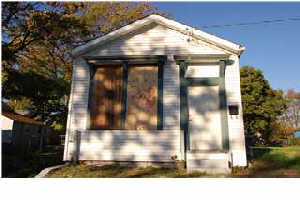
Cheap rental homes remind me of buying electronics off the street.
Street Urchin: “$50 Bucks! Flat screen television for $50! Why are you even thinking about it? This is a great deal- CHEEP!!”
My mind (definitely thinking about it): “Hmmm… I need a flat screen, but this thing is either stolen or a piece of garbage. But, if it’s not (and his uncle really died and bequeathed it to him), this is a great deal!”
My mouth: “OK, I’ll give you forty-five for it.”
This is the type of deal I see people making to buy homes for as little as $10K. It’s really a gamble, but can be a lucrative one if it works out. I mean, the ups can be great!
For example, a $20K house’s payments come to approximately $130/month (believe it or not, there are no HOA fees to worry about!). The home can rent for $400. That’s a positive cash flow of $270/month, which is not bad! With a $100K credit line, this could equal 5 homes. I like the math, $270 multiplied by five homes equals $1,350/month. That’s a monthly return of 13.5%. Oh yeah! So the flat screen works and works well! I’ve got a great television and an even better story of my tough negotiating tactics to match.
But then, there are the down times. The house is cheap and old, and things start breaking down. The tenants (savvy to the system) call the city’s code enforcement department, who find a lot more stuff that’s not at code. The landlord is required to fix them (or face fines) which eats into the return. Several of the tenants think that requests for rent are merely suggestions; they promise payment, but it never comes (even after thousands of dollars in repairs are done). Evicting them is a double-whammy as no rent is coming in and the attorney fees are going out. The house becomes vacant and vandals begin to smash windows; neighborhood kids start using the home as a party pad. After filing ineffective police report after police report, it’s clear that the police don’t want to be in the neighborhood unless absolutely necessary. Then again, neither does the landlord.
So now “you get what you pay for” begins to ring true. The flat screen has stopped working and has somehow completely shot the electric system of my condo. A detective from the police department has left a business card on my door. Unfortunately, I threw away my old television set (“Good riddance, 20th Century!” I said…) and am now forced to read a lot more.
So how do people make money off of cheap homes? Well, the margin is there so some savvy investors have figured it out. A guy I used to work with told me his system:
1. Thoroughly inspect to see what’s broken and on the verge of wearing out. Include this in the upfront cost of the home.
2. Leave the home broken up until someone moves in. Then repair it.
3. Never have carpet in the house; always use vinyl or a hard surface that cleans off well for flooring.
4. Get tenant referrals from good existing tenants
5. Find out when pay day is and show up in person on that day. Accept cash and carry a gun.
6. Find a handyman who lives in the community to take care of the needed maintenance/repairs.
7. Understand that evictions and losses are part of the game sometimes. There will rarely be months where something doesn’t happen. It’s not upsetting, it’s business.
8. The homes will probably never go up significantly in value and will be difficult to impossible to sell on the market. This is purely a cash flow play.
9. Buy these homes in bulk and spread the gains and losses across many homes.
10. Make enough cash flow to hire someone else to do the dangerous duties (aka visiting the properties).
Cheap homes are meant for the savvy investor with a system, not the guy looking for a deal on an inexpensive set on the street. A steel stomach doesn’t hurt either!
Brett Furniss is the President & Owner of BDF Realty (“Charlotte’s Most Innovative Property Management & Investment Company”), and Rent-To-Sell Realty (“When You Need a New Solution to Sell Your Home”) which specialize in rent-to-own (lease options) and rent-to-sell homes. His newest book, A Real Estate Agent’s Complete Guide to Representing Rent-To-Own (Lease Option) Tenants (Delight Clients, Fill Vacant Homes, and Earn $2,250* Upfront! (*Minimum!)
Learn MoreCharlotte Property Management Weekly: Is “Final Tenant Approval” Desirable For Landlords?

As I was thinking about this question the other day, I had a flashback to my high school history class. The first thing I learned from this trip down memory lane was that it is indeed possible to daydream about hours of daydreaming.
The second thing I learned was the strange applicability of our class’s discussion on democracy in regards to approving prospective tenant applications. The question was whether a true democracy (everyone makes the decisions) or a representative democracy (“experts” were voted in to make the decisions) was better.
The effectiveness of a true democracy was illustrated by a story that Aristotle told. It goes something like this:
You’re on a big cruise ship with 100 other passengers. Everything is going fine until it is clear a major storm is on the horizon. The ship is about to navigate a tight channel where it could easily be dashed upon the rocks if steered incorrectly. Any wrong move would spell imminent disaster for all the passengers. What to do?
A true democracy would offer a vote to everyone on the ship to determine which way to steer the rudder (“Raise your hand if you think we should steer right. Okay, after the final count of hands, the ‘Lefts’ have it.”). Aristotle said he’d prefer to rely on the captain and his crew to make that decision. This discourse lead to our founding fathers (many years later) settling on a representative democracy as America’s form of government; a true democracy sounds better, but wouldn’t work as well in practice. The captain, due to his experience and expertise, would know best.
Tenant selection is one of the most important duties a property manager performs for landlords. Tenants make or break (unfortunately, literally sometimes) a rental property. They will pay and treat the property well, or they won’t. Knowing who they are as people and their background greatly mitigates this risk. This is why the front end tenant screening by a property manager is so vital. And experience in tenant selection counts!
Some landlords want to be hands-on in this process. I don’t have an issue to this prior to going to market. But if the hands-on treatment is expected to go on for the duration of the tenant selection process, there is little need for a property manager. I would recommend posting a few rental ads and going the “do-it-yourself” route. This works for some people. It also (potentially) saves money, but greatly increases the risk.
It reminds me of my favorite all-time television show, 24. Kiefer Sutherland (Jack) would only try to bandage people with life-threatening injuries in the field if it was an absolute emergency. Most of the time he would just send them to CTU’s medical clinic for treatment. And, at no point did he ask Chloe (from CTU’s IT staff) to give him pointers on bandaging the wound. He trusted the professionals.
And so should landlords. “Final tenant approval” can be used as a cop-out by property managers. If things go south with a tenant, “final tenant approval” makes it very easy for the property manager to say, “Well, you gave final approval for the tenant we placed, so what happened isn’t really my fault.” I even sometimes see property management companies advertise this “feature”, making it appear to be desirable! All I can say is that if my sister died on the operating table and the doctor came to me and said, “You know, I asked you for “final removal approval” on which part of her organ to cut out… you said ‘OK’…” I would be incredulous! I mean, what do I know about medical procedures? Why would he ask me what to do? I’m paying for his expertise!
True democracy may sound good, but a representative democracy works much better in practice. Let the “final tenant approval” come from the expert you hired!
Brett Furniss is the President & Owner of BDF Realty (“Charlotte’s Most Innovative Property Management & Investment Company”), and Rent-To-Sell Realty (“When You Need a New Solution to Sell Your Home”) which specialize in rent-to-own (lease options) and rent-to-sell homes. His newest book, A Real Estate Agent’s Complete Guide to Representing Rent-To-Own (Lease Option) Tenants (Delight Clients, Fill Vacant Homes, and Earn $2,250* Upfront! (*Minimum!)
Learn MoreCharlotte Property Management Weekly: “Free” Repair Quotes on Rental Homes Can Cost You Money

Everyone wants to save money! But to what lengths (and for what) does it make sense to find “deals”? It really depends on the urgency level of the need. Here are three scenarios of high, middle, and no urgency:
High urgency (nurse): “Your daughter needs the heart transplant now! Do we have your consent? …I don’t know how much it costs, sir… it will be itemized on your bill later, I suppose… No, there is no AAA discount on this procedure… I’ve never seen a coupon like that- it looks like you typed up ‘50% OFF’ and then wrote ‘Group-On’ on top of it… No, I suppose we don’t want to lose your business to a competitor… We’re losing her!! Yes, we do validate parking.”
Middle urgency (property manager): “The house needs one bedroom painted, the carpets cleaned, and the outside power washed before we can put it on the market… You said you want 3 quotes per repair?”
No urgency (sales clerk at Best Buy): “The new iphone detachable screen is really cool! You’re a loser if you don’t get one! We only have 10 million of these left, but when they’re gone, we’ll call our factory in China to make more… $199 for a screen to put on top of your screen (that already works) is a bargain. This is as cheap as it gets (until next week when ‘Detachable Screen Mini’ comes out). There is no discount; it’s under $200 bucks already, man! Go to another store then! …Fine, don’t call me crying when you are shunned socially and professionally for your weak iphone accessorizing…”
So the point of these scenarios is to illustrate that “high urgency” scenarios need to be acted on immediately, with no time to haggle. And “no urgency” scenarios allow time to shop vendors for price; time is on your side (yes, it is)!
But what about “middle urgency” scenarios? We run into these sometimes when tenants move out and the rental home needs to go back on the market. Houses need to be repaired, and some landlords want to quote out every repair multiple times to get the lowest price. This sounds reasonable, even prudent. The repairs do need to be made in a reasonable time, but not tomorrow or next week. Time is on their side (yes, it is?) to get repair quotes. Right?
Well, it’s a “middle urgency” scenario (not a “no urgency” scenario) because there are other factors in play. Every investment home has some combination of costs that accrue every day it’s vacant: mortgage payments, HOA fees, lawn care, utilities, property taxes, etc. For easy math, let’s say these come to $900/month. $900 split into a 30-day month is $30/day. This is a very real cost; the meter is running daily.
For this example, let’s say the initial repair quote comes in at $500. After getting 3 quotes per repair item, the repair quote is whittled down to $400. Congratulations- that’s a 20% savings of $100!
But, wait, is it really? Getting those additional quotes took 10 days. 10 days of vacancy multiplied by 30 days equals $300. So, to save $100, it cost $300. The net loss is $200, plus all the time and headaches it took to coordinate vendors and sort through repair quotes.
Unfortunately, this is not the totality of the loss sometimes. Empty homes are risky! Talk to any police officer and ask them whether they have any problems with vacant rental homes being broken into in this economy. If this happens, stolen appliances and break-in damages escalate the costs upward substantially. Remember: the longer the home is vacant, the higher the risk.
“Free” repair quotes can cost a lot! Don’t over-quote yourself into a financial loss!
Brett Furniss is the President & Owner of BDF Realty (“Charlotte’s Most Innovative Property Management & Investment Company”), and Rent-To-Sell Realty (“When You Need a New Solution to Sell Your Home”) which specialize in rent-to-own (lease options) and rent-to-sell homes. His newest book, A Real Estate Agent’s Complete Guide to Representing Rent-To-Own (Lease Option) Tenants (Delight Clients, Fill Vacant Homes, and Earn $2,250* Upfront! (*Minimum!)
Learn MoreCharlotte Property Management Weekly: Recruiting Great Tenants- Your Team Is Only As Good As Your Players

It’s been said the most important part of major college coaching is recruiting. A team’s ultimate potential is limited by their talent level. Sure, good coaching can make good players better, but great players are the reason teams win championships and are consistently good.
I started thinking about this the other day when a friend of mine called. He told me that a friend of his bought a property management company inCharlotteand it is proving to be a nightmare. The company he bought has sloppy books, awful employees, and a large cache of substandard properties that are in disrepair. But most importantly, they have a lot of tenants that have not been paying rent and have stayed in the houses rent-free for months. His friend is watching his investment go up in flames as he tries to salvage what’s left.
This made me think. What would be the characteristic that would be most important to measure the strength of a property management company? Is it good employees, growing cash flow, long-term contracts in place, sound business procedures, or something else? They are all obviously very important. But what’s the ultimate key to success?
As I thought more about it, my head began to hurt and my mind drifted to sports:
Why did Coach Nick Nolte agree to buy Ricky a new truck in the movie, Blue Chips? Why are there so many recruiting scandals in college athletics? Why do I read about “tampering” charges in the professional leagues when teams illegally contact players when they are not allowed? Why are college coaches only allowed to send potential recruits a limited number of text messages and are restricted on how often they can call them? Why do coaches work harder in the offseason traveling to visit recruits than they do during the season? Why do the Charlotte Bobcats think they can rebuild the team with late round draft picks?
Then the answer occurred to me. The players are the most important thing. They directly dictate the success of a coach. If a team has great players, they will be a good team (no matter the coaching quality). That is why recruiting is so important and organizations are willing to push the envelope on wooing potential stars.
As a rule, every top-tier athletic team puts a premium on signing great players. And this is the same mentality that top-tier landlords and property managers, like you, must have to build a strong property management company and investment portfolio. It’s about getting great tenants for your properties. They will directly dictate your success.
When a great tenant applies for a property, it is imperative to let them know that you want them. You need them. You will treat them like gold if they would just sign with you (on the lease). Text and call them every hour (there are no contact restrictions in business, only the weirdness factor of over-communication). Add incentives. Buy them the pony they always wanted, as long as it is munching the grass in your rental home’s yard! Let them know your love will never end if they can out down a deposit today.
Great tenants provide so many great benefits! They pay on-time and in full providing consistent cash flow. They take care of the properties so they don’t fall into neglect. They let you know if your employees are lacking or slacking. They even take care of minor repairs on their own!
Your team, investment, and/or company is only as strong as the players it has signed. Maniacally pursue the best, get them under contract, and rest will take care of itself!
Brett Furniss is the President & Owner of BDF Realty (“Charlotte’s Most Innovative Property Management & Investment Company”), and Rent-To-Sell Realty (“When You Need a New Solution to Sell Your Home”) which specialize in rent-to-own (lease options) and rent-to-sell homes. His newest book, A Real Estate Agent’s Complete Guide to Representing Rent-To-Own (Lease Option) Tenants (Delight Clients, Fill Vacant Homes, and Earn $2,250* Upfront! (*Minimum!)
Learn MoreCharlotte Property Management Weekly: Tenant Stories Often Raise Red Flags

“If you have to ask how much it costs, you can’t afford it.” Maxim of the Wealthy
“If you have to ask for a payment plan for the home’s security deposit, you can’t afford it.” Maxim of the Intelligent
We are approached by potential renters a few times a month with something like the following:
“We love this house! We want to take it! We would call our lives “complete” if we could inhabit this home with our children! We get goose bumps just imagining the daily ingestion of pure beauty that permeates from each nook of this stunning domicile. We have the first month’s rent ready to put down now! Where do we bring it? We will treat this house like our very own with weekly carpet baths and loving dustings!
But… The only problem is that we are a little short on the security deposit. Will the owner accept breaking this payment into 3 months? Let the owners know we are good for it and I will be praying that they be blessed this Sunday at each of the church services we regularly attend.”
Thinking like a property manager, how many red flags come up in this beautiful soliloquy? A few come to my mind:
1. Lack of funds: I dare to call this the number one tenant screening technique; this is the collection of the application fee, pet fee, security deposit, and the first full month’s rent upfront and in full. This really is the number one way to find out if they have cash on hand. If they can pay it, they probably have money. If they can’t, they probably don’t and won’t apply.
2. Offer of the security deposit in a payment plan: This ties into red flag #1, but there is another issue. If they don’t pay it upfront, you are left with absolutely no leverage to get it after they move in. You can’t evict them because they are paying rent. Please don’t take payment plans! I’ve done it a few times (because it seems so easy and the tenants seem so sincere…), but they rarely keep up with them. Moving is always more expensive than they realize and cash was already short. They won’t give you the money simply because they don’t have to. They duped you on the front end and will now avoid your calls and hollow threats.
3. Effusive praise over a rental home: I like it that you like it, but let’s not go overboard. When you tell me that you’re going to take meticulous care of it, that’s great; but I’ve never had a tenant tell me that they were planning to systematically destroy their rental before moving in.
4. I like it that you’re into church: But I wonder why you’re telling me this when you’re applying for a rental home?
Red flags don’t mean you need to wave a white one. Be diligent in your screening process and the right tenant will come along!
Brett Furniss is the President & Owner of BDF Realty (“Charlotte’s Most Innovative Property Management & Investment Company”), and Rent-To-Sell Realty (“When You Need a New Solution to Sell Your Home”) which specialize in rent-to-own (lease options) and rent-to-sell homes. His newest book, A Real Estate Agent’s Complete Guide to Representing Rent-To-Own (Lease Option) Tenants (Delight Clients, Fill Vacant Homes, and Earn $2,250* Upfront! (*Minimum!)
Learn MoreCharlotte Property Management Weekly: Big Bank Lessons: How to Sell More by Charging More- It’s All in the Ask

It’s not how much you charge, but how you ask.
“Even in this ‘new economy’? Everyone is so price conscious!”
A friend of mine was going to Mexico and I wanted to surprise her by giving her some Mexican pesos for the trip. Being that Charlotte (drum roll, please) is the 2nd largest banking city in the country, I didn’t think it would be a big deal; I only planned on getting 20 dollars worth of pesos.
I walked into Wachovia across the street and asked for the twenty dollars worth of pesos. They said there was a $15 fee, so it probably wouldn’t be worth getting it from them. They suggested the airport, a travel agency, or Bank of America. I found it interesting that they suggested a competitor; good for them!
I walked a few blocks to Bank of America and figured I’d cut through the chase. I immediately asked the bank teller what they charged for exchanging dollars for pesos. She said they didn’t charge anything; the conversion cost was factored into the exchange rate (aka lowering it). That sounded swell to me.
The question is: how much money did Bank of America make on this transaction? I really have no idea. But they got the sale! The real exchange rate could have been 20 pesos to the dollar, and they gave me an exchange rate of 10 to the dollar. That’s robbery (of course), but I didn’t know it. I just knew I wasn’t paying a $15 conversion fee on top of the $20 of pesos!
So I thought about this in the context of a la carte real estate pricing, specifically in property management. When I tell a customer that our fee for power washing their house is a 15% “project management fee” on top of the real cost, it does not come off very smoothly. The customer feels the exact amount of our fee and how it is increasing their total cost. There is always a strange pause after this pricing explanation, but I thought it was worth it as it provided a high level of transparency on how and where we make our money.
However, can a case be made to present this differently? If power washing costs us $70, and we tell the customer it will cost them $100 to do it, that’s not dishonest. I mean, do you e-mail the Gap and ask them what the actual price the shirt you bought from them cost? Or ask McDonald’s what your soda actually cost? Of course not! You either like the price and buy the product, or you don’t, and you walk.
That conversation with no added fees goes a lot smoother. I mean, what sounds better: $100 cost with no “hidden fees” or $70 plus a 15% fee? Surprisingly, the $100! The profit margin of the first presentation method (which sounds better) is approximately 66% more! And the customers are happier and not triple-checking their monthly statement to make sure the 15% was computed correctly.
In conclusion, the way pricing is offered is important. It’s a way to have your cake and eat it too, a true win-win-win. You can charge more, while selling more, while making your customers happier!
There might be a reason that big banks generate so much revenue; they know how to ask their customers for it!
Brett Furniss is the President & Owner of BDF Realty (“Charlotte’s Most Innovative Property Management & Investment Company”), and Rent-To-Sell Realty (“When You Need a New Solution to Sell Your Home”) which specialize in rent-to-own (lease options) and rent-to-sell homes. His newest book, A Real Estate Agent’s Complete Guide to Representing Rent-To-Own (Lease Option) Tenants (Delight Clients, Fill Vacant Homes, and Earn $2,250* Upfront! (*Minimum!)
Learn More