

Selling Rental Properties: 3 Free Steps To Determine Whether You Should

There’s been a lot of good news of rising home prices coming from the Charlotte housing market, as well as the rest of the country. For real estate investors, this news is a mixed bag. There are less great buying opportunities for them, but their net worth is increasing. It also presents a good opportunity to turn their home assets into cash.
Making money on selling rental homes is a nice aspect of the investment real estate game. Buy low, sell high. When a real estate investor is able to do this, life is good! It makes all the repairs, waiting for late rental payments, and extra tax work worth it!
Let’s face it, there are two main joys of selling investment homes:
1. A good amount of cash is transferred into your pocket
2. The worry about your extra home is gone and given to someone else!
So if you have an investment property that you may want to sell, here are 3 free steps to make a quick determination on whether you should:
1. Determine the value of your home: Ask your property manager or friendly Realtor a realistic range of values for your home. Why a range and not a fixed number, you ask? Real estate pricing is subjective. If your home is in great shape and in a desirable section of the neighborhood, your home should sell in the top of the range. If it’s been beaten by years of tenants and little fix-up has been done, it will be in the lower range of the values. Estimate low for this exercise.
2. Estimate selling costs: Nothing creates a bigger vacuum of air on the phone when I explain that owners should factor in 10-15% in selling costs. After the initial scolding pause, they ask the requisite question, “What? How do you figure that, brother?”
This general estimate of 10-15% is computed by:
6% Realtor fees
1% Miscellaneous seller closing costs
3-8% Less than list price offer and seller concessions (typically paying for the buyer’s closing costs)
For example, MecklenburgCounty (Charlotte) currently has an average offer acceptance of 92% of the list price (and this is on the rise from 90% from last quarter).
3. Find out your loan balance: For a general idea, just look at the loan balance remaining on the monthly mortgage statement. If you don’t get a mortgage statement, you’ll really like this exercise!
Once these 3 figures are retrieved, the math looks like this:
Value of home (be a pessimist!) – Estimate the cost to sell (say 12%) – Your loan balance = Profit (or loss)
For example, take a $100K house with a loan balance of $60K:
$100K (home value) – $12K (12% of $100K) – $60K (loan balance) = $28K (Profit!)
This is a general estimate of whether it is worth putting your home on the market to sell. Now you can decide whether this approximate dollar figure works for you.
Selling homes can be a very good thing for your wallet! Just use this simple exercise to see if it is worth doing at any given point in time.
Brett Furniss is the President & Owner of BDF Realty (Charlotte Property Management) which works with Charlotte real estate investors and homeowners and Rent-To-Sell Realty (“When You Need a New Solution to Sell Your Home”) which specialize in rent-to-own (lease options) and rent-to-sell homes. His newest book, A Real Estate Agent’s Complete Guide to Representing Rent-To-Own (Lease Option) Tenants (Delight Clients, Fill Vacant Homes, and Earn $2,250* Upfront! (*Minimum!)
Learn MoreCharlotte Property Management Monthly: Don’t Return Your Tenant’s Security Deposit Just Yet

As a Charlotte property manager, I am a big proponent of returning as much of the tenant’s security deposit to them as possible. If the tenant took time to care for the property, did what they were supposed to do during their lease period, and paid all of their rent, they certainly deserve it back! There is a reason property managers are required to put the security deposit into an escrow account; it is a reminder that the security deposit is not the landlord’s money, it belongs to the tenants.
However, that being said, I’m also a proponent of the “slow return.” By NC law, the security deposit does not need to be returned to the tenant for 30 days. And also according to the law, if the landlord is still figuring out repair costs and won’t make the 30-day deadline, they just need to notify the tenant that the payment will be delayed in writing and let them know the approximate cost of the repairs at that point in time.
Why would landlords delay the tenant’s security deposit return? The most popular question asked (by far) when a tenant moves out is, “when can I expect the security deposit back?” If you want to be a “cool” landlord, shouldn’t you just give it back after the walk-through? You already know how much the repairs are going to cost (if there are any) and the tenant could use the money back. You certainly want to be good to the tenants who were good to you, right?
Well, yes, but not exactly. I recommend keeping the security deposit as long as possible. Once it is given back, you really need to consider the tenant gone and their account closed. You need to assume that you will never get any money from them again.
So? They moved out already, right?
Yes, but… Walk-throughs are an inexact science and sometimes things are missed. Think about home inspectors; they are professionals that take hours doing a walk-through to write a comprehensive damage report and they still miss issues with the home. I guarantee that landlords are not close to conducting several hour walk-throughs at the level of detail that they are (nor should they be). Things get missed and that’s life.
However, you can provide yourself some extra time so missed things can get caught before it’s too late and you have to pay for it! It may be one of the handymen working on your home that alerts you to new repair issues. It may be a Realtor or marketing person who wonders why something looks off. Or (usually) it’s the next tenant who moves in afterwards that lets you know what’s not up to par (and by the way, they want the issues fixed on your dime!).
Let tenants pay for damages they are responsible for. And, unfortunately, the delay in returning the security deposit to them is a good way to ensure this happens.
Brett Furniss is the President & Owner of BDF Realty (Charlotte Property Management) which works with Charlotte real estate investors and homeowners and Rent-To-Sell Realty (“When You Need a New Solution to Sell Your Home”) which specialize in rent-to-own (lease options) and rent-to-sell homes. His newest book, A Real Estate Agent’s Complete Guide to Representing Rent-To-Own (Lease Option) Tenants (Delight Clients, Fill Vacant Homes, and Earn $2,250* Upfront! (*Minimum!)
Learn MoreCharlotte Property Management Monthly: Interested in Investing in Charlotte Homes? 3 Strategies & 1 FYI

As a Charlotte real estate investor and property manager for almost a decade, I’ve spoken to a lot of clients about buying Charlotte investment homes. Many different clients have many different goals, but the goals typically fall into three camps (all cash flow, cash flow and equity, all equity). Below are these 3 types of investment strategies and the residential houses used to achieve them:
1. All cash flow ($10K – $50K priced homes): These homes make investors lick their lips. “I could just put the house on my credit card or write a check!” Yes, this is true and it has been done! It’s nice that these homes will rent anywhere from $250 – $500 a month. With home payments less than $150/month (figure taxes around $50/month and insurance around $35/month), vacancy doesn’t hurt too much. The plan is to buy up a bunch of these homes, fill them with good tenants, and enjoy the cash flow!
The downside is that these homes are not in desirable neighborhoods and are barely liquid, even in great real estate markets; selling them to home owners (non-investors) is close to impossible, which allows for virtually no capital appreciation. Vacancy costs don’t hurt that much, but the damage and theft expenses can add up quickly (you may see your home’s missing HVAC unit for sale on the street… Hint: buy it back! It’s cheaper!). “Good tenants” are tougher to find than with higher-priced homes. Bottom line, this strategy is either high risk or high reward (if managed well) depending on what month you ask. It’s a boat that goes up and down on the waves- buckle up!
2. Both cash flow and equity (home price appreciation) ($90K – $140K homes): These homes are my personal favorite to invest in. The tenants are typically stable and treat the homes well. If the home is bought properly, they fill quickly and do appreciate in rising real estate markets. These are moderate risk investments. Vacancies and fix-up costs hurt more than the less expensive homes, but monthly positive cash flow can be in the $200-$400 range (if bought correctly). These homes are more liquid and are appealing to both retail and investor buyers.
3. All equity ($250K+ homes): These more expensive homes can be bought at great discounts because most real estate investors don’t hold them (too expensive) and most home owners don’t like buying major fixer-uppers. However, buying a house $100K-$200K below retail value, fixing it up (gulp- maybe a $50K cost?), putting a renter in it to net out the monthly mortgage costs, and then flipping it when the subdivision the home is in stabilizes can be a very profitable venture (with time). Utilizing this strategy requires a good cash reserve and patience to sit on the home before cashing it out. The good news is that the tenants in these homes are typically very stable, pay on time, and will take care of them. As the Tom Petty song goes, “the waiting is the hardest part.”
And the FYI:
Investors love multi-family units! But multi-family homes (1 to 4 units) are not that prevalent in Charlotte. I don’t know why more of them weren’t built (maybe due to cheaper land here?), but there are typically very few of them available for sale.
Charlotte is a beautiful, up-and-coming city with a growing population. Whatever the strategy being used, the time to invest seems to be now!
Brett Furniss is the President & Owner of BDF Realty (Charlotte Property Management) which works with Charlotte real estate investors and homeowners and Rent-To-Sell Realty (“When You Need a New Solution to Sell Your Home”) which specialize in rent-to-own (lease options) and rent-to-sell homes. His newest book, A Real Estate Agent’s Complete Guide to Representing Rent-To-Own (Lease Option) Tenants (Delight Clients, Fill Vacant Homes, and Earn $2,250* Upfront! (*Minimum!)
Learn MoreCharlotte Property Management Monthly: Landlords- 5 Reasons Why Our Time Is Now
Wow! Has it already been over five years already since the real estate market tanked? TARP, the “new normal”, bailouts, CDO’s, and toxic assets were all the rage back then. Home buyers disappeared, home sellers were really unhappy, and real estate prices dropped like a rock. Renters were deemed the smart folks, and landlords, not so much.
It was a tough time for most people as the economy soured and landlords were no different. Rental rates were relatively low, almost no one could get a mortgage to refinance, and people (landlords and tenants included) were losing their jobs. This affected landlords in two ways. First, if they lost their job, they still had to pay for their home and their rental homes. And, secondly, if their tenant lost their job, they had to deal with that situation as well. The uncertainty made for tough times for all involved. Many landlords got out of the rental business either by choice or by economic necessity.
However, the times have changed in almost every way for the better now. The rewards for hanging in there the last five years seem to have arrived and I’m seriously wondering if we are entering into a golden age for landlords. Wait- What??? Why would someone vested in real estate for his livelihood make such an outrageous claim? Well, let’s look at the facts on the ground:
1. Rental rates keep on rising. Love you, extra cash flow!
2. Mortgage rates have dropped even lower making leverage really cheap. Locking into low interest rates is fun!
So, higher rents coupled with lower mortgage costs equals bigger profits for landlords. Sweet!
3. Home prices are still low and seemed to have bottomed out. For landlords with cash, they can pick up rental homes on the cheap that will immediately cash flow and be primed for a quick equity build-up when the market recovers. There are undoubtedly still more sellers than buyers in the market.
4. The rental market is healthy and homes are filling quickly with higher quality tenants. Many great former homeowners who hit a rough spot are now clamoring to live in rental homes on the market today. They pay on time and maintain the homes extremely well. They know the drill and are great to work with!
5. Being that it seems that home prices have stabilized (and with inflation coming at some point in the near future), home prices will begin to work their way up again. So the landlords who have held on and been paying down their mortgages over the past five years, will be rewarded with equity (cash) in a liquid market.
So, as a landlord, you should be excited! Our time is now!
Brett Furniss is the President & Owner of BDF Realty (Charlotte Property Management) and Rent-To-Sell Realty (“When You Need a New Solution to Sell Your Home”) which specialize in rent-to-own (lease options) and rent-to-sell homes. His newest book, A Real Estate Agent’s Complete Guide to Representing Rent-To-Own (Lease Option) Tenants (Delight Clients, Fill Vacant Homes, and Earn $2,250* Upfront! (*Minimum!)
Learn More
Charlotte Property Management Monthly: Cash Flow Happens On Both Ends: After You Check Your Rental Comps, Do the “Bank Thang”

A property manager’s most important task is to maximize their client’s cash flow. This includes looking at most of the inflows (good!) and outflows (bad!) of the property.
Cash Inflows: Rent from the tenants (typically the biggest or only inflow)
Cash Outflows: Repairs, management fees, & vendor fees
What is out of the property manager’s control, however, is typically the largest outflow for landlords- the financing of the property. This is the mortgage payment that goes to the bank each month. If this outflow can be sizably reduced, all other expenses (outflows) seem minimal.
So does that mean I need to start doing the “bank thang” (defined as giving up total control of your personal information and providing a ridiculous amount of documentation)? Unfortunately, yes.
You may not like dealing with the banks again (I didn’t either!). And you may think that the Fed is crushing the value of our dollar by printing money (I do too!). But one of the positive results of the Fed’s “Quantitative Easing” we read about in the news is that it has pushed interest rates on mortgages to historic lows (for now). And, as a landlord, you need to explore taking advantage of these low rates and minimizing your biggest outflow. And that means having a conversation with the banks about refinancing options.
The three ways to deal with refinancing (from best to worst option):
1. Read the mail the banks send you, especially the letters that come via UPS and FedEx. I got a letter from Chase (one of my existing lenders) the other day via UPS that offered to reduce my interest rate from 6.875% to 4.25% on one of my rental properties. I called them and it was legitimate (no closing costs and limited documentation needed). This took my payment down 30% on this house. That is a good outflow reduction!
2. Proactively call the lenders who hold your home loans and see if they can do anything for you. Mention government programs like HARP, HAMP, and HARP2. Then hope they know what you’re talking about.
3. Call a mortgage broker and ask them to look over your loans and see if they can refinance any of them with favorable rates.
Property managers can run rental comps to make sure their landlord clients receive the highest possible rents and try to minimize other costs. But landlords, especially in this historically low interest rate environment, need to do their part to maximize cash flow. And that means doing the “bank thang”!
Brett Furniss is the President & Owner of BDF Realty (“Charlotte’s Most Innovative Property Management & Investment Company”), and Rent-To-Sell Realty (“When You Need a New Solution to Sell Your Home”) which specialize in rent-to-own (lease options) and rent-to-sell homes. His newest book, A Real Estate Agent’s Complete Guide to Representing Rent-To-Own (Lease Option) Tenants (Delight Clients, Fill Vacant Homes, and Earn $2,250* Upfront! (*Minimum!)
Learn MoreCharlotte Property Management Monthly: Everyone Loves Pets (Except Landlords): 3 Reasons Maybe They Should Too

“Oh, did you see Fluffy. He’s so cute! He’s practically part of the family.”
(Most pet owners)
“Pets in my house? Never!”
(Most landlords)
Almost everyone loves pets. Some people are dog people. Some are cat people. And some like the more interesting kinds, like birds and snakes. Pet enthusiasts are a multi-billion dollar business segment; and those billions don’t count the home rental income from tenants who crave those fenced-in backyards and pet doors.
However, landlords are the one minority group that typically despises pets. They’ve heard the horror stories of urine-soaked flooring, smells that just never seem to go away, and shredded interiors. “I’m not going to allow that to happen in my house!” thousands of landlords have told property managers throughout the years.
But maybe going in the complete opposite direction of this conventional wisdom is the best way to maximize ROI?
Here are the top three reasons why landlords should consider welcoming pets into their rental homes:
1. It’s much easier to place tenants! From personal experience in Charlotte property management, tenants have pets 50%-75% of the time. I really don’t think this is an exaggeration! Property managers turn away so many prospective (great) tenants when pets are not allowed. This crushes ROI as it slows the property being occupied, turns away better tenants, and commands lower rents as a smaller pool of tenants are being courted.
2. Non-refundable pet fees are free money. Tenants will pay extra for their furry (and non-furry) animal friends to be in the house. The bigger the house, the bigger the pet fee the tenant will pay. The more pets they have, the more pet fees they will pay. Try to charge per child for big families and see how that is received! But, with pets, it is industry standard.
Furthermore, there is nothing that says that pet fees have to go towards cleaning up for the pet; this is what the security deposit is for! The pet fee is merely paying for the right to have a pet in the home- nothing more.
3. It is important to have a realistic view about pets and the potential damage they cause. Have pets caused costly damage to rental homes in the past and will they continue to do so in the future? Yes. Flooring, especially carpet, is the usual casualty when pets go rogue. And new carpet isn’t cheap. Now, with that being said…
Tenants who like and can afford nice homes typically like to have clean places that their friends and family can visit. It is embarrassing to most people to have visitors into their home if it reeks of pet urine and there are visible pet feces ground into the carpet.
With lower priced rentals in questionable neighborhoods, the carpet is typically a goner anyway. So instead of fighting this, rip up the carpet after the current tenant moves out, replace it with linoleum, and allow pets! As my friend who invests in lower price rentals says, “Carpet? What’s that?”
Allowing pets often makes for a better ROI. Maybe landlords should consider showing pets more love!
Brett Furniss is the President & Owner of BDF Realty (“Charlotte’s Most Innovative Property Management & Investment Company”), and Rent-To-Sell Realty (“When You Need a New Solution to Sell Your Home”) which specialize in rent-to-own (lease options) and rent-to-sell homes. His newest book, A Real Estate Agent’s Complete Guide to Representing Rent-To-Own (Lease Option) Tenants (Delight Clients, Fill Vacant Homes, and Earn $2,250* Upfront! (*Minimum!)
Learn More
Charlotte Property Management Monthly: Incentives: Knowing Why the Chicken Crossed the Road & Why Fees are Good
Q. Why did the chicken cross the road?
A. There was bird feed there
B. A coyote was chasing him
C. He saw a hot “chick” on the median
D. To get to the other side
Answer D is the response that makes this a legendary “joke” (somehow…). Answer D is also very incomplete. Everything happens for a reason; no one does things without some type of incentive being involved. I mean, the chicken wouldn’t care about getting to the other side if he didn’t have a reason to do so. What was its motivation? What was the incentive the chicken was pursuing? A, B, or C answers make much more sense to me in answering the “why” question! They address the chicken’s needs:
A. Hunger
B. Safety
C. Love (or lust)
In business, incentives usually mean money. If 90%+ of businesses fail for lack of cash flow (lack of money incentives), then the ones that survive make sure they are getting enough cash incentives from their customers. Obviously, this isn’t a one way street; the businesses are offering enough value in return so these payments are a win-win deal.
So now that is established, what can incentives tell you about a company? Some charge for certain services, some don’t. Why not just take the free services when they’re offered? Cheaper, especially in tough economies, seems like the best way to go. Right?
Well, incentives can be telling; company pricing and their fees can tell you what they believe they do well and what they don’t. So, in terms of getting great results, paying fees can be very important! Fees motivate companies to do what you want them to do.
Reading into incentives (aka company pricing) is interesting and generally informative. Let’s look at examples of this from real estate and other businesses:
1. When a tech company sells pricy software and then offers free support with it, I’d expect the software to be good and the support to have long hold times. If support costs extra money monthly and can be cancelled at any time, the support will probably be pretty good.
2. If you ask a friend to pet sit Fluffy as a free favor to you, your friend will probably be late and leave early; unfortunately, most friends will do the minimum required! If you hire the most expensive pet sitter in town, chances are Fluffy will be treated like Benji on a movie set.
3. If property management companies don’t charge you to sell homes under management, they are probably not going to actively seek to sell your home to the tenant.
4. If you offer your real estate agent 7% commission, they will probably be incented to work harder to sell your home. Many people will try to get their agent down to 5%, which is a complete misread of how incentives work.
5. If a property management company charges a huge sign-up fee, but very little for procuring a tenant and managing the property, chances are they will be very motivated to sign you up. They may be less motivated to procure the tenant and manage the property.
Generally-speaking, incentives (pricing) are an effective measure of the value that will be received for different services. A $5 chocolate bar should be better than a $1 bar. If you offer to pay one friend $50 to mow your loan and ask another to do it for free, guess which one you will see firing up his push mower first in your front yard?
So fees are good for consumers! If you don’t make sure you are utilizing proper incentives for service providers, you’ll never know when (or if) the chicken will actually cross the road.
Brett Furniss is the President & Owner of BDF Realty (“Charlotte’s Most Innovative Property Management & Investment Company”), and Rent-To-Sell Realty (“When You Need a New Solution to Sell Your Home”) which specialize in rent-to-own (lease options) and rent-to-sell homes. His newest book, A Real Estate Agent’s Complete Guide to Representing Rent-To-Own (Lease Option) Tenants (Delight Clients, Fill Vacant Homes, and Earn $2,250* Upfront! (*Minimum!)
Learn MoreCharlotte Property Management Weekly: The Cheap Rental Home Game: A Saga of Ups & Downs- 10 Tips for Survival
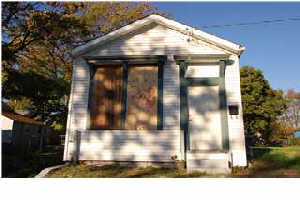
Cheap rental homes remind me of buying electronics off the street.
Street Urchin: “$50 Bucks! Flat screen television for $50! Why are you even thinking about it? This is a great deal- CHEEP!!”
My mind (definitely thinking about it): “Hmmm… I need a flat screen, but this thing is either stolen or a piece of garbage. But, if it’s not (and his uncle really died and bequeathed it to him), this is a great deal!”
My mouth: “OK, I’ll give you forty-five for it.”
This is the type of deal I see people making to buy homes for as little as $10K. It’s really a gamble, but can be a lucrative one if it works out. I mean, the ups can be great!
For example, a $20K house’s payments come to approximately $130/month (believe it or not, there are no HOA fees to worry about!). The home can rent for $400. That’s a positive cash flow of $270/month, which is not bad! With a $100K credit line, this could equal 5 homes. I like the math, $270 multiplied by five homes equals $1,350/month. That’s a monthly return of 13.5%. Oh yeah! So the flat screen works and works well! I’ve got a great television and an even better story of my tough negotiating tactics to match.
But then, there are the down times. The house is cheap and old, and things start breaking down. The tenants (savvy to the system) call the city’s code enforcement department, who find a lot more stuff that’s not at code. The landlord is required to fix them (or face fines) which eats into the return. Several of the tenants think that requests for rent are merely suggestions; they promise payment, but it never comes (even after thousands of dollars in repairs are done). Evicting them is a double-whammy as no rent is coming in and the attorney fees are going out. The house becomes vacant and vandals begin to smash windows; neighborhood kids start using the home as a party pad. After filing ineffective police report after police report, it’s clear that the police don’t want to be in the neighborhood unless absolutely necessary. Then again, neither does the landlord.
So now “you get what you pay for” begins to ring true. The flat screen has stopped working and has somehow completely shot the electric system of my condo. A detective from the police department has left a business card on my door. Unfortunately, I threw away my old television set (“Good riddance, 20th Century!” I said…) and am now forced to read a lot more.
So how do people make money off of cheap homes? Well, the margin is there so some savvy investors have figured it out. A guy I used to work with told me his system:
1. Thoroughly inspect to see what’s broken and on the verge of wearing out. Include this in the upfront cost of the home.
2. Leave the home broken up until someone moves in. Then repair it.
3. Never have carpet in the house; always use vinyl or a hard surface that cleans off well for flooring.
4. Get tenant referrals from good existing tenants
5. Find out when pay day is and show up in person on that day. Accept cash and carry a gun.
6. Find a handyman who lives in the community to take care of the needed maintenance/repairs.
7. Understand that evictions and losses are part of the game sometimes. There will rarely be months where something doesn’t happen. It’s not upsetting, it’s business.
8. The homes will probably never go up significantly in value and will be difficult to impossible to sell on the market. This is purely a cash flow play.
9. Buy these homes in bulk and spread the gains and losses across many homes.
10. Make enough cash flow to hire someone else to do the dangerous duties (aka visiting the properties).
Cheap homes are meant for the savvy investor with a system, not the guy looking for a deal on an inexpensive set on the street. A steel stomach doesn’t hurt either!
Brett Furniss is the President & Owner of BDF Realty (“Charlotte’s Most Innovative Property Management & Investment Company”), and Rent-To-Sell Realty (“When You Need a New Solution to Sell Your Home”) which specialize in rent-to-own (lease options) and rent-to-sell homes. His newest book, A Real Estate Agent’s Complete Guide to Representing Rent-To-Own (Lease Option) Tenants (Delight Clients, Fill Vacant Homes, and Earn $2,250* Upfront! (*Minimum!)
Learn MoreCharlotte Property Management Weekly: Recruiting Great Tenants- Your Team Is Only As Good As Your Players

It’s been said the most important part of major college coaching is recruiting. A team’s ultimate potential is limited by their talent level. Sure, good coaching can make good players better, but great players are the reason teams win championships and are consistently good.
I started thinking about this the other day when a friend of mine called. He told me that a friend of his bought a property management company inCharlotteand it is proving to be a nightmare. The company he bought has sloppy books, awful employees, and a large cache of substandard properties that are in disrepair. But most importantly, they have a lot of tenants that have not been paying rent and have stayed in the houses rent-free for months. His friend is watching his investment go up in flames as he tries to salvage what’s left.
This made me think. What would be the characteristic that would be most important to measure the strength of a property management company? Is it good employees, growing cash flow, long-term contracts in place, sound business procedures, or something else? They are all obviously very important. But what’s the ultimate key to success?
As I thought more about it, my head began to hurt and my mind drifted to sports:
Why did Coach Nick Nolte agree to buy Ricky a new truck in the movie, Blue Chips? Why are there so many recruiting scandals in college athletics? Why do I read about “tampering” charges in the professional leagues when teams illegally contact players when they are not allowed? Why are college coaches only allowed to send potential recruits a limited number of text messages and are restricted on how often they can call them? Why do coaches work harder in the offseason traveling to visit recruits than they do during the season? Why do the Charlotte Bobcats think they can rebuild the team with late round draft picks?
Then the answer occurred to me. The players are the most important thing. They directly dictate the success of a coach. If a team has great players, they will be a good team (no matter the coaching quality). That is why recruiting is so important and organizations are willing to push the envelope on wooing potential stars.
As a rule, every top-tier athletic team puts a premium on signing great players. And this is the same mentality that top-tier landlords and property managers, like you, must have to build a strong property management company and investment portfolio. It’s about getting great tenants for your properties. They will directly dictate your success.
When a great tenant applies for a property, it is imperative to let them know that you want them. You need them. You will treat them like gold if they would just sign with you (on the lease). Text and call them every hour (there are no contact restrictions in business, only the weirdness factor of over-communication). Add incentives. Buy them the pony they always wanted, as long as it is munching the grass in your rental home’s yard! Let them know your love will never end if they can out down a deposit today.
Great tenants provide so many great benefits! They pay on-time and in full providing consistent cash flow. They take care of the properties so they don’t fall into neglect. They let you know if your employees are lacking or slacking. They even take care of minor repairs on their own!
Your team, investment, and/or company is only as strong as the players it has signed. Maniacally pursue the best, get them under contract, and rest will take care of itself!
Brett Furniss is the President & Owner of BDF Realty (“Charlotte’s Most Innovative Property Management & Investment Company”), and Rent-To-Sell Realty (“When You Need a New Solution to Sell Your Home”) which specialize in rent-to-own (lease options) and rent-to-sell homes. His newest book, A Real Estate Agent’s Complete Guide to Representing Rent-To-Own (Lease Option) Tenants (Delight Clients, Fill Vacant Homes, and Earn $2,250* Upfront! (*Minimum!)
Learn MoreCharlotte Property Management Weekly: When Should Rental Rates be Negotiated?

As a Charlotte-area property manager, we get contacted (usually via e-mail) by prospective tenants asking us if the owner is willing to accept less than the listed rental rate. This question gets asked before the tenant even looks at the rental home.
I guess with the “new normal”, Group-On world we are living in, some might assume that consumers are not willing to look at something that isn’t drastically reduced; I don’t necessarily agree with this. But it does bring up the question: How does a property manager answer such a query on an immediate price reduction? There are obviously two ways to do this.
Question from Prospective Tenant: Will you lower the price even though I haven’t even seen the home and have done nothing besides click the rental ad to e-mail you?
Answer from Property Manager: Yes! How much would you prefer to pay? The list price is merely a starting point for negotiations, my astute friend! Property management’s new business model is akin to the “suggested donation” for entrance into a benefit concert. By the way, all the new chairs in our office are of the “EZ-Fold” style; we sit on them while eating our Burger King “Have It Your Way” Whopper, Jrs.
OR
Answer from Property Manager: No! The listing price is the listing price! I’m offended by your audaciousness, you crooked wretch! In a battle of wills, we will win. Think about it: our downside is that the rental home is on the market for a few more days; your downside is homelessness. The rent has now doubled for you! Scram!
Neither of these is a winning response (caution: do not use these responses at home or the office), but they do cover each end of the spectrum of responses to this “negotiation.” The best answer is somewhere in the middle of this spectrum. But where?
First of all, let’s clarify what a “negotiation” is. A true negotiation is where both sides give something of value and, in turn, receive something in return. In this example, the property manager is giving a discount in rent (real dollars), and the tenant has not even committed to visiting the property (let alone filling out an application and putting down a deposit)!
This example is not a negotiation; it is an example of a fishing expedition. Or a game show called, “How Desperate is the Owner to Rent Out their Property?” So giving away rent money for nothing is an obvious no-go. The best answer to an immediate query about reducing the rent would be something along the lines of, “I’m not sure how the owners would feel about that. If you visit the property and are interested, it is certainly something I could ask them.”
Okay, this does risk alienating some people. However, if the rental price is close to market value, then other renters will materialize. However, if the house has been on the market for a while, this may be a game you want to play. Proceed cautiously so you don’t wind up throwing free lawn care and daily Bojangles biscuits in as well to close the deal.
What about if the tenants do look at the property, are interested, and then try to negotiate the rental price? If the owner is willing to reduce the rent, I think an argument could be made to do this; however, this would be only if the tenants are strong candidates (great credit scores, landlord history, and income). Tenants who pay on time, keep the property in good shape, and do not create problems for others (neighbors, police, and property managers…) are worth their weight in gold. If they do not fit this bill, I would decline any reduction in rent.
Rental rate negotiation may be subjective, but common negotiation rules still apply. Make sure you get when you give! No “quid” without “quo”!
Brett Furniss is the President & Owner of BDF Realty (“Charlotte’s Most Innovative Property Management & Investment Company”), and Rent-To-Sell Realty (“When You Need a New Solution to Sell Your Home”) which specialize in rent-to-own (lease options) and rent-to-sell homes. His newest book, A Real Estate Agent’s Complete Guide to Representing Rent-To-Own (Lease Option) Tenants (Delight Clients, Fill Vacant Homes, and Earn $2,250* Upfront! (*Minimum!)
Learn More