

Does the “Rental Bible” Say That Evictions are the Unforgiveable Sin?
“…but whoever blasphemes against the Holy Spirit will never be forgiven; they are guilty of an eternal sin.”
Mark 3:29
“Do not be one who shakes hands in pledge or puts up security for debts; if you lack the means to pay, your very bed will be snatched from under you.”
Proverbs 22:26-27
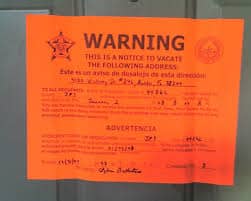
Evictions are bad to have on the credit report in the rental home game; I won’t try to gloss over that fact! There is a reason that they are asked about on every rental application worth its salt. Landlords do not like to see a prior eviction come up on a prospective tenant’s dossier because it means that things got about as bad as they could get with the tenant’s former landlord. It typically means that the tenant did not pay, did something really against the rules, and/or would not move out of the house. No landlord wants to have a repeat performance; it’s a major red flag! We like peaceful, nice relationships…
Now, there are two sides to every story. The narratives that previously evicted tenants will tell are typically less confrontational:
My mom got really sick so I moved out of my place and into hers to help her. My roommate at the time stopped paying rent and my name was still on the lease so it happened.
I’ve never lived at that residence in my life! I have no idea what you’re talking about!
COVID happened. Enough said.
I co-signed a lease for my friend so he could get into the property. I guess he didn’t pay. I’ll need to ask him about that.
(Free advice: Please don’t co-sign for someone else. There is a reason they couldn’t get approved on their own. The Bible even cautions against it (see above)!)
It’s always some combination of best intentions paved with unforeseen adversity. And I don’t doubt that at all. But life is life and stuff happens and will happen again. Landlords just don’t want it to happen on their watch.
When a tenant doesn’t pay or follow the rules of the lease, experienced landlords will try to communicate and work with the tenant to get things in compliance. There is often give-and-take and patience required to right the ship. But sometimes the tenant either cannot or will not do what they signed up to do. When backed into this corner, there is one nuclear bomb that a property manager has- filing for eviction. And this bomb is not free. It takes a lot of human resources to see it through, it costs the owner money while rent is not coming in (cash flow double-whammy), and (when vacated) the rental house is usually left in deplorable condition. It’s the downside of real estate investment.
So when a prospective tenant claims that a landlord filed for eviction “by mistake” or “on the 2nd day of the month after I left for vacation when the check was still in the mail”, I’m skeptical. Filing for eviction is a last resort and one most landlords would not take lightly. The costs are just too high.
A “successful” eviction typically means that every rock was turned over, every resource for payment exhausted, and nothing could be settled outside of the courtroom. That’s not a good reference for a renter coming in.
So, is eviction the unforgiveable sin? Is it an automatic rental application denial?
It really can’t be. No matter how draconian the landlord, saying that a human being isn’t worthy of having a place to live is a tough line. Bad things do happen to good people. And many people use these awful experiences to change for the better. We all learn from struggles and hard times and need another chance.
However, we do say that not disclosing an eviction filing on the rental application when asked is an unforgiveable sin. If we don’t start from a position of honesty, I don’t think differences can be bridged to make a tenancy palatable.
To determine whether a previously evicted tenant has a path for approval, we try to focus more on the numbers and less on the story. The stories are usually compelling, but what do the facts look like? We try to investigate:
What does their current debt level look like?
What is the length of the current employment and its real income?
How long ago was the past eviction?
What do prior (non-evicting) landlords say?
Why are things different now?
How much cash do they have on hand to put down to mitigate risk?
So, no, the “Rental Bible” does not say that eviction is the unforgiveable sin. But it is a very real red flag! Prudent landlords will need to put in the research to determine if it is likely to reoccur in their rental homes.
Happy Landlording!
Learn More
As Landlords (Temporarily) Rejoice, Renting Still Has Its Merits
“Every cloud has a silver lining” & “The grass is always greener on the other side”
(Popular Axioms)
I’m not sure I’ve ever read an article that talked about the “joys of renting.” I’m sure it exists somewhere. Maybe it’s because I’m saturated with a bunch of real estate industry communications that always tout “the dream of homeownership” and how everyone should strive for it. I’m bombarded by banter like, “There’s no feeling like stepping over the front door threshold for the first time and knowing that you own the home”*.
* As my uncle likes to point out, it must be the warm feeling that comes from knowing that your bank actually owns most of it.
The way home prices and rents have shot up, the pro-homeownership articles seem to have a lot of merit! After sorting through all the mail and texts from investment groups hungry to buy homes, it is sometimes shocking to see what prices they are offering. It makes me think, “I don’t think I have much money, but these people are telling me I’m sort of rich…”
But as a veteran of leaner landlord times when rent barely covered the mortgage (and often went negative when repairs and vacancy happened) and it was hard to sell a house, life wasn’t always so rosy. I often thought of how renters had it pretty good in many respects:
- No fear of a $10K repair call at any moment
- If something major breaks, call the landlord and let him deal with it
- If you want to live somewhere else at any time, just move. No fuss, no muss.
That all holds true today.
So, though it seems landlords have a better situation now, things change. Renting will always have merit and hot markets always turn sour at some point.
Homeowners and landlords are able to enjoy current market conditions (and they should!), but renters shouldn’t feel totally left out. Things always swing back and forth and renters always have some built-in advantages in any market that owners never get to enjoy.
But, for now, landlords should rejoice!
(Very) Happy Landlording!
Learn More
Santa’s Influence & Rental Home Inspections: Naughty or Nice?
He’s making a list
He’s checking it twice
He’s gonna find out who’s naughty or nice
Santa Claus is coming to town
(“Santa Claus Is Comin’ to Town” written by J. Fred Coots and Haven Gillespie)
Oh, Santa Claus! He’s the mythical man who causes such delight and fear in the hearts of children (and some misinformed adults). He can be a best friend who showers good kids with gifts, or a cold, disapproving, gift-withholding coal-dispenser.
Parents have long used Santa’s inexplicable worldwide influence to ply good behavior from their children, especially in the month of December. There are several proven manipulations:
1. Santa the Spook: He’s watching you… all the time… his values are perfectly aligned with your parents… you could blow this Christmas big-time if there are any incidents… he sees all- yup, even that…
2. Santa the Bully: Do you want to get any presents??? Do you??? Then you better be good! Do you think Santa is playing? He’s been doing this forever and knows payback better than anyone. Do you feel lucky, punk??? Don’t try Saint Nick …
3. Santa the Eager Rewarder: Santa loves you- he really does. He wants to get you those Legos… but if you take the screws out of your sister’s bed, how is he going to justify giving you the galactic mother ship when Mrs. Claus asks? Even the reindeers would revolt if you were rewarded for that behavior. Just make it easy, be good, and let the Lego ship will fly down your chimney on Christmas Eve…
The Santa illustration can be carried over to our bi-annual home inspections. For clarity purposes, our rental home inspections include an on-site visit of approximately 10 minutes where we have a checklist of things to look at (air filters, smoke/CO detectors, pets, smoking, etc.) and we take some pictures of the interior and exterior. And, yes, we check our list twice.
The question is: “Are home inspections naughty or nice?”
As a property manager, I initially wasn’t a huge fan of conducting home inspections and had them on the “naughty” list. I figured the tenants were going to be staying in the home largely regardless of what we saw (short of some major discovery at the home) for their lease duration, so I wasn’t sure what we were trying to accomplish. Badgering tenants into compliance also seemed to be a loser’s battle. And, to boot, tenants did not like the home inspections either and would gripe. The whole thing seemed like a waste of time and resources to me.
But we did them anyway. As time went on and we had years of home inspections under our belts, visiting the homes twice a year proved to be really beneficial! At first take, there were some smaller, auxiliary benefits for our owner clients. We were able to catch some repairs early and head off some more major issues. We had a good idea of what a home was going to look like after the tenants moved out. We could eyeball certain tenant complaints in person and see if they had merit. We built better personal relationships with some of the longer term tenants we would visit. And we elongated the life of HVAC units as we made sure the air filters were changed regularly.
But the largest benefit was that we got the homes back in better shape. And I would attribute that to the “Santa” influence effect. If people think someone cares and is actually checking, people tend to put more thought and time into their efforts. Home inspections are a good reminder that the landlord cares how the rental house is kept and the tenants should too. And most of them do!
Rental home inspections seem to limit naughtiness. So Santa (and this property manager) now put them firmly on the “nice” list.
Merry Christmas & Happy Landlording!
Learn More
Noah’s Ark & Real Estate Investing: Can You Persevere?
Noah’s ark is a crazy story. God tells Noah, some ordinary guy, that He is heartbroken with how sinful mankind has become and is going to flood the Earth and start again. He tells Noah that he is going to spare him, his family, and all the animals if he builds an ark. Noah takes God at His word and builds the ark, gathers the animals and provisions, and loads the ark up.
Everyone knows it rained for 40 days and 40 nights, but Noah and his crew were safe because they were floating on top of this massive amount of water. The lesser talked about part of this story is that they did not walk out of the ark on Day 41 ready to repopulate the Earth; there was way too much standing water (they were floating above mountains, for goodness sake!). They were actually stuck on the ark for over a year before it was sufficiently dry enough to get out on land and walk around.
The children’s Bible I was reading my son surmised that it wasn’t boring because they had so much to do. They had daily routines to feed and care for all the animals, put out fires (so to speak), and take care of themselves and the ark. Wash, rinse, repeat. If anything was neglected, there were problems. Survival for mankind and the animal kingdom was at stake and duties needed to be carried out diligently or there would be dire consequences. The carrot was that if they kept to the plan, they would be free of the confines of the ark at some point and the whole beautiful world would be waiting for them to enjoy.
It reminded me of real estate investing.
Like the ark, rental homes require constant diligence. They need to be fixed up, repaired, and maintained. Tenants need to be acquired, serviced, and replaced. The mortgage, insurance, and taxes need to be paid. The HOA and government entities need to be catered to. These duties need daily attention; if they are neglected, the financial boat can start taking on water and sinking can become a real possibility.
The carrot of real estate investing is owning the property someday. As it rains (roof needs replacing, tenant evictions, tenants not paying because of a pandemic), it seems like that day is far off. Sometimes it seems like it would be better to abandon the ark and swim without it.
But persevering and waiting for the ark door to finally open to dry land has its benefits. Free cash flow, a higher net worth, and assets that can be liquidated for college tuition or passed on to children are great financial prizes.
But tending the smelly animals is a pain day-after-day (ever try to pick up after 1,000’s of animals?). The lightning is scary. The boat rocks a lot and causes sleepless nights and sea sickness. Some boards on the ark look like they are breaking down. Drowning is a real possibility. Why did I get on this thing to begin with? My friends who stayed behind at least seemed merry before the torrential downpour.
However, amidst the doubts and setbacks… there is belief that one day in the future the sun will come out, the water will recede, and the dove will return with a leaf clenched firmly in its beak. The remaining mortgage payments will be made, the appraised home value will be high, and the financial statement will be solid. Landfall will make it all worth it.
Noah persevered and he and his family were rewarded. Hang in there!
Happy Landlording!
Learn More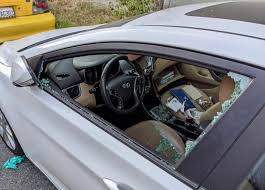
Rental Outcomes: Don’t Bust The Guy Breaking Into Your Car?
It was a sunny Sunday afternoon and I was in my car with my kids to get some exercise in. I wanted to shoot some hoops, so I convinced my kids they did too. It was on.
We parked behind a local school and walked over to where the basketball court was on the other side of it; there was also a small playground 50 yards behind the court. My son and I wanted to play basketball. My daughter also initially wanted to play until she didn’t… then she wandered over to the playground.
It became a volley of walking from the basketball court to the playground and then back again. “Dad! Come see this!” “Dad! Over here!”
On my sixth trip back to the playground, I realized that if I walked far enough into the playground, I could get the sight view past the school to see my car in the distance (which was completely obscured from the basketball court). And I saw a strange man walking suspiciously around my car. I say “suspiciously” because there were no other cars there. What was he doing? He was looking into my windows and did not know he was being watched. How suspenseful! And what to do?
I went through the options. I could yell and let him know I saw him. That would probably prevent any theft or damage to my car. Yawn & boring.
Or I could go (undetected) back to the basketball courts, stash my kids in the bushes, and then sneak around to potentially catch the stranger breaking into my car. Once he broke glass, I could ambush and subdue him; in a perfect world, I could handcuff him with the zip ties in the back of my car. Then I could call 911 and the Charlotte Observer letting them know that a “local hero” had one criminal on ice waiting for them- no charge.
That would be awesome unless… the stranger was bigger than me, good at fighting, and also included kidnapping as part of his criminal repertoire. Then he might drive away in my car with my kids, and leave me bleeding on the pavement. That would be a major fail and one that would be difficult to explain to my wife.
Seriously, what outcome did I want? Though the hero thing sounded pretty good, I needed to get real for a minute. Despite the appeal of potentially getting a key to the city from Mayor Lyles, what was going to be the cost? Realistically, if all went close to best-case scenario (which it rarely does), I’d have a busted car window (that I’d have to pay for and deal with), be waiting a while for the cops to show up (with my knee in a guy’s back who is probably cussing me out), and be babysitting two young children at the same time. That did not seem like a great outcome, even with the best-case scenario.
To me, property management is about creating good outcomes for our clients; the best outcomes come from tenants who stick around a while and consistently:
- Pay the rent
- Maintain the property
- Get along with their neighbors
We recently got a call from the HOA of one of our condo units where they accused our tenants of unkempt living, namely having a unit so disgusting that bugs where infiltrating the homes of neighboring tenants. This was clearly a violation of #2 and #3 above. This was not good, if it was true. They wanted us to evict the tenants immediately (and if we didn’t, they were sending a Sheriff that night to do so).
Despite the sheer illegality and impracticality of such a threat (landlords wish it was this easy to evict bad tenants- “oh, just call the local Sheriff and have him go over the same day to remove them…”), what outcome did we really want? Did we want to remove paying tenants who never had any prior issues? Of course not. We wanted the tenants to correct any cleanliness issues, if applicable, and then continue to stay and pay rent.
So we contacted the tenants and explained what the HOA alleged. Then we let them know we’d be there for an inspection the next afternoon to ensure the HOA there was no issue. The tenants understood and said there was no problem with that.
The next day, our inspection showed a very clean unit. We thanked the tenants and reported the findings to the HOA. There haven’t been any issues since.
The desired outcome was to keep the tenants, not to try to play “gotcha” to catch them violating the lease. That would put ourselves in a position where we would need to make a decision that no one wanted to make- the costly removal of paying tenants.
Viewing issues from a desired outcome perspective, as opposed to the initial bravado impulse, can help make decision-making more clear. It may be “boring”, but “boring” property management is typically the most effective and keeps the checks coming.
Postscript: So I yelled something at the guy at my car and he left. My son hit some shots, my daughter hit the swings, and then we left (unscathed) in a non-damaged car. Yawn…
Happy Landlording!
Learn More
COVID-19 Rent Collections: OK to Say “I Don’t Know”?
“Dewey Defeats Truman”
Chicago Daily Tribune headline on 11/3/48
“Even fools are thought wise if they keep silent, and discerning if they hold their tongues.”
Proverbs 17:28
My 6-year old son is tasked with completing school assessment tests this week on the computer. It’s a stressful time for him! Not only does he have to deal with new questions about numbers and words, he has to figure out how to use a mouse for the first time. It’s a lot for a new, aspirant student.
My wife thinks some of the questions may be out of the scope of a Kindergarten-educated child. “Three-digit subtraction questions? Scandalous! How could he know such things at this point?”
So he’s tackling an assessment question like:
Q. What is 100 – 80?
- 35
- 20
- I don’t know!
- I really don’t know! (Can I watch TV now?)
The truthful answers for him are clearly 3 or 4 (with a hard lean on 4). But for us educated folk who have been taking tests all our lives, we know at minimum we need to answer 1 or 2. Nobody gets any points for offering “I don’t know” on a test! We only get points for knowing (or acting like we know and guessing correctly). But we really should know stuff, right?
Or maybe that’s the limitation with tests when we implement this methodology in real life. With tests, there’s always one right answer that is evident if the data is studied and understood. But reality can be very different.
For example, take this COVID-19 situation for property managers. We’re asked questions from clients like, “Do you expect tenants to pay rent next month?” Or, more directly, “Will my tenants pay rent next month?” As someone in the property management field for the past 16 years, I should be able to answer that question, right?
Well, I read the same articles that everyone else did with statistics from large apartment provider associations saying 33% of tenants didn’t expect to be able to make their rental payments this summer. Wow! 1 in 3, that’s bad. Then I received calls from a few of our tenants telling me about their job losses and wondering if any of our owner-clients would be offering “Free Rent” until things were back to normal. Data was not promising, both empirically and anecdotally.
All of this must have meant that we were going to experience some rough times with the rental properties we manage in the Charlotte-Metro area, right? So I jotted off letters every month this summer to our owner-clients telling them to expect some rental disruption. I thought I knew what was going to happen and then I relayed this to our clients.
So what happened? Everyone this entire summer paid (with the exception of literally 1 tenant who is moving out). And the number of late paying tenants was half of what we usually have.
What do I know?
What is 100 – 80? Fortunately, I can help with that one. But are tenants going to continue paying on time and in full next month? I really don’t know. (But I hope so!)
Happy Landlording!
Learn More
Lost in Translation: Landlords Are Not “Pants”
“OK… but do we rock?”
(Opus from “Bloom County” after reading his band’s confusing review in Rolling Stone)
I remember back when I was in college and I had the opportunity to be a student-athlete abroad in Merrie Olde England. I thought the new scenery shouldn’t be that hard to figure out being they spoke English over there. But I didn’t account for some of their slang that as a “Yankee” I wasn’t privy to.
I was on the American football team and we had a pretty mediocre record. In our defense, we only had about 20 guys, so most of us were playing offense, defense, and special teams. We had some good players so we were able to keep the score close for most games (and win some of them), but exhaustion would set in during the fourth quarter due to our lack of depth; this would sometimes doom us.
Very few fans (aka only our friends) showed up for these fake “football” games (aka not soccer). So I really didn’t know if anyone cared or thought we were any good. However, someone pointed out that an article had been written about the team, so I was anxious to read it (was I mentioned in it???). I was in the computer lab later that day and found it.
Now, I’m not sure if the writer was trying to appear impartial, but I had a hard time figuring out what his take on us was. And then I wasn’t sure if he even understood what he was watching, as he used some soccer references to describe the action. He listed some good things about us and then list some bad things, and then vice-versa. Finally, at the end of the article, he gave his summation. “All in all, the Staffordshire Stallions are pants.”
“Pants”?? What the heck does that mean? I was at a loss. Do we rock? That’s what I wanted to know.
So I nudged the guy beside me and asked him what “pants” meant. He looked at me for a second, noticed my American baseball cap, and had pity. He said, ‘It means rubbish, complete rubbish.” Ouch.
For us to have a .500 record and beat some much bigger schools with 60+ players on their sidelines, I wasn’t sure how fair his assessment was. Some of our 20 guys hadn’t really even played before and were pressed into action. The article really could have been about how well we were doing despite the odds being stacked against us every game (and then how some “American saviors” were making their mark…).
I bring up this story because it reminds me of negative press landlords are taking for being against the eviction moratorium (not legally being allowed to file for eviction for non-payment) imposed now during COVID-19. The plight of affected tenants has been well-documented and no one wants this economic devastation. But to make landlords the villains is ridiculous.
I “know a friend” who manages a property where the tenant has not made a rental payment in 2020. My friend’s client still needs to make a mortgage payment, insurance, and property taxes every month without any offsetting revenue coming in. He provides a service where an agreement was made to pay him for it, and he is not getting it. And he has nowhere to go for help.
I’m not sure if any of our property management clients are multi-millionaires who are immune if no rent comes in on their rental houses. I get calls and e-mails from concerned owners when a tenant is late in paying or a repair seems on the high side. Most need the rents to keep their real estate investments afloat. I don’t know of any that are sitting on their yacht in the Mediterranean who rarely need to check a bank account!
Some of the criticism probably comes from people who just don’t understand the real estate investment game. On the other hand, I also understand (during tough times especially) that eviction is dirty word and can appear heartless.
But this is a situation that has been lost in translation. Landlords are not “pants” for wanting to receive their rental payments for providing houses for people to live in and making repairs to keep them functional. It makes sense for them to have the option of legal recourse to go to if things are not working out. They rock for trying to keep their obligations up-to-date during tough times.
In summation, the COVID-19 economic situation is “pants”, not landlords (or the 1998-1999 Staffordshire Stallions, for that matter).
Happy Landlording!
Learn More
Virtual Life With Virtual Rental Home Showings?
“Ain’t Nothing Like The Real Thing, (Baby)”
Marvin Gaye & Tammi Terrell
I don’t think I’ve ever written on the same topic four months in a row, but COVID-19 has affected every facet of life so abruptly; it’s tough to avoid.
Everything in life has changed when you can’t be with other people and are scared (or not allowed) to go places. Some things have been enhanced (more time with your family in your home & no commute) and others have been limited or discontinued.
In the limited and discontinued space, compromises were made to replicate virtually what was lost physically:
“If we can’t meet in person, we’ll have an awesome Zoom.com meeting.”
“Let’s do drive-in church where we watch our pastor on a big screen from the church parking lot in our cars and honk when we like what he says.”
“Let’s watch world-renown artists sing in their homes instead of going to watch them live in a stadium.”
“With no live sports, let’s re-watch Game 7 of the 2016 NBA Finals or NASCAR’s iRacing where their drivers are essentially playing a video game from their homes. That’s awesome!”
“There’s no need to hold the new grandson when you can just FaceTime him and wave! It’s virtually the same thing.”
These compromises, though necessary, are certainly not the same thing; I’d say they are not even close. It’s like seeing a shadow of a person instead of the person. Or it’s like seeing a picture of the New York City as opposed to standing in the middle of Times Square. These compromises are largely ineffective, counterfeit replacements.
I remember in my early sales career when I tried to avoid the time and energy of meeting customers, my boss would always say, “You can’t fax a handshake.” (Note: in retrospect, I need to never give that example again as both of those things seem to be relics of the past and will make me sound really dated…) Nevertheless, the point is that there is immense value in seeing people, places, and things in person.
A Realtor friend of mine called me the other day and was talking about how “virtual” house buying (aka seeing a video of a house and making an offer sight unseen) was gaining enormous traction. And really, I have no problems from that from the sales-side.
Why? In NC, we are a caveat emptor (“let the buyer beware”) state; this essentially means that after you close on a property, there are no “take-backs”. Once the house is bought, it’s yours- it’s over even if after you move-in you decide you don’t like it for some reason.
With rental homes, it’s a different story. Back when we first started offering property management in Charlotte, BDF Realty would allow “sight unseen” rentals. Most of the time, it was fine. But there were a small number of people who decided they hated the house after they actually saw it in-person; this created problems. They had already signed a lease and had moved in their furniture when they decided they wanted to move. The reason was a problem with the neighborhood, or the size if the rooms when they were actually in them, or a number of things that would have been avoided if they had seen the rental home in person. But, unlike when a house is sold, there was someone they could complain to- the property manager.
Virtual rental home showings just can’t replicate what seeing a home in-person can. Sometimes just driving a neighborhood or stepping into a home will immediately eliminate it from consideration. We don’t want renters being forced to live in a home for a year if it is going to be a disaster from the get-go. That’s not good for anyone- the renters, owners, or the management company.
Virtual life has its limits. It’s wise to exercise caution on the rental home side with a virtual-only approach. There ain’t nothing like the real thing, baby!
Happy Landlording!
Learn More
Credit Reports (YAWN) & COVID Tenant Placement
“Everyone has a plan until they get punched in the mouth.”
“Iron” Mike Tyson
The “sleep industry” (from bedding, sound control, “sleep consultants”, prescription pills, etc.) is estimated to be a $30B-$40B annual business growing by 8% year. That’s a lot of money going to something that should naturally be free; and, unfortunately, the inability to sleep seems to be an issue that keeps growing.
My father told me that a solution that always worked for him was to read textbooks. It made sense, but most adults (thankfully!) don’t have many lying around. However, if you’re in the property management arena, you do have a lot of credit reports you can read through that will have the same effect.
On a single rental application, it is possible to have 20+ pages per person. Every open and closed line of credit they’ve ever had in their lives is listed. It can be painful reading and sorting through them as the pages can begin to just run together…
Many property management companies outsource the application process. I get it! No one wants to read through the reports and try to put together how someone’s finances link to whether they’ll be a good tenant, especially when 10-20 applications are coming in per property. It’s arduous. That’s why it’s common for property management companies to have credit score minimums- for example, if you don’t have a minimum 600 credit score, your application will automatically denied.
There are a couple problems with that approach, in my opinion. The first is that if every landlord did that, there would be a lot of people in the streets who weren’t eligible to rent a house. That seems harsh, unfair, and inhumane.
The second is that a credit score alone is insufficient to gauge an applicant’s true financial strength. I think the level of debt to how much available credit they have is a huge indicator. A credit score rewards taking on debt to a certain extent as it measures whether debt payments are being made in a timely fashion; people with no debt (or utilized available credit) seem to have lower credit scores because there is less of a payment track record to go off of. Should people be penalized for that? I guess I have an “old-school” mindset where I think not having debt is preferable to the alternative.
Thirdly, I like to see cash flow and where it is going. I’ve had 700+ credit score applicants who have so much debt to pay off that after their monthly debt obligations (aka credit cards, financed cars, etc.) there is little room to pay rent and other niceties of life (like food).
This is where COVID and tenant placement comes in. How strong is the applicant? Can they pay when times are good and bad? Can applicants take a financial punch? COVID is a huge punch to almost everyone. But even putting COVID aside, a punch could be an unexpected job loss, big car repair, or some other major expense that life throws at everyone at some point. Can it be weathered?
That’s where I find the credit report to be an invaluable tool and a “must-read”. I always felt that the #1 responsibility of property managers is to keep the rents flowing to the owners. And property managers are only as good as the bench of good-paying tenants they have in their properties. How strong is the bench? Can it handle adversity?
COVID has and will continue to put things to the test. I think the practice of pouring that extra cup of coffee while poring over the credit reports will prove to be time well spent.
Happy Landlording! And Stay Safe!
Learn More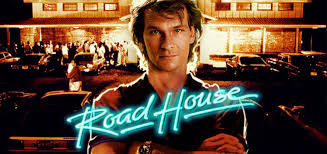
Tenant Management: Be Nice Until…
“A brother wronged is more unyielding than a fortified city; disputes are like the barred gates of a citadel.”
Proverbs 18:19
“I want you to be nice… Until it’s time not to be nice.”
Patrick Swayze to the other bouncers in Road House
There’s a danger of showing your age when quoting lines from the classic movie, Road House. Younger people have no idea what you’re talking about. It’s not as bad as making a “Rosebud” reference from Citizen Kane (1941), but it can make you feel like you’re in the same ballpark sometimes.
For the uninitiated, Road House is about a bouncer (Patrick Swayze) who is hired to go to a small, backwoods town in Missouri where some local ruffians are ruining a local bar by making it a warzone for fights. His job is to restore peace by training the staff to deescalate the increasing violence.
His first training session with the bouncers starts with him giving them the advice of “be nice”. No matter what bar patrons say to them, they shouldn’t take it personally. It’s a job. He instructs them not to retaliate, but walk offenders out of the bar, nicely. They should be nice, until it’s time not to be nice.
The inevitable question he gets after this speech is “how do we know when it’s time not to be nice?” He answers succinctly, “You don’t. I’ll let you know.”
As a Charlotte property manager, we often run into the same question. This may come as news, but tenants don’t always follow the lease to the T. They want to do what they want to do, regardless of what they signed their name to. This can be frustrating. And it can lead to the impulse to escalate situations quickly by invoking phrases like “throw you out on the street”, “it’s eviction time”, and “you’ll never live indoors again when your next potential landlords ask me for a reference”.
That’s not nice. And it’s usually foolish.
In my experience, nicely asking tenants to do something differently is effective. For example, if they are leaving the trash cans out for days which elicit HOA complaints, we may ask, “Would you mind trying to get the trash cans in a little earlier so we can be compliant with the HOA rules? I wouldn’t want them to start sending fines.” Or “can you try to make your rental payment a little earlier? The owner needs to be able to pay his mortgage on time and it would also save you from donating late fees to us every month. You’re usually only off by a few days.”
Most tenants are reasonable and respond well to landlords who ask for things nicely. I feel as a property manager, one of our most important jobs is to establish a respectful relationship with the tenants who rent from us. We both need things from each other and it’s much better for all involved when the relationship is cordial.
However, when a landlord is repeatedly ignored or there are egregious violations, it may be time not to be nice. This is when court action may be necessary, but it rarely leads to a happy ending. Remember, the tenant and his/her family are losing the place where they live and sleep; in Charlotte, at least, it’s going to be difficult for them to find another house easily due to the lack of available housing and a recent eviction on their credit. They are in a really bad situation that they will probably blame the landlord for.
At this point, the relationship in most cases is irrevocably broken. The chances of receiving additional rent are low and the house is usually returned in horrible shape. It’s a true “lose-lose” transaction.
It’s actually the same ending as in Road House. When it was time for Swayze and his fellow bouncers not to be nice, it infuriated the bad guys and a civil war broke out in the town. A lot of people got hurt (including Swayze’s best buddy, Sam Elliot, who was killed) and a lot of property was destroyed. In the end, Swayze got his Pyrrhic victory which, outside of movie logic, would only be considered a complete disaster.
So, be nice and try to keep things nice as long as it depends on you! It’s much better than having to turn to the alternative.
Happy Landlording!
Learn More