

Rental Outcomes: Don’t Bust The Guy Breaking Into Your Car?
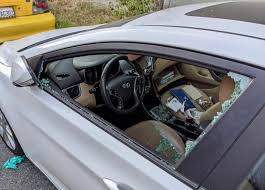
It was a sunny Sunday afternoon and I was in my car with my kids to get some exercise in. I wanted to shoot some hoops, so I convinced my kids they did too. It was on.
We parked behind a local school and walked over to where the basketball court was on the other side of it; there was also a small playground 50 yards behind the court. My son and I wanted to play basketball. My daughter also initially wanted to play until she didn’t… then she wandered over to the playground.
It became a volley of walking from the basketball court to the playground and then back again. “Dad! Come see this!” “Dad! Over here!”
On my sixth trip back to the playground, I realized that if I walked far enough into the playground, I could get the sight view past the school to see my car in the distance (which was completely obscured from the basketball court). And I saw a strange man walking suspiciously around my car. I say “suspiciously” because there were no other cars there. What was he doing? He was looking into my windows and did not know he was being watched. How suspenseful! And what to do?
I went through the options. I could yell and let him know I saw him. That would probably prevent any theft or damage to my car. Yawn & boring.
Or I could go (undetected) back to the basketball courts, stash my kids in the bushes, and then sneak around to potentially catch the stranger breaking into my car. Once he broke glass, I could ambush and subdue him; in a perfect world, I could handcuff him with the zip ties in the back of my car. Then I could call 911 and the Charlotte Observer letting them know that a “local hero” had one criminal on ice waiting for them- no charge.
That would be awesome unless… the stranger was bigger than me, good at fighting, and also included kidnapping as part of his criminal repertoire. Then he might drive away in my car with my kids, and leave me bleeding on the pavement. That would be a major fail and one that would be difficult to explain to my wife.
Seriously, what outcome did I want? Though the hero thing sounded pretty good, I needed to get real for a minute. Despite the appeal of potentially getting a key to the city from Mayor Lyles, what was going to be the cost? Realistically, if all went close to best-case scenario (which it rarely does), I’d have a busted car window (that I’d have to pay for and deal with), be waiting a while for the cops to show up (with my knee in a guy’s back who is probably cussing me out), and be babysitting two young children at the same time. That did not seem like a great outcome, even with the best-case scenario.
To me, property management is about creating good outcomes for our clients; the best outcomes come from tenants who stick around a while and consistently:
- Pay the rent
- Maintain the property
- Get along with their neighbors
We recently got a call from the HOA of one of our condo units where they accused our tenants of unkempt living, namely having a unit so disgusting that bugs where infiltrating the homes of neighboring tenants. This was clearly a violation of #2 and #3 above. This was not good, if it was true. They wanted us to evict the tenants immediately (and if we didn’t, they were sending a Sheriff that night to do so).
Despite the sheer illegality and impracticality of such a threat (landlords wish it was this easy to evict bad tenants- “oh, just call the local Sheriff and have him go over the same day to remove them…”), what outcome did we really want? Did we want to remove paying tenants who never had any prior issues? Of course not. We wanted the tenants to correct any cleanliness issues, if applicable, and then continue to stay and pay rent.
So we contacted the tenants and explained what the HOA alleged. Then we let them know we’d be there for an inspection the next afternoon to ensure the HOA there was no issue. The tenants understood and said there was no problem with that.
The next day, our inspection showed a very clean unit. We thanked the tenants and reported the findings to the HOA. There haven’t been any issues since.
The desired outcome was to keep the tenants, not to try to play “gotcha” to catch them violating the lease. That would put ourselves in a position where we would need to make a decision that no one wanted to make- the costly removal of paying tenants.
Viewing issues from a desired outcome perspective, as opposed to the initial bravado impulse, can help make decision-making more clear. It may be “boring”, but “boring” property management is typically the most effective and keeps the checks coming.
Postscript: So I yelled something at the guy at my car and he left. My son hit some shots, my daughter hit the swings, and then we left (unscathed) in a non-damaged car. Yawn…
Happy Landlording!
Learn More
COVID-19 Rent Collections: OK to Say “I Don’t Know”?
“Dewey Defeats Truman”
Chicago Daily Tribune headline on 11/3/48
“Even fools are thought wise if they keep silent, and discerning if they hold their tongues.”
Proverbs 17:28
My 6-year old son is tasked with completing school assessment tests this week on the computer. It’s a stressful time for him! Not only does he have to deal with new questions about numbers and words, he has to figure out how to use a mouse for the first time. It’s a lot for a new, aspirant student.
My wife thinks some of the questions may be out of the scope of a Kindergarten-educated child. “Three-digit subtraction questions? Scandalous! How could he know such things at this point?”
So he’s tackling an assessment question like:
Q. What is 100 – 80?
- 35
- 20
- I don’t know!
- I really don’t know! (Can I watch TV now?)
The truthful answers for him are clearly 3 or 4 (with a hard lean on 4). But for us educated folk who have been taking tests all our lives, we know at minimum we need to answer 1 or 2. Nobody gets any points for offering “I don’t know” on a test! We only get points for knowing (or acting like we know and guessing correctly). But we really should know stuff, right?
Or maybe that’s the limitation with tests when we implement this methodology in real life. With tests, there’s always one right answer that is evident if the data is studied and understood. But reality can be very different.
For example, take this COVID-19 situation for property managers. We’re asked questions from clients like, “Do you expect tenants to pay rent next month?” Or, more directly, “Will my tenants pay rent next month?” As someone in the property management field for the past 16 years, I should be able to answer that question, right?
Well, I read the same articles that everyone else did with statistics from large apartment provider associations saying 33% of tenants didn’t expect to be able to make their rental payments this summer. Wow! 1 in 3, that’s bad. Then I received calls from a few of our tenants telling me about their job losses and wondering if any of our owner-clients would be offering “Free Rent” until things were back to normal. Data was not promising, both empirically and anecdotally.
All of this must have meant that we were going to experience some rough times with the rental properties we manage in the Charlotte-Metro area, right? So I jotted off letters every month this summer to our owner-clients telling them to expect some rental disruption. I thought I knew what was going to happen and then I relayed this to our clients.
So what happened? Everyone this entire summer paid (with the exception of literally 1 tenant who is moving out). And the number of late paying tenants was half of what we usually have.
What do I know?
What is 100 – 80? Fortunately, I can help with that one. But are tenants going to continue paying on time and in full next month? I really don’t know. (But I hope so!)
Happy Landlording!
Learn More
Lost in Translation: Landlords Are Not “Pants”
“OK… but do we rock?”
(Opus from “Bloom County” after reading his band’s confusing review in Rolling Stone)
I remember back when I was in college and I had the opportunity to be a student-athlete abroad in Merrie Olde England. I thought the new scenery shouldn’t be that hard to figure out being they spoke English over there. But I didn’t account for some of their slang that as a “Yankee” I wasn’t privy to.
I was on the American football team and we had a pretty mediocre record. In our defense, we only had about 20 guys, so most of us were playing offense, defense, and special teams. We had some good players so we were able to keep the score close for most games (and win some of them), but exhaustion would set in during the fourth quarter due to our lack of depth; this would sometimes doom us.
Very few fans (aka only our friends) showed up for these fake “football” games (aka not soccer). So I really didn’t know if anyone cared or thought we were any good. However, someone pointed out that an article had been written about the team, so I was anxious to read it (was I mentioned in it???). I was in the computer lab later that day and found it.
Now, I’m not sure if the writer was trying to appear impartial, but I had a hard time figuring out what his take on us was. And then I wasn’t sure if he even understood what he was watching, as he used some soccer references to describe the action. He listed some good things about us and then list some bad things, and then vice-versa. Finally, at the end of the article, he gave his summation. “All in all, the Staffordshire Stallions are pants.”
“Pants”?? What the heck does that mean? I was at a loss. Do we rock? That’s what I wanted to know.
So I nudged the guy beside me and asked him what “pants” meant. He looked at me for a second, noticed my American baseball cap, and had pity. He said, ‘It means rubbish, complete rubbish.” Ouch.
For us to have a .500 record and beat some much bigger schools with 60+ players on their sidelines, I wasn’t sure how fair his assessment was. Some of our 20 guys hadn’t really even played before and were pressed into action. The article really could have been about how well we were doing despite the odds being stacked against us every game (and then how some “American saviors” were making their mark…).
I bring up this story because it reminds me of negative press landlords are taking for being against the eviction moratorium (not legally being allowed to file for eviction for non-payment) imposed now during COVID-19. The plight of affected tenants has been well-documented and no one wants this economic devastation. But to make landlords the villains is ridiculous.
I “know a friend” who manages a property where the tenant has not made a rental payment in 2020. My friend’s client still needs to make a mortgage payment, insurance, and property taxes every month without any offsetting revenue coming in. He provides a service where an agreement was made to pay him for it, and he is not getting it. And he has nowhere to go for help.
I’m not sure if any of our property management clients are multi-millionaires who are immune if no rent comes in on their rental houses. I get calls and e-mails from concerned owners when a tenant is late in paying or a repair seems on the high side. Most need the rents to keep their real estate investments afloat. I don’t know of any that are sitting on their yacht in the Mediterranean who rarely need to check a bank account!
Some of the criticism probably comes from people who just don’t understand the real estate investment game. On the other hand, I also understand (during tough times especially) that eviction is dirty word and can appear heartless.
But this is a situation that has been lost in translation. Landlords are not “pants” for wanting to receive their rental payments for providing houses for people to live in and making repairs to keep them functional. It makes sense for them to have the option of legal recourse to go to if things are not working out. They rock for trying to keep their obligations up-to-date during tough times.
In summation, the COVID-19 economic situation is “pants”, not landlords (or the 1998-1999 Staffordshire Stallions, for that matter).
Happy Landlording!
Learn More
Virtual Life With Virtual Rental Home Showings?
“Ain’t Nothing Like The Real Thing, (Baby)”
Marvin Gaye & Tammi Terrell
I don’t think I’ve ever written on the same topic four months in a row, but COVID-19 has affected every facet of life so abruptly; it’s tough to avoid.
Everything in life has changed when you can’t be with other people and are scared (or not allowed) to go places. Some things have been enhanced (more time with your family in your home & no commute) and others have been limited or discontinued.
In the limited and discontinued space, compromises were made to replicate virtually what was lost physically:
“If we can’t meet in person, we’ll have an awesome Zoom.com meeting.”
“Let’s do drive-in church where we watch our pastor on a big screen from the church parking lot in our cars and honk when we like what he says.”
“Let’s watch world-renown artists sing in their homes instead of going to watch them live in a stadium.”
“With no live sports, let’s re-watch Game 7 of the 2016 NBA Finals or NASCAR’s iRacing where their drivers are essentially playing a video game from their homes. That’s awesome!”
“There’s no need to hold the new grandson when you can just FaceTime him and wave! It’s virtually the same thing.”
These compromises, though necessary, are certainly not the same thing; I’d say they are not even close. It’s like seeing a shadow of a person instead of the person. Or it’s like seeing a picture of the New York City as opposed to standing in the middle of Times Square. These compromises are largely ineffective, counterfeit replacements.
I remember in my early sales career when I tried to avoid the time and energy of meeting customers, my boss would always say, “You can’t fax a handshake.” (Note: in retrospect, I need to never give that example again as both of those things seem to be relics of the past and will make me sound really dated…) Nevertheless, the point is that there is immense value in seeing people, places, and things in person.
A Realtor friend of mine called me the other day and was talking about how “virtual” house buying (aka seeing a video of a house and making an offer sight unseen) was gaining enormous traction. And really, I have no problems from that from the sales-side.
Why? In NC, we are a caveat emptor (“let the buyer beware”) state; this essentially means that after you close on a property, there are no “take-backs”. Once the house is bought, it’s yours- it’s over even if after you move-in you decide you don’t like it for some reason.
With rental homes, it’s a different story. Back when we first started offering property management in Charlotte, BDF Realty would allow “sight unseen” rentals. Most of the time, it was fine. But there were a small number of people who decided they hated the house after they actually saw it in-person; this created problems. They had already signed a lease and had moved in their furniture when they decided they wanted to move. The reason was a problem with the neighborhood, or the size if the rooms when they were actually in them, or a number of things that would have been avoided if they had seen the rental home in person. But, unlike when a house is sold, there was someone they could complain to- the property manager.
Virtual rental home showings just can’t replicate what seeing a home in-person can. Sometimes just driving a neighborhood or stepping into a home will immediately eliminate it from consideration. We don’t want renters being forced to live in a home for a year if it is going to be a disaster from the get-go. That’s not good for anyone- the renters, owners, or the management company.
Virtual life has its limits. It’s wise to exercise caution on the rental home side with a virtual-only approach. There ain’t nothing like the real thing, baby!
Happy Landlording!
Learn More
Credit Reports (YAWN) & COVID Tenant Placement
“Everyone has a plan until they get punched in the mouth.”
“Iron” Mike Tyson
The “sleep industry” (from bedding, sound control, “sleep consultants”, prescription pills, etc.) is estimated to be a $30B-$40B annual business growing by 8% year. That’s a lot of money going to something that should naturally be free; and, unfortunately, the inability to sleep seems to be an issue that keeps growing.
My father told me that a solution that always worked for him was to read textbooks. It made sense, but most adults (thankfully!) don’t have many lying around. However, if you’re in the property management arena, you do have a lot of credit reports you can read through that will have the same effect.
On a single rental application, it is possible to have 20+ pages per person. Every open and closed line of credit they’ve ever had in their lives is listed. It can be painful reading and sorting through them as the pages can begin to just run together…
Many property management companies outsource the application process. I get it! No one wants to read through the reports and try to put together how someone’s finances link to whether they’ll be a good tenant, especially when 10-20 applications are coming in per property. It’s arduous. That’s why it’s common for property management companies to have credit score minimums- for example, if you don’t have a minimum 600 credit score, your application will automatically denied.
There are a couple problems with that approach, in my opinion. The first is that if every landlord did that, there would be a lot of people in the streets who weren’t eligible to rent a house. That seems harsh, unfair, and inhumane.
The second is that a credit score alone is insufficient to gauge an applicant’s true financial strength. I think the level of debt to how much available credit they have is a huge indicator. A credit score rewards taking on debt to a certain extent as it measures whether debt payments are being made in a timely fashion; people with no debt (or utilized available credit) seem to have lower credit scores because there is less of a payment track record to go off of. Should people be penalized for that? I guess I have an “old-school” mindset where I think not having debt is preferable to the alternative.
Thirdly, I like to see cash flow and where it is going. I’ve had 700+ credit score applicants who have so much debt to pay off that after their monthly debt obligations (aka credit cards, financed cars, etc.) there is little room to pay rent and other niceties of life (like food).
This is where COVID and tenant placement comes in. How strong is the applicant? Can they pay when times are good and bad? Can applicants take a financial punch? COVID is a huge punch to almost everyone. But even putting COVID aside, a punch could be an unexpected job loss, big car repair, or some other major expense that life throws at everyone at some point. Can it be weathered?
That’s where I find the credit report to be an invaluable tool and a “must-read”. I always felt that the #1 responsibility of property managers is to keep the rents flowing to the owners. And property managers are only as good as the bench of good-paying tenants they have in their properties. How strong is the bench? Can it handle adversity?
COVID has and will continue to put things to the test. I think the practice of pouring that extra cup of coffee while poring over the credit reports will prove to be time well spent.
Happy Landlording! And Stay Safe!
Learn More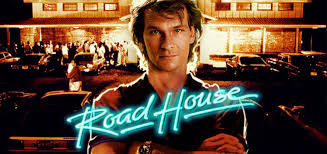
Tenant Management: Be Nice Until…
“A brother wronged is more unyielding than a fortified city; disputes are like the barred gates of a citadel.”
Proverbs 18:19
“I want you to be nice… Until it’s time not to be nice.”
Patrick Swayze to the other bouncers in Road House
There’s a danger of showing your age when quoting lines from the classic movie, Road House. Younger people have no idea what you’re talking about. It’s not as bad as making a “Rosebud” reference from Citizen Kane (1941), but it can make you feel like you’re in the same ballpark sometimes.
For the uninitiated, Road House is about a bouncer (Patrick Swayze) who is hired to go to a small, backwoods town in Missouri where some local ruffians are ruining a local bar by making it a warzone for fights. His job is to restore peace by training the staff to deescalate the increasing violence.
His first training session with the bouncers starts with him giving them the advice of “be nice”. No matter what bar patrons say to them, they shouldn’t take it personally. It’s a job. He instructs them not to retaliate, but walk offenders out of the bar, nicely. They should be nice, until it’s time not to be nice.
The inevitable question he gets after this speech is “how do we know when it’s time not to be nice?” He answers succinctly, “You don’t. I’ll let you know.”
As a Charlotte property manager, we often run into the same question. This may come as news, but tenants don’t always follow the lease to the T. They want to do what they want to do, regardless of what they signed their name to. This can be frustrating. And it can lead to the impulse to escalate situations quickly by invoking phrases like “throw you out on the street”, “it’s eviction time”, and “you’ll never live indoors again when your next potential landlords ask me for a reference”.
That’s not nice. And it’s usually foolish.
In my experience, nicely asking tenants to do something differently is effective. For example, if they are leaving the trash cans out for days which elicit HOA complaints, we may ask, “Would you mind trying to get the trash cans in a little earlier so we can be compliant with the HOA rules? I wouldn’t want them to start sending fines.” Or “can you try to make your rental payment a little earlier? The owner needs to be able to pay his mortgage on time and it would also save you from donating late fees to us every month. You’re usually only off by a few days.”
Most tenants are reasonable and respond well to landlords who ask for things nicely. I feel as a property manager, one of our most important jobs is to establish a respectful relationship with the tenants who rent from us. We both need things from each other and it’s much better for all involved when the relationship is cordial.
However, when a landlord is repeatedly ignored or there are egregious violations, it may be time not to be nice. This is when court action may be necessary, but it rarely leads to a happy ending. Remember, the tenant and his/her family are losing the place where they live and sleep; in Charlotte, at least, it’s going to be difficult for them to find another house easily due to the lack of available housing and a recent eviction on their credit. They are in a really bad situation that they will probably blame the landlord for.
At this point, the relationship in most cases is irrevocably broken. The chances of receiving additional rent are low and the house is usually returned in horrible shape. It’s a true “lose-lose” transaction.
It’s actually the same ending as in Road House. When it was time for Swayze and his fellow bouncers not to be nice, it infuriated the bad guys and a civil war broke out in the town. A lot of people got hurt (including Swayze’s best buddy, Sam Elliot, who was killed) and a lot of property was destroyed. In the end, Swayze got his Pyrrhic victory which, outside of movie logic, would only be considered a complete disaster.
So, be nice and try to keep things nice as long as it depends on you! It’s much better than having to turn to the alternative.
Happy Landlording!
Learn MoreSecurity Deposit Dispersion: Should You Treat Long-Term and Short-Term Tenants Differently?

Scenario #1: Melissa has been in your rental home almost as long as you’ve owned it. And it’s been a good ride! It started out as a standard tenant-landlord relationship with formal calls for repairs and rent checks sent solitarily in the envelope. But over the years, Melissa (now “Mel”) has really grown on you and vice-versa.
It started when she had some tough financial times and asked for you to allow some late payments. You assented and wound up having some deep conversations after the initial rental payment was discussed. A few years later, the water pipe blew and ruined many of her things. You promised to make it right; Mel paid her rent diligently and never complained about all the workmen coming in and out of the house for a few weeks. She really could have!
Over the years, Mel started sending some pictures of her kids having major life events in with her rent check every few months. Oh, how you looked forward to seeing what had become of her family. You were so proud of them! But now, with Michael, Jr. graduating at the end of the summer, Mel has told you that she needs to downsize. And that means she’s moving out.
Mel has been a tenant for 12 years. And you have to admit that your stomach has been in knots since that phone call. On one level, you knew this day was inevitable. On another, it’s almost like losing a family member.
Scenario #2: Wally moved into your Uptown Charlotte rental condo right after his internship at Goldman Sachs ended in Manhattan so he could take a job with Bank of America. You knew Wally would never be Mel. This condo was clearly a stepping stone for him to get used to the area and figure out where he wanted to live in Charlotte (or elsewhere in the world).
Wally was very cordial and business-like when you met him to sign the 1-year lease. “You’ll probably never hear from me!” he joked. And he was right. He set up his on-line bill pay and his rent checks showed up on time every month (sans any other correspondence). And, expectedly, about 40 days prior to his lease expiration, you got an e-mail from him giving you his 30-day notice to let you know he was moving out.
Two of your tenants are leaving and you’ll have to do two walk-throughs so you can disburse the security deposits. Personal feelings aside, do you treat these 2 tenants differently from each other?
Tenants should be charged for any damages beyond normal wear and tear. The amount of normal wear and tear for someone who lived in a rental unit for 1-year versus 12 years is substantial.
Fix-up expectations for a 12-year rental:
- Probable repainting of entire home
- Probable carpet replacement
- Professional cleaning
- Replacing miscellaneous worn out items throughout house
Likely charge to tenant: $0.00
If a tenant lives in your property for 12 years, that’s a lot of normal wear and tear. It would be difficult to justify charging them anything (short of them detonating a bomb in your home prior to move-out).
Fix-up expectations for 1-year rental:
- Minor touch-up paint
- Carpet steam-cleaning (hopefully already performed by tenant prior to move-out)
- Professional cleaning
- Any damages beyond light wear and tear
Likely charge to tenant: That depends typically on how dinged up the walls and flooring are and if there are any major items of damage. Tolerance for rental unit abuse is low.
Sorry, Wally, but you need to be really careful to keep things nice if you’re only sticking around a year. But, Mel, you don’t need to worry so much and thanks for staying so long (I’ll miss you!); just because you moved away doesn’t mean you can’t keep in touch!
Brett Furniss is the President & Owner of BDF Realty (Charlotte Residential Property Management), the trusted real estate advisor for Charlotte landlords & Home of $100 Flat Fee Property Management. BDF Realty utilizes their innovative Pod System for exceptional customer service in residential property management, home repairs, and home sales (including Rent-To-Sell) for single-family homes, condos, and town homes in the Charlotte-Metro Area. Contact Us Today!
Learn More
How Much Should I Fix Up My Rental Home for the Next Tenant?

The perfect scenario:
You are lounging on a sunny, deserted beach with your loving wife by your side. You have a cold drink in your hand as you marvel at the solitude and beauty of your surroundings. The only sounds you hear are the waves gently crashing in front of you and the occasional fluttering of a seagull’s wings. The sun subtly warms your skin before a timely breeze arrives to refresh you. You grasp your wife’s hand as she lovingly reciprocates. And you just filled your last rental property with a tenant. Life is perfect.
But, wait… is that your cell phone ringing in your beach bag? Who could be calling you? As you reach for the phone, your wife aggressively removes her hand from yours. “You better not answer that! We haven’t been away together since Eli was born and I’m not going to have our vacation ruined by work calls!” As your eyes refocus to the numbers on the phone, you realize it is the new tenant. “I’ve got to get this,” you mutter as your wife disgustedly begins to turn her beach chair away from you. You feign an enthusiastic greeting of “Hey Herb, what’s up? How’s the place?” as your eyes plead forgiveness to your now emotionally-estranged wife.
Herb begins his 10-minute rant, “This place is a dump! The whole house is filthy! The cabinets and appliances are especially gross and the entire trim needs to be repainted. The landscaping has been completely neglected and the yard is mostly weeds. My wife and I have spent our first 48 hours here on our hands and knees scrubbing and aren’t even close to being done! The air conditioning doesn’t even blow cold air. How could anyone live in this place??”
“Multiple tenants have managed to survive the experience in past 12 years I’ve rented it out,” you want to retort and then think better of it. You turn your head to see your wife disgustedly heading back towards the resort while pounding feverishly on her iPhone, undoubtedly spewing Facebook hate (Subject: You).
Herb is irate and you hear his wife trying to get into the action in the background. Once Herb says his piece, you tell him you’re very sorry, you’ll have someone over to look at the air conditioning, and will send the cleaners back (“No need! If they think the condition they left it in was clean, I don’t care to entertain their second act!”).
So this is bad. You thought you had the rental home in good shape and the tenants are ripping it apart. You look up at the resort and see your wife talking to the pool boy as she uncharacteristically is downing cocktails at 9 AM. This was supposed to be a relaxing, loving vacation and things are going very wrong.
What could have been done to avoid this tenant situation? Honestly, nothing. No matter how clean a house is left, some tenants will say it is filthy. Cleanliness is subjective.
There is a relatively predictable spectrum of responses from tenants after they move-in:
- 10% will be happy with whatever condition the home is in when they move-in
- 10% will be unhappy with whatever condition the home is in when they move-in
- 80% will be happy if the home is reasonably clean and touched-up when they move-in
So if things are reasonably clean, all major systems are working, and the house has been touched up, 90% of tenants will be happy. And everyone likes happy tenants.
And what about the unhappy 10%? It’s not a desirable situation, but there is a silver lining. You will take heat on the front end from them; that is for sure. And you won’t like it. But there are 2 positive takeaways:
- There was nothing you could have done to avoid their unhappiness. If you fixed your home up to such a pristine condition, it would crush the ROI on your investment property. And if you are going to pay to fix it up that much, do it only once and sell it for top dollar. Don’t do it every year. The objective (I’m told) is to make money on investments.
- When the initially unhappy tenants vacate, they will probably leave your home in move-in condition for the next tenant! This allows you to take the pain now to experience joy later.
So, to sum it up:
1. Fix-up your home in a reasonable manner between tenants. This means all systems working, touch-up paint (don’t repaint the house), steam cleaned carpet (don’t replace the flooring), and professional cleaning.
2. Hire a property manager so you don’t have to answer the phone on vacation.
3. Go get your wife!
Brett Furniss is the President & Owner of BDF Realty (Charlotte Residential Property Management), the trusted real estate advisor for Charlotte landlords & Home of $100 Flat Fee Property Management. BDF Realty utilizes their innovative Pod System for exceptional customer service in residential property management, home repairs, and home sales (including Rent-To-Sell) for single-family homes, condos, and town homes in the Charlotte-Metro Area. Contact Us Today!
Learn More3 Tips for Effective Rental Home Inspections

What’s going on in my rental home and how does it look?
Typical Landlord Query
You do want to know, but you don’t want to know. It’s one of those paradoxes in life.
If you do want to know, it’s important to have some type of methodology. Here are 3 tips to making the most of your rental home inspections:
- Spot checks won’t lead to lease extensions. And, in the South, they may get you shot. Being that I usually don’t prefer it when people show up unexpectedly at my door (even people I really like!), most tenants are not going to like it if a property manager shows up unannounced (they might not even like the property manager- I’ve heard this happens sometimes…). Prior to tenant move-in, let the tenants know what type of inspection schedule you are likely to keep (annually, bi-annually, quarterly, monthly (gasp!)) so expectations are set in advance. Don’t feel the need to schedule the inspection when they have company in town; it can be a good idea to give the tenants at least a week notice of your visit. And the tenants don’t need to be there, but make sure they muzzle their pets. Don’t undervalue injury-free inspections!
- If you ask for nothing, don’t be upset when you get it (and you usually will!). Smart property managers want the tenants to know exactly what they plan to look at. But isn’t that like giving students the answers to the test beforehand? Yes!! Having the home in good condition is the desired test effect (even if they have to cram for the test). We send them the exact checklist we are going to fill out a week before we visit. This checklist lets them know we’re looking out for unapproved animals, dirty air filters, smoke smells in the house, cleanliness, lawn care, that our keys work, functional smoke & CO detectors on each home level, and any other things that really stick out (we provide ourselves a little latitude to comment on items not on our checklist). Then we snap 4+ pictures (no bedrooms) and e-mail the filled-out checklist and pictures to the owner.
- If no one is keeping score, no one cares. Sharing the inspection results with the tenants is paramount. They need to know that the property manager is paying attention and cares how they treat and maintain the home. We send them the exact, filled-out checklist we had used on their home. We let them know what corrective actions need to be taken and ask them to get back to us when they do correct any issues. However, the first thing we do is compliment them on the items that are correct. We want the tenants to know we appreciate the things they are doing right, prior to asking them to correct the items they could be doing better.
In short, schedule courteously, announce beforehand what will be inspected, share the results, and praise/correct accordingly. Rental home inspections, when thought out well, can be a positive experience for both the property manager and tenant (and the home itself!).
Brett Furniss is the President & Owner of BDF Realty (Charlotte Residential Property Management), the trusted real estate advisor for Charlotte landlords & Home of $100 Flat Fee Property Management. BDF Realty utilizes their innovative Pod System for exceptional customer service in residential property management, home repairs, and home sales (including Rent-To-Sell) for single-family homes, condos, and town homes in the Charlotte-Metro Area. Contact Us Today!
Learn MoreWhat Rental Home Repairs Should A Landlord Pay For?

Oh, home repairs… One of the aspects of rental home investing that can really eat into a landlord’s financial return. Landlords and tenants both want to have a perfect home, but debate on who should pay for it.
In 10 years of practicing property management in Charlotte, I’ve found that the responses of who should pay for what repairs are unanimous (depending on what faction of people you ask):
Q: Who should pay for broken stuff at the rental house?
A. The owners!! (results tallied from 100% of the tenants)
Supporting testimony: “This house is a piece of garbage! They are lucky I’m a great tenant and renting it. I pay on-time every month; the least the owner can do is make some needed repairs around here. I guess Ebenezer is too busy counting his money to remember the little guy living in one of the houses in his vast real estate empire.”
Contradictory facts: House was lived in by owner prior to tenant move-in. Everything worked fine. Actual real estate holdings of owner are 2 houses.
B. The tenants!! (results tallied from 100% of the owners)
Supporting Testimony: “The house was in perfect condition when the tenant moved in. I lived there for 5 years and everything worked. Now they want every little thing fixed? Who cares if the screen door has a little rip in it? It didn’t kill my family, but the tenant can’t live with a flea once in a while? Please! He doesn’t even have children!”
Contradictory facts: “Little rip” in screen would allow full grown vulture entry. Perfectly conditioned homes would be violently offended at this owner’s shoddy home being placed in the same category as them.
And this is why property management can be challenging at times.
“To pay to repair or not to repair”, that is the question. And it is one that has no clear-cut answer. But, with that being said, there should be some methodology applied to make fair decisions.
My take on some parameters:
1. The house must be kept at code. Major systems (plumbing, heat, electricity, appliances) need to work properly. This includes working air conditioning nowadays (I know the old-school hardliners just stopped reading). I’m aware it used to be a luxury item, but that was a long, long time ago.
2. If it worked when they moved in, it should work throughout their tenancy (some exceptions apply on really high-cost or not-being-manufactured-anymore items). Example: a home was rented with a working gas fireplace. The fireplace stopped working in the middle of the tenancy. The manufacturer went out of business for the parts that were needed to fix it. In my opinion, the owner is not responsible to pay $3K for a replacement fireplace for home that rents for $1K a month.
3. If tenant negligence clearly causes something to break (example: a bottle cap found blocking a garbage disposal from working), the tenant should be billed back for the repair. But a tie goes to the tenant. Think of this as more of a criminal trial (where the tenant is innocent until proven guilty) than a civil trial (only requires a preponderance of evidence). There is a higher standard of evidence required before a tenant can be billed back for a repair (it must be really obvious).
4. Operational items need to be repaired; aesthetic items (aka how the house looks) do not. It should be made clear to the tenant during the lease signing that the home looks the way it looks now and nothing will be done by the owner about it.
5. Just because the tenant is renting the house, it does not mean that they will never spend money on the house. Maintenance items are required (air filters, light bulbs, lawn care, etc.) and are not paid by the owner.
This is obviously not a comprehensive repair policy, but it is a good start. Good luck!
Brett Furniss is the President & Owner of BDF Realty (Charlotte Residential Property Management), the trusted real estate advisor for Charlotte landlords & Home of $100 Flat Fee Property Management. BDF Realty utilizes their innovative Pod System for exceptional customer service in residential property management, home repairs, and home sales (including Rent-To-Sell) for single-family homes, condos, and town homes in the Charlotte-Metro Area. Contact Us Today!
Learn More