


Tenant Management: Be Nice Until…
“A brother wronged is more unyielding than a fortified city; disputes are like the barred gates of a citadel.”
Proverbs 18:19
“I want you to be nice… Until it’s time not to be nice.”
Patrick Swayze to the other bouncers in Road House
There’s a danger of showing your age when quoting lines from the classic movie, Road House. Younger people have no idea what you’re talking about. It’s not as bad as making a “Rosebud” reference from Citizen Kane (1941), but it can make you feel like you’re in the same ballpark sometimes.
For the uninitiated, Road House is about a bouncer (Patrick Swayze) who is hired to go to a small, backwoods town in Missouri where some local ruffians are ruining a local bar by making it a warzone for fights. His job is to restore peace by training the staff to deescalate the increasing violence.
His first training session with the bouncers starts with him giving them the advice of “be nice”. No matter what bar patrons say to them, they shouldn’t take it personally. It’s a job. He instructs them not to retaliate, but walk offenders out of the bar, nicely. They should be nice, until it’s time not to be nice.
The inevitable question he gets after this speech is “how do we know when it’s time not to be nice?” He answers succinctly, “You don’t. I’ll let you know.”
As a Charlotte property manager, we often run into the same question. This may come as news, but tenants don’t always follow the lease to the T. They want to do what they want to do, regardless of what they signed their name to. This can be frustrating. And it can lead to the impulse to escalate situations quickly by invoking phrases like “throw you out on the street”, “it’s eviction time”, and “you’ll never live indoors again when your next potential landlords ask me for a reference”.
That’s not nice. And it’s usually foolish.
In my experience, nicely asking tenants to do something differently is effective. For example, if they are leaving the trash cans out for days which elicit HOA complaints, we may ask, “Would you mind trying to get the trash cans in a little earlier so we can be compliant with the HOA rules? I wouldn’t want them to start sending fines.” Or “can you try to make your rental payment a little earlier? The owner needs to be able to pay his mortgage on time and it would also save you from donating late fees to us every month. You’re usually only off by a few days.”
Most tenants are reasonable and respond well to landlords who ask for things nicely. I feel as a property manager, one of our most important jobs is to establish a respectful relationship with the tenants who rent from us. We both need things from each other and it’s much better for all involved when the relationship is cordial.
However, when a landlord is repeatedly ignored or there are egregious violations, it may be time not to be nice. This is when court action may be necessary, but it rarely leads to a happy ending. Remember, the tenant and his/her family are losing the place where they live and sleep; in Charlotte, at least, it’s going to be difficult for them to find another house easily due to the lack of available housing and a recent eviction on their credit. They are in a really bad situation that they will probably blame the landlord for.
At this point, the relationship in most cases is irrevocably broken. The chances of receiving additional rent are low and the house is usually returned in horrible shape. It’s a true “lose-lose” transaction.
It’s actually the same ending as in Road House. When it was time for Swayze and his fellow bouncers not to be nice, it infuriated the bad guys and a civil war broke out in the town. A lot of people got hurt (including Swayze’s best buddy, Sam Elliot, who was killed) and a lot of property was destroyed. In the end, Swayze got his Pyrrhic victory which, outside of movie logic, would only be considered a complete disaster.
So, be nice and try to keep things nice as long as it depends on you! It’s much better than having to turn to the alternative.
Happy Landlording!
Learn MoreLosing 20% of Your Clients and Finding Joy in Serving

“If anyone forces you to go one mile, go with them two miles.”
Jesus Christ (Matthew 5:41)
At the beginning of 2015, we (BDF Realty) lost almost 20% of our clients in a space of four months. That’s substantial. And fast!
It was for a variety of reasons: some owners wanted to sell their homes, some were unhappy, some wanted to move back into their rental houses, some were foreclosed on. It wasn’t just one thing that we could try to correct.
I had just had my first child and was wondering what was going on. I prayed to God repeatedly wondering why this was happening. “What am I doing wrong? What is the issue? What are You trying to teach me through this?”
After about six weeks of praying with no answer, I ran into the Bible verse above. “If anyone forces you to go one mile, go with them two miles.” It stuck in my craw.
I thought about my recent interactions with clients. They were asking me to do things that I didn’t want to do (probably out of laziness). I made up excuses or came up with charges for doing the work, hoping the tasks would go away.
I came to the realization that not only was I not going 2 miles, I was a probably pulling up a little short on the first mile too.
So I brainstormed and came up with a list of approximately 15 things I remembered that I had avoided doing for clients. Note: there was a reason I didn’t want to do these 15 things- they were a big pain(!) and were non-revenue producing. That’s a hard combination to get motivated for.
Fortunately/Unfortunately, when you lose so many clients, you tend to have a lot more free time at work. So I started working to complete the list. It took me about 3 weeks, but it begrudgingly got done. Then I contacted the clients and told them that I took care of their issues (at no charge).
Our clients were very grateful. It felt sort of good; actually, it felt really good. It was nice to feel appreciated.
Property management can be a thankless job. Most of the communication is centered on people that are unhappy that something went wrong.
“My toilet is broken!”
“My AC has been out for 2 days and I have a baby! Don’t you care?”
“Why is this repair so much??”
“Where is the rent?”
But there also is an unmistaken joy in serving, a blissfulness for going beyond what is asked for or expected. This experience awakened me to make me a happier (and more effective) property manager. Work was more fun!
As a postscript, we didn’t lose any more customers that year (thank God!). But I don’t think we added many either. And even at a reduced revenue rate, my new son did continue to eat (and hasn’t stopped…).
But a little over a year later, the phone started ringing a lot from prospective new clients. I was grateful, but didn’t really know why it was happening. After a few weeks, someone was about to list their rental property with us and asked for me to send him more information before he made a decision. Then he called back and said, “Your reviews are great. Don’t worry about it! Just send me the contract.”
This happened before the business world was “review crazy”; honestly, I didn’t even know BDF Realty had on-line reviews at that point. Apparently, the clients who I “begrudgingly” went back to do work for a year before wound up helping me out more than I ever did for them.
Especially in property management, I tell this story much more from a “find joy in serving” bend than a “method to recoup 20% of your clients who found pasture elsewhere.” The second mile can be where the real rewards lie.
Happy Landlording!
Learn MoreNew York City Living & Landlording: Count the Cost

“Suppose one of you wants to build a tower. Won’t you first sit down and count the cost to see if you have enough money to complete it?”
Jesus Christ (Luke 14:28)
Shortly after I graduated college, I moved to New York City (NYC- aka the “Big Apple”). “If I could make it there, I could make it anywhere.” Wow! It was definitely an experience.
Honestly, I was a little scared. All the television shows and movies that had criminals crushing the common folk were in NYC. I grew up in NJ, but my parents really never took me into the big city so I wasn’t sure what to expect. The mafia and gangs could just be waiting for fresh meat to show up so they could take my lunch money every day. Who knew?
Fortunately, my physical safety was never really threatened. My issues were more on the economic side. I wasn’t making much money; I was in a sales job and wasn’t selling anything. My manager nicknamed me “rowboat”… because I had no sales (get it?). The lack of cash inflow was tough.
And the cash outflow required was excruciating. It was the $3.50 for a small apple at the corner bodega. Then buying a round of 5 drinks after work that ran $90.00 (without tip). I used to joke that it cost me $20.00 to cross the street. Geez, it was an expensive place to live!
Good deals were hard to come by. And breakfast at the food cart on the corner of my street was one of them. $2.00 got you a large coffee (with milk and sugar) and a huge cinnamon raisin bagel with butter. It was my go-to meal every morning that I’d take on the subway into work.
One morning, there was a couple in front of me in line at the food cart. I could make out parts of their conversation; it was apparent that they were visiting from the Midwest somewhere. When the man was placing his order I could see him getting agitated. Then he said something that I’ll never forget:
“$1.00 for a cup of coffee??? I’ve NEVER paid $1.00 for a cup of coffee in my life!”
That’s when I knew that he was going to absolutely hate this trip to the big city. I almost felt obligated to get him in a cab (and pay for it) so he could immediately return back home. If $1.00 for a cup of Joe was cause for righteous price indignation, he was due for a heart attack later that day.
He did not count the cost of what visiting New York City was going to do to him.
Unfortunately, the same can be said of being a Charlotte landlord.
The investment real estate gurus preach that you will be a millionaire through rental homes! Buy as many properties as you can! This is the way that you build residual income that will last a lifetime for you and your children’s children!
They just don’t tell you that it is a cash-poor business. All of the above can be true, but the trick is the ability to stay solvent for year upon year as things break and wear out. All the financial models go out the window when a messy eviction happens or your HVAC unit needs to be replaced (just happened to me this month- the dreaded $5K phone call…).
Carpet will not last forever and will need to be replaced. The entire house will need to be repainted at some point. Appliances only last so long. The roof too…
Long term real estate investment can be a wonderful, profitable endeavor (you’ll love your net worth!), but don’t let anyone fool you- it can and will cost you money. So before diving in too far, count the cost. A few miserable days in NYC can be remedied with an early flight home to your 25 cent coffee vendor. Several broken-down rental homes saddled with mortgages in a buyer’s market is a little tougher to navigate out of.
Happy Landlording!
Learn MoreLandlords & Lease Renewals: Don’t be Like Spectrum!

First of all, this is not a blog of a Spectrum (formerly Time Warner Cable) hater. I actually don’t have strong feelings either way about them. I was a user of their internet and basic cable and was relatively happy. The service worked decently and the price was reasonable. I put my bill on auto-pay and lived my life.
Then about 6 months ago, I saw a change in my $20.00 basic cable bill (aka the cheapest plan where I get about 10 channels). They started billing me $4.00/digital adapter (I have 2) for some cable boxes they made mandatory for me to use a year or two ago. While $8.00 isn’t life-changing, I brushed up on my middle school math and computed it was a 40% increase. That’s substantial in percentage terms.
Still, changing services is a pain. I could eat a 40% increase ($8 is still $8, no matter how alarmingly you dress it up). I was not pushing the panic button (thank you, hot Charlotte real estate market).
But when that happened, I actually started looking at my Spectrum bill each month. A few months later in the “Spectrum News” section on the front page of it (I didn’t previously know there was a “news” section I could be enjoying each month!), I see the following verbatim:
Your current promotion is ending, but your savings will continue. As a valued customer, we have automatically extended your preferred rate.
(good so far…)
Important Billing Update:
Effective for your next billing statement, pricing will be adjusted for:
- Starter TV Service from $20.00 to $23.89
- Broadcast TV Surcharge from $7.50 to $8.85. This reflects costs incurred from local Broadcast TV stations.
- Digital Adapters from $4.00 to $4.99
Not good.
We’re up roughly another $4.00 on 10-channel TV, not to mention another $5.00 for internet service (not previously affected). I don’t even need to do the percentage math anymore. We’re above a 50% increase in less than 6 months on my lame cable TV plan.
Now, on general principle, I’m trying to leave Spectrum cable TV service due to a large increase which appears to be largely meritless. So I fish out some $10-$20 antennas I bought from Amazon a year or two ago and see if I can make them work. Viola! They work like a charm after I put in a little more effort in this go-round.
I call Spectrum and cancel my starter cable TV service. I won’t lie; it feels good. Injustice was made right! Then they tell me that my internet service is not only going up $5.00 next month, but because it’s not bundled with TV anymore, it is going up another $20.00. Touché Spectrum! I have to have internet service, so they may have won this battle. But I am not a Spectrum cable TV customer any longer.
Unfortunately, now my resolve to rid myself of Spectrum in its entirety has built. I wrack my brain for a solution. Wait! Who was digging up my front lawn 6 months ago to my son’s delight? Google Fiber! They’re boasting $50/month internet service! So my dream of a “Spectrumless” home may become a reality next week.
But… my true thoughts on my mini-“SpectrumGate” are how sad and unnecessary it was. I was fine being a Spectrum customer. I paid my bill every month, they collected the money, and everyone was happy. It just seemed to me that they got greedy were trying to stick it to me.
To be fair, I don’t know Spectrum’s economics. They may be losing money on customers like me and it’s better for them to lose me than to keep me at a lower monthly fee. Fair enough. That’s business.
The purpose of this story is I see landlords use similar tactics on tenants during lease renewals. The tenants pay their rent on time every month and take care of minor repairs on the rental home. But when their lease is up, the landlords try to stick the tenants with a 10%+ increase and additional fees. The tenants feel betrayed and don’t renew their leases on principle. Both parties lose.
We’re in a rising real estate market, I get it. But the grass isn’t always greener on the other side. New tenants don’t always pay the rent on time and take care of the home. Plus the fix-up and other vacancy costs could more than devour any surplus a higher rental rate from a new tenant might offer.
If you have good tenants and are making money, keep any rent increases between lease renewals within reason. There is no reason to endanger the money flow. Most tenants understand that landlord costs go up a little bit every year too.
However, if you are losing money and need to stop the bleeding, I get that too. A rising market could finally bring a new tenant to get bring positive monthly cash flow back into play. Business is business.
Happy Landlording!
Learn MoreTrump’s Cabinet Means You Should Invest in Charlotte Real Estate

The stock market will always go up eventually. Historically, it keeps happening. Most wealthy people (aka the people who make the rules- check out Trump’s cabinet of billionaires) have much of their wealth tied up in corporate ownership (stocks). It’s almost a sure thing. If the stock market crashed and stayed down permanently, our country would be in mayhem. And the dollars under the pillow and gold bars stashed in the attic wouldn’t mean much. Food would be the main currency.
So why do investors get fearful when the stock market goes down? It will go back up, right?
After 9/11, the stock market tanked. Billionaire New York City Mayor, Mike Bloomberg, had a message for his constituents. He essentially said,” People always ask me for investment advice so they can become billionaires. I don’t often offer it, but today is different. Take all of your available money and buy stocks now.”
The Dow dropped to under 9,000 in 2001, and almost to 7,000 in 2002. It is now over 20,000. Too many powerful forces have a vested interest in the stock market doing well for it to flounder long.
Charlotte’s population is forecasted to go up 50% in the next 10 years. All of those people need a place to live. Statistically, 2/3 will buy and 1/3 will rent. Housing demand will continue to drive rents and prices higher.
So, investing in real estate in Charlotte is a slam dunk? As much as investing in the stock market is, especially with a Trump administration.
So that leads to 2 questions:
- When is a good time to buy in Charlotte?
For long-term holds, anytime really should be fine. The best time to buy is when the market gets hammered (see 2008-2012 when we didn’t get many buying inquiries, but many of our clients were looking to unload their homes and became reluctant landlords). For short-term holds and flips, this might not be a great time as competition is fierce for good properties; it’s clearly a seller’s market now. But financing is easy and historically cheap right now.
- Where should I buy in Charlotte?
Once again, for long-term holds, anywhere within city limits will work; really the surrounding counties seem pretty good too. When I was a newbie investor 10-15 years ago, my first two purchases were in areas that were considered “war zones”. I bought them very cheaply ($27K & $39K) and now they are considered to be in “hot areas”. Note: I wouldn’t recommend this, especially for newer investors. The fix-up and tenant issues were challenging and I wished I didn’t own them for years due to the headaches. But there are plenty of Charlotte houses that are in better areas that will make coveted rentals for years and years. I’d recommend buying houses that are more expensive (the market is pretty good at pricing houses based on risk). The homes I bought over $100K were much easier and safer investments that have also appreciated.
Much like investing in the stock market as a whole, Charlotte real estate is a great long-term hold that doesn’t require a large amount of analysis. And Trump’s cabinet members (and President Trump himself) own a lot of real estate too…
Happy Investing & Landlording!
Learn MoreSection 8 Program Worth Revisiting? A Definite Maybe

No one really liked Janie. And there were a lot of reasons why. For a teenager, she was pretty much a know-at-all. Stubbornly obnoxious. She would not let you get a word in edgewise. Always right. Rude. Cocky. Maladjusted. And that was just her award-losing personality. And physically? Her scrawny frame, big glasses, and overflowing braces (often full of food scraps) made her equally unappealing.
Now fast forward 5 years in the life of Janie. After years of dejection, she has softened a bit. Instead of looking completely past you before beginning her monologue on her life’s recent happenings, she’ll toss a few platitudes your way that make you feel a small connection. “How are you doing?” “How’s your brother? “You get that mole taken off your back yet?” She’ll still take the last doughnut off the plate in front of both of you, but now she’ll pause and feign a glance your way for approval. She still texts constantly when you talk, but now raises her head for momentary eye contact when you bring up your mother’s cancer treatments. And her scrawny body has filled out, she started wearing contact lenses, and has a nice straight smile now; some may say she isn’t bad to look at, relatively attractive even.
But Janie’s not for everyone. Maybe not for most people. But some people “get her” and even go out of their way to be around her. Some of your friends have even dated her.
Ever know anyone like that?
The Section 8 program is like Janie in a way. Several years ago, I wrote how we needed to get our landlords out of the Section 8 business because it was impossible to get a good ROI for our owner clients. As a Charlotte property manager, we couldn’t cost justify the lower rents, costly repair items, poor communication, and overall effort needed to recommend the program. And I still get a little queasy thinking about it.
As a footnote, we do have clients that have kept their homes in the Section 8 program. The owners allowed the tenants to keep renewing their leases (most at significantly below market rates) and the Section 8 tenants chose to do so. The advantages to our owners are continued rental payments and not having to fix-up their properties to get them market-ready for new tenants. The negatives are that as Charlotte rental rates have been going up 5-10% annually, Section 8 has capped their permitted rental increases (if approved) to 2% annually (in real numbers: $900 monthly rent = $18.00 rent increase- not much to get excited about). Section 8 also conducts annual inspections which almost always lead to an owner repair bill; some of the items would never have to be repaired if the house didn’t have to meet many government regulations (re: peeling paint on ceiling, etc.).
However, in the past 6 months, Section 8 has enacted 2 changes that I thought were very landlord friendly:
- Locking a tenant into a property if they have lived there for 18 months. The owner has the option of not renewing the lease, but the tenant does not have the option of moving if they want to stay in the Section 8 program.
- Changing house inspections from annually to biannually. So, now the repairs only have to be made every 2 years (which is a huge deal for landlords who have gone through the nightmare of rent abatement for multiple inspection failures).
This still doesn’t make Section 8 work for everyone, but it might start making sense for some people. And as responsible property managers, it is something we will need to consider recommending again for certain owners (risk averse) and certain properties (difficult to fill, long term investment holds, areas of historically low rent appreciation). While the private rental market might be compared to the stock market (higher yields, more volatility), the Section 8 market might now be compared to the bond market (lower yields, steadier income).
So… your best buddy saw Janie the other day and said she was looking good and they had a nice chat. He said she asked about you. Your stomach still churns when thinking about your past dealings with her, but since she’s interested, maybe she’s worth meeting up for coffee? Maybe she’s changed?
Anyway, it’s something to think about- a definite maybe. Happy landlording!
Brett Furniss is the head property manager of BDF Realty (Charlotte Residential Property Management), the trusted real estate advisor for Charlotte landlords & Home of $100 Flat Fee Property Management. BDF Realty utilizes their innovative Pod System for exceptional customer service in residential property management, home repairs, and home sales for single-family homes, Uptown condos, and town homes in the Charlotte-Metro Area. Contact Us Today!
Learn MoreTalk to Your Tenant: Win-Win is Better Than Lose-Lose, Right?

Years ago, there was a small, remote island that was relatively non-descript and unnoteworthy. Then two multi-billion dollar pharmaceutical companies decided their business’s future hinged on acquiring it.
Why? Its climate and soil composition was ideal to grow a certain tree that had revolutionary medicinal value. The pharmaceutical companies needed to harvest and grow and lot of these trees and this was the only place where they could find the perfect conditions to do so.
So what happened? These heavyweight industry titans went after each other to procure this island resulting in a bidding war (hundreds of millions for dollars over a nominal asking price), lawsuits, threats, and tons of bad blood. After millions had been spent and not one tree had been harvested after a year, a level-headed senior executive suggested the use of a mediator. People had their doubts because the companies were so tight-lipped about trade secrets; they wouldn’t divulge anything about their intended use of the trees.
As the story goes, the mediator ironed out a deal within an hour. All lawsuits were dropped, conversations turned from sharply bitter to excitedly collaborative, and the rivals eagerly bought the island together in joint ownership. They were both in production within 6 months.
What happened? Both pharmaceutical companies still needed the trees, but the first only needed the leaves the other only needed the bark. Once this was discovered, both pharmaceutical companies were in business! Adversaries became profitable allies.
It was a pretty simple solution, right?
Communication is important, especially in the property management business. And, conversely, non-communication can be very expensive and time consuming!
A rental relationship can thrive with good communication and turn seemingly lose-lose arrangements like a tenant needing to get out of his lease into win-win situations. Here are a few examples:
A tenant wanted to get out of his lease early due to a job loss during the spring and the owner wanted to sell. This turned out well as the tenant paid an extra month of rent to terminate their lease and the owner had a vacant month paid for while the home was being fixed-up during an active spring/summer sales market.
Or a tenant was a landscaper and needed an extra month to vacate. The owner wanted to sell immediately, but allowed for an extra month of renting. For this negotiation, the tenant landscaped the yard for free before vacating. This gave the tenant the time they needed, while saving the owner money for fixing up the yard.
These types of win-win negotiations are only possible when landlords and tenants talk and find out the best path forward together. A good property manager makes sure that these issues are fleshed out and potential solutions are vetted thoroughly.
Anyone can take a hard line on a lease and impose their will legally. But this is rarely the best and most profitable path.
As a postscript to the initial story, the big loser was the owner of the island. Through incomplete information, the island owner almost achieved a huge, unnecessary payday. In the property management sphere, the island owner is usually the lawyers who are paid to enforce the lease.
So talk to your tenant! Good things can happen and can turn seemingly lose-lose scenarios into win-win.
Happy landlording!
Brett Furniss is the head property manager of BDF Realty (Charlotte Residential Property Management), the trusted real estate advisor for Charlotte landlords & Home of $100 Flat Fee Property Management. BDF Realty utilizes their innovative Pod System for exceptional customer service in residential property management, home repairs, and home sales for single-family homes, Uptown condos, and town homes in the Charlotte-Metro Area. Contact Us Today!
Learn More
You Break It, You Bought It! Avoiding Rental Home Repair Costs
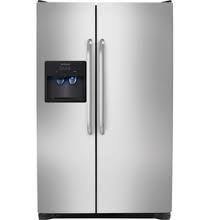
The dreaded scenario…
You enter the “4th Century Priceless Vases” store with your 3-year old child sleeping in his stroller. “While he’s sleeping I might as well find a birthday present for Uncle Milt,” you quietly say to yourself as you peruse the priceless artifacts (surprisingly all with prices on them…). As you turn to the shop owner to ask if there is a chance that the price of the orange vase had mistakenly had too many zeroes added to it (a simple clerical issue could happen to anyone!), you hear a crash behind you.
Looking at the shards of glass on the floor and your giggling, (temporarily) smiling son, you realize this could be an expensive trip. The shop owner, with arms crossed on his chest, points to the antique sign on the wall:
“You Break It, You Bought It!”
Ouch!
A better scenario for everyone would be that “4th Century Priceless Vases” decided years ago to elevate every shelf in the store to a minimum of 4 feet off the ground and added a feather-coated floor. The most expensive vases were put behind locked glass and could only be accessed by store personnel. This way they were able to decrease breakage and save money.
On a similar vein as a Charlotte property manager and fellow real estate investor, it pains me (sad, but true) when I get repair calls from tenants on things that could have been avoided. By spending money on features (“being nice”), it winds up costing in service calls and replacements for years.
My 3 main culprits on optional home amenities that always seem to break:
- Icemakers on refrigerators (ugh!!)
- Washers & dryers
- Gas fireplaces
Most leases say that if something is working when a tenant moves in, it is the landlord’s responsibility to pay to keep it working (aka “promptly repair all appliances and facilities” under Landlord Responsibilities in the NC standard Realtor lease). This costs money.
But what about if you took a page out of the “4th Century Priceless Vase” store’s playbook and made breaking these things close to impossible? Sounds good! But how?
Don’t own them! Nowhere in the lease does it say you have to have these things in your rental house. So don’t!
I see no rent difference in Charlotte single family residences in whether you have these niceties or not. So, I would highly recommend dealing with my main 3 culprits in the following manner:
- Icemaker on refrigerator: when you replace your refrigerator, get one without one!
- Washer & Dryer: sell them on Craig’s List the next time your house is vacant
- Gas fireplace: turn it off and let the tenant know it is not to be used. If they insist, let them know they are responsible for its upkeep.
Some parts of maximizing rental home ROI is addition by subtraction. It’s tough to break expensive vases when you can’t get to them, and you don’t need to perform maintenance on items that aren’t there. When there is less to break, there is less to be bought!
Brett Furniss is the head property manager of BDF Realty (Charlotte Residential Property Management), the trusted real estate advisor for Charlotte landlords & Home of $100 Flat Fee Property Management. BDF Realty utilizes their innovative Pod System for exceptional customer service in residential property management, home repairs, and home sales for single-family homes, Uptown condos, and town homes in the Charlotte-Metro Area. Contact Us Today!
Learn MoreMarch Madness: How to Pick a Great Bracket & Great Rental Tenants

Everybody loves March Madness. Even property managers! Chances are the only repair calls will go to the cable television companies if their television screens start to flicker.
But now the hard part starts; trying to predict who will win each game of the NCAA tournament. Picking a perfect bracket is tough; no one did it last year after millions of entries. The odds are seriously stacked against getting them all right. And, inexplicably, it’s even tougher if you’re a serious college basketball fan! The men’s college basketball fanatics, who watch all the games year round and know that Duke should absolutely kill Mercer, wind up picking the wrong team to win. Meanwhile, the clueless non-fans who turn on Mercer Street to go to work everyday and choose Mercer to win, wind up getting the pick right. Go figure!
To make good picks, fans rely on statistics and past performance versus other opponents. And then they look at other, intangible signs. Are their players healthy? Are they experienced or are the teams filled with unproven freshmen who might wilt in the big game? How did they do against big teams during the year? How about fast teams that like to run? How well are they playing now?
Much like fans, property managers are tasked to pick the best tenants when they get many applications for the same rental property. Some, like Kentucky this year, seem to fall in the “no-brainer” category. Great credit scores, great landlord history, make plenty of money to afford the rent, and stay away from trouble with the law. They don’t seem to have any weaknesses and look to be a shoo-in for application approval.
But what about if Kentucky’s starting center gets hurt and can’t play? Or in the rental game, you read about a company starting layoffs in the department where your “no-brainer” tenant has worked for the last 10 years. Is that a cause for concern? Yes, but how much so?
That’s a judgment call. Kentucky has enough other talent to steamroll most teams on most nights even without their center. And the prospective tenant could be just fine as she has plenty of cash reserves and a robust Rolodex where she could get hired anywhere in town with a quick phone call. Or she might be in real trouble as she was living paycheck-to-paycheck and hasn’t updated her resume since college.
The other prospective tenants aren’t as polished (lower credit scores and income), but have dual incomes in disparate industries. Would they be better bets? How does a property manager know who to give the approval to?
There is no right answer. Much like picking a bracket, some of it comes down to raw data and past landlord performance. But some of it comes down to the experience of selecting tenants for many years. I wish I had it down to a perfect science and could put it in a training manual (that I could sell for millions of dollars…). But no matter how good a property manager is, no one can get them right all the time. As my 3rd grade teacher said emphatically, “that’s why pencils have erasers!”
So, what to do? The right answer is closer to reviewing the raw data thoroughly and then looking for other signs. Do they have a pattern of paying people on time? Did their past landlords have good things to say? Do they make enough money to afford the property with some excess funds still available if their car breaks down or they face unemployment? Have they recently attempted to hurt anyone seriously (I’m half-kidding on this one)?
As for other signs… how did they sound on the phone? Did they get the application materials back to us in a timely manner? Are they pleasant to talk to? Were they forthcoming and truthful with everything asked in their application? Did they return our calls in a timely fashion? Were they evasive in any way? There’s a certain feel involved.
The other signs are tough to quantify. But that is when picking good tenants turns from a science into an art form. And that’s when the experienced know in their gut that Lehigh has a chance to take down Duke, even though they are a huge underdog. And that North Carolina, despite an up-and-down season, seems to be peaking and can take it all this year.
Picking tenants and the NCAA brackets isn’t as easy as picking all the favorites. Experience counts.
Good luck with both and enjoy the tournament!
Brett Furniss is the President & Owner of BDF Realty (Charlotte Residential Property Management), the trusted real estate advisor for Charlotte landlords & Home of $100 Flat Fee Property Management. BDF Realty utilizes their innovative Pod System for exceptional customer service in residential property management, home repairs, and home sales for single-family homes, condos, and town homes in the Charlotte-Metro Area. Contact Us Today!
Learn More
“When To Evict Or Not To Evict”, That Is The Question
“I’ll gladly pay you Tuesday for a hamburger today…”
Wimpy
“I will have the rent for you next week- guaranteed!”
Late Tenants
As a property manager in Charlotte, collecting rent is obviously one of our main functions (in my opinion, the most important function!). Our primary job is to create the most favorable ROI for our clients; we need to be taking rent in for this to be a reality. When we are collecting rent on time and in full, all things are typically good with our owner clients. If a tenant is not paying, things aren’t so grand. And we like things to be grand with our clients!
When a tenant doesn’t pay, eviction is always a last resort. It’s costly, time-consuming, and stressful. And, to boot, the tenant will usually tell you they are going to have the money for you next week! The mind games begin. You can surely hold out until next week to get paid!
But then next week comes and there is a new excuse. “My paycheck was shorted!” That’s one when you don’t feel that badly about going the eviction route. But when the tenants pull out the big guns like, “My mother is dying and I had to use the money for the rent to fly out to see her one last time (the last time I saw her 2 years ago, we said things we both regret- I couldn’t leave it like that). I had no choice… But I get a bonus next week from work and will pay you then!” That’s tougher.
We get calls from home owners who have tenants who haven’t paid for 6 months. Once they get that behind, they’re never going to get caught up.
So what’s the answer? At what point should eviction be filed?
First of all, bad things occur and many tenants are going paycheck to paycheck. When a big expense (aka major car repair) happens, the money just isn’t there for that and the rent.
But most people get paid twice a month (the 1st and the 15th). Filing for eviction prior to the 16th day of the month doesn’t allow you to get those funds. So I believe filing for eviction on the 16th is the earliest point in which it makes sense to do so.
If they aren’t able to make good by the 16th, the next factor to look at is the tenant’s income from when you did the original tenant screening. How much money do they make? Is it even possible for them to come back from being a month overdue (their next paycheck)? For some people, it’s just not possible.
Note: This is something I would strongly recommend paying strong attention to in the tenant screening process. Watch the income to rent ratio- when it is too high, it makes you highly susceptible to negative events happening in a tenant’s life. You ideally need to be less than 33% (examples: $3,000 monthly income and $1,000/month rent = 33% ratio. $4,000 monthly income and $1,000/month rent = 25% ratio. 25% ratio would be much better!)
If their income is too low, eviction should be filed right away. However, if they make enough money to pay the rent by the 1st of the following month and then get caught up sometime later that month (and express an earnest willingness to do so), then I’d wait. It could be worth the gamble.
But set hard, no-excuse deadlines at this point. If you don’t have all of the money by the 1st, you need to file for eviction to protect yourself. After a month goes by with no rent, you can’t wait any longer (no matter how good the excuse is).
If the tenant really is going to have the money in another week like they claim, they can bring it to court and stop the eviction. If not, you need to move on and take the loss. There is really no excuse to go multiple months without full rental payments.
Timing evictions for maximum ROI is a judgment call. But going past 30 days is a dangerous and usually unfruitful proposition!
Brett Furniss is the President & Owner of BDF Realty (Charlotte Residential Property Management), the trusted real estate advisor for Charlotte landlords & Home of $100 Flat Fee Property Management. BDF Realty utilizes their innovative Pod System for exceptional customer service in residential property management, home repairs, and home sales for single-family homes, condos, and town homes in the Charlotte-Metro Area. Contact Us Today!
Learn More